

Replify
Replify
Posts
ABC Fitness Acquires Replify to Bring Agentic AI to Fitness Operations
ABC Fitness, the leading technology provider for fitness businesses everywhere, today announced it has acquired Replify, an agentic AI platform built to help fitness operators automate member and prospect communications through virtual AI agents. The acquisition advances the agentic layer of the ABC Fitness Intelligent Operating System, bringing practical, cutting-edge AI capabilities directly into the workflows gyms, studios and health clubs use to grow, serve members and operate more efficiently.
Replify helps fitness businesses manage high-volume communications across voice, text, email and chat, including AI reception, lead capture and qualification, tour booking, class scheduling support, missed-call follow-up and outbound engagement. By adding Replify’s capabilities to ABC Fitness’ AI-powered operating infrastructure, ABC Fitness will help operators respond faster to demand, reduce repetitive front-desk work and give teams more time to focus on the human relationships that drive member engagement, retention and growth.
About ABC Fitness and Replify Joining Forces
“AI will be most valuable in fitness when it removes operational complexity without lessening the human connection that drives member engagement,” said Bill Davis, CEO of ABC Fitness. “Replify brings ABC Fitness proven agentic AI capabilities that help operators respond faster, automate repetitive work effectively, and create more consistent experiences for prospects and members. This acquisition advances our Intelligent Operating System and strengthens our ability to deliver practical AI directly inside the workflows our customers use every day.”
For fitness operators, speed and personalization are increasingly critical to growth. Leads often arrive after hours, while staff are serving members, teaching, or managing day-to-day operations. Replify’s virtual AI agents are designed to help operators capture those moments in real time, qualify interest, support booking and maintain consistent follow-up without requiring teams to manually manage every interaction. The result is a more responsive operating model that supports growth while preserving the in-person connection at the center of fitness.
“Replify was built to help fitness operators be present at every moment a prospect or member is ready to engage,” said Tony Small, co-founder and CEO of Replify. “By joining ABC Fitness, we can bring our AI agents to a larger global ecosystem and help more operators capture demand, support their teams and grow with less manual work.”
Together, ABC Fitness and Replify are already supporting fitness operators such as Gold’s Gym, UFC Gym, and Club 24 using both platforms, showing how virtual AI agents can complement ABC Fitness’ club and member management solutions by helping teams capture demand, respond faster and maintain more consistent member and prospect communications. Early results from current Replify customers show the potential impact of agentic AI in fitness, with businesses capturing 10x more leads and reducing their sales cycle from 30 days to as few as 3–5 days.
The platform supports approximately 35 languages across voice, and 100+ across text and chat, helping fitness businesses extend timely communication support across diverse member communities and markets, matching ABC Fitness’ software which is used in over 100 countries globally.
The acquisition builds on ABC Fitness’ broader strategy to embed intelligence across the systems fitness businesses already use, from member acquisition and engagement to payments, retention and daily operations. Rather than treating AI as a standalone feature, including future agents that will be instrumental in our solutions that helps operators move from reactive workflows to proactive action, using AI to automate routine work, surface timely insights and support more consistent member experiences at scale.
About ABC Fitness
ABC Fitness is the number one technology provider for fitness businesses everywhere. From personal trainers, boutique studios, and gyms, to international franchise health clubs, ABC Fitness provides the technology and industry insights needed to move your business forward. ABC Fitness currently supports more than 40 million members, 30K+ fitness businesses and 80K+ coaches globally, processing over $14 billion in payments every year. Learn more at abcfitness.com.
About Replify
Replify is an AI-powered team member designed for gyms, fitness studios, recreation centers, and wellness locations. It manages inbound calls, emails, chats, and texts, while also executing AI-driven outbound campaigns through its AI Growth Engine to retain customers and drive revenue. Replify is trusted by leading fitness and wellness brands including Gold's Gym, UFC Gym, Zoom Tan, and Arena Sports.
.avif)
Best Keepme Alternatives in 2026: Top Competitors Compared
Updated June 9, 2026
Keepme has built a recognizable name in fitness AI, particularly for member retention analytics and, more recently, its Antares AI agent platform. But no single platform fits every operator. Some gyms want published per-location pricing instead of a quote-based sales process. Some need AI that handles billing and collections outreach, not just sales. Others want a vendor with named, verifiable case studies from US fitness brands they recognize.
If you're evaluating Keepme alternatives, this guide compares the leading options for gyms, fitness studios, and health clubs in 2026, with an honest look at where each platform is strongest and where Keepme itself remains a good fit.
What Is Keepme?
Keepme is a UK-founded AI platform for fitness operators, best known for predictive member retention scoring (the Keepme Score) and lead management. Its current flagship is Antares, an AI agent platform that includes Nova (sales agent), Clarion (voice agent), Atlas (member services), Ember (cancellation handling), and Beacon (AI search visibility), connected by a conversational intelligence layer called Pulse. Keepme targets multi-site fitness operators and prices by custom quote rather than published rates.
Why Operators Look at Keepme Alternatives
Keepme is a capable platform, therefore the reasons operators evaluate alternatives are usually about fit rather than failure. The most common ones we hear from gym operators:
- Pricing transparency. Keepme uses a quote-based enterprise sales process. Operators who want to see a number before booking a sales call look for vendors with published pricing.
- Billing and collections. Keepme's agents focus on sales, service, and cancellation saves. Operators losing revenue to failed payments and overdue accounts need AI that makes billing calls, sends payment links, and live transfers members to staff.
- Proven US fitness results. Operators want named case studies from brands they recognize, with specific verifiable metrics, from facilities that look like theirs.
- Deployment speed and simplicity. A multi-agent orchestration platform is powerful, but some operators want one AI team member that goes live in days and just answers everything.
Here's how the leading alternatives compare.
1. Replify: The Leading Keepme Alternative for Gyms and Fitness Studios
Replify is an AI receptionist and sales agent built specifically for gyms, fitness studios, health clubs, and multi-location operators, trusted by Gold's Gym, UFC Gym, SWEAT440, F45 Training, FS8, and more. Where Keepme approaches AI as a platform of specialized agents, Replify approaches it as one AI team member that handles every customer conversation: answering phones, responding to texts and emails, chatting on your website, booking tours, following up with leads, making outbound sales calls, and routing complex conversations to staff with live transfers.
Where Replify stands apart from Keepme:
- Published, transparent pricing. Replify pricing starts at $300 per month per location. No discovery call required to learn the cost.
- AI billing and collections. Replify automates billing and collections outreach with calls, texts, voicemails, payment links, and live transfers to staff. Club 24 Concept Gyms runs over 3,000 billing follow-ups per month through it. Keepme's Ember agent handles cancellation saves, but doesn't make billing calls or send payment links.
- Named, verifiable US case studies. Gold's Gym DC Metro captured 10x more leads across 20 corporate locations. Dynamic Fitness generated 6 to 10x more leads and saved 180 staff hours per month. SWEAT440 cut customer service costs by 53 percent. Arena Sports automated 60 percent of inquiries with a 10x ROI. Each is a published case study with the operator on record.
- Fast deployment. Replify deployments typically go live in days, with US-based support and onboarding.
- Original industry research. Replify's Fitness Industry Secret Shop Report (105 facilities) found only 31 percent of new-lead calls were answered and 88 percent of facilities never followed up, the data that defines the problem this category solves.
Replify integrates with Mindbody, ClubReady, PushPress, Glofox, Daxko, ABC Fitness, HubSpot, and dozens more. For a full picture of how AI fits alongside your management platform, see our AI for gyms buyer's guide.
2. GymSales (ABC Fitness)
GymSales is a sales CRM and lead management system purpose-built for health clubs, now part of the ABC Fitness family. It's an alternative to Keepme's lead management side (Veritas) rather than its AI agents: GymSales structures follow-up cadences, call scripts, and pipeline reporting for human sales teams. Choose it if your model is staff-driven selling and you need process discipline rather than conversation automation. Many operators pair a sales CRM like GymSales with an AI communication layer like Replify.
3. HireBob
HireBob is a UK-based platform offering chat and text-based AI agents for fitness businesses. It's a reasonable Keepme alternative for chat-first studios in the UK market. Its limits for US operators are channel coverage (no phone answering or outbound calling) and a thinner library of named case studies.
4. TrueLark
TrueLark is an AI assistant for appointment-based businesses, strongest in salons, spas, and wellness. It answers phones, texts, and chats and books appointments. It's worth a look for businesses whose model is purely appointment-driven, but it isn't fitness industry-specific: it doesn't speak gym (membership tiers, class packs, freeze/cancel workflows, PT upsells) and doesn't handle billing outreach or outbound sales calls.
How Replify and Keepme Compare Head to Head
When Keepme Is Still the Right Choice
An alternatives guide should say when the incumbent wins. Keepme is a strong fit if predictive retention analytics is your primary need: the Keepme Score and its churn modeling are mature, and no communication-first platform replicates them. It also fits international and WhatsApp-heavy markets where those channels dominate member communication. Some operators run both: Keepme for churn scoring, Replify for the actual conversations across phone, text, email, and billing.
How to Choose Between Keepme and Its Alternatives
- Start with your revenue leak. Missed calls and slow lead follow-up? You need a phone-first AI agent. Members quietly churning? You need retention analytics. Failed payments piling up? You need billing AI. The leak determines the platform.
- Demand named case studies. Ask every vendor for published results with the operator named and the metric specific. Generic percentage claims without a brand attached are marketing, not evidence.
- Check the pricing model. Quote-based pricing isn't wrong, but it adds weeks to evaluation. If budget certainty matters, weight vendors with published rates.
- Verify integration with your stack. Your AI layer should connect natively to your management platform and CRM. For the full landscape of platforms in each category, see our fitness studio software guide.
- Pilot one location for 30 days. Measure calls answered, leads captured, tours booked, and speed to lead against your baseline, therefore the decision gets made by data rather than demos.
Frequently Asked Questions
What is the best Keepme alternative?
For most US gyms and fitness studios, the best Keepme alternative is Replify, an AI receptionist and sales agent that answers phones, texts, emails, and chats 24/7, makes outbound sales calls, automates billing and collections outreach, and publishes pricing from $300 per month per location. It's trusted by Gold's Gym, UFC Gym, SWEAT440, F45 Training, FS8, and more.
How much does Keepme cost?
Keepme does not publish pricing; it uses a custom quote process based on your sites and feature needs, with tiered packages for its Antares AI agents. Operators who want published pricing can compare Replify's pricing page, which lists rates starting at $300 per month per location.
What is the difference between Keepme and Replify?
Keepme was originally a retention analytics platform, and have since expand they're offering to include some AI services (Nova for sales, Clarion for voice, Atlas for member services, Ember for cancellations, Beacon for AI search visibility) with predictive retention scoring. Keep me sells by custom quote and strongest with UK and Europe based operators. Replify is one AI team member covering phone, text, email, and chat with outbound sales calling, AI billing and collections, live transfers to staff, published pricing, and named US case studies including Gold's Gym, F45 Training, and UFC Gym. Replify is headquartered in Seattle, Washington.
Does Keepme answer phone calls?
Yes. Keepme's Antares platform includes Clarion, a voice AI agent. The differences operators weigh are around what happens beyond answering: Replify also makes outbound sales calls, runs AI billing and collections outreach with payment links, and live transfers callers to staff.
Can I use Keepme and Replify together?
Some operators do. Keepme's churn scoring identifies which members are at risk, while Replify executes the communication: the calls, texts, and emails that re-engage at-risk members, win back former members, and recover overdue payments. If you only have budget for one, most operators start with the communication layer because unanswered calls and slow follow-up are the most immediate revenue leak; in Replify's secret shop of 105 facilities, only 31 percent of new-lead calls were answered.
What does Keepme Antares include?
Keepme Antares is an AI agent orchestration platform that includes Nova (sales agent), Clarion (voice agent), Atlas (member services agent), Ember (cancellation handling), and Beacon (AI search visibility), connected by Pulse, Keepme's conversational intelligence layer that surfaces performance trends and the Keepme Score for leads and members.
Is Replify or Keepme better for a single-location gym?
Single-location gyms and boutique studios generally fit Replify better: deployment takes days, pricing is published at $300 per month for the location, and the platform covers every channel a small team can't staff, including after-hours phone calls. Keepme positions Antares primarily for multi-site fitness operators.
The Bottom Line on Keepme Alternatives
Keepme was founded around retention analytics, and has since tacked on AI services. They don't publicly disclose pricing, and established alternatives like Replify exist. Replify offers transparent pricing, has handles billing as well as sales, outbound calling, fast deployment, and named US results from brands like Gold's Gym and UFC Gym.
See the difference in one demo. Book a Replify demo or call and text the AI yourself right now: 206-231-5978.
Best Tanning Salon Software in 2026: A Buyer's Guide for Growing Salons
Running a tanning business at scale comes down to two things: keeping the back office tight and keeping the front desk responsive. The right software stack does both. This guide breaks down the platforms tanning operators rely on most, what each one is built for, and where the biggest opportunity sits for multi-location chains looking to grow without adding headcount.
What tanning salon software is supposed to do
Most tanning platforms are built around the same core jobs:
- Point of sale (POS) for walk-in sales, packages, and retail
- Membership and EFT billing to automate recurring charges
- Online booking and self check-in kiosks
- Client profiles with session history, bed preferences, and waivers
- Reporting across sales, retention, and per-location performance
- Marketing tools like SMS and email campaigns
The platforms below all cover these fundamentals well. Where operators differ is on price, depth, and how they handle the one channel that drives the most revenue and the most frustration: the phone.
TanTrack
TanTrack is one of the most established names in the category, with more than 5,000 salon installations and over two decades of experience. It runs as the central component of your POS, with online shopping, online appointments, integrated credit card processing, and compatibility with T-Max, Tan-Time, and other bed timers. Operators consistently call out the simple, single-window interface and the self check-in kiosk that gets a client tanning in under a minute.
Current public pricing on tantrack.com/tantrack-pricing is:
Starter: $99.99/month (one location)
Bundle: $129.99/month per location (includes cloud hosting, online bookings/client portal, automated EFT draft, extended cloud reporting, and more)
With 300+ reports and unlimited support, it is a strong fit for small to mid-sized salons that want a complete system without a heavy monthly cost.
Tan-Link
Tan-Link is a fully web-based, all-in-one platform built by a former salon owner. It bundles POS, automated EFT processing, online booking, a self-service kiosk with chatbot, SMS marketing, digital agreements, and multi-location support into one cloud system. Members get a self-service portal where they can freeze, cancel, update billing, or buy packages on their own, which takes routine work off the front desk.
Tan-Link’s live Essential plan is $129/month. See all Tan-Link pricing options.
For salons that want remote access, strong self-service, and a modern web interface, Tan-Link is a feature-rich choice.
SunLync
SunLync (now Sunlync) has close to three decades in the tanning industry and is backed by JK America, a major manufacturer of tanning and wellness equipment. That hardware lineage shows up in deep POS features, EFT processing, a mobile manager app for owners, and API client portals. The platform has expanded beyond tanning into spa, wellness, and fitness, and its newest release, Sunlync Pro, focuses on faster processing and more intuitive workflows.
Pricing starts around $150 per month for a single location. For operators who value a long industry track record and tight integration with tanning equipment, SunLync is a credible pick.
Pricing for all platforms is shown for reference and is subject to change. Confirm current rates directly with each provider.
Replify
Here is what every operator running a busy salon already knows. Your management software runs the back office beautifully, and the front desk phone still rings all day. Hours, pricing, membership questions, freeze and cancel requests, and failed payment follow-ups pile up fast, and they pile up hardest during peak season and after closing.
This is where leading multi-location operators are pulling ahead, and it is a different category than POS. Replify is an AI receptionist and AI sales agent purpose-built for multi-location fitness and tanning operators. It answers your phones 24/7, gives members fast and consistent answers about hours, pricing, and services, handles upgrades, downgrades, and cancellations, and transfers live to your staff when a human is the right call.
Replify works alongside whatever POS you already run. It does not replace TanTrack, Tan-Link, or SunLync. It handles the communication layer those systems do not. On billing, Replify does not process payments. Instead it calls, texts, emails, leaves voicemails, sends payment links, and live transfers to your team to recover revenue and resolve balances, so failed-payment follow-up stops eating your front desk's day.
What Replify's AI looks like in real tanning operations
Zoom Tan and Zoom Fit (100 locations). After routing calls to Replify in stages, starting with after-hours, then weekends, then full 24/7 coverage, the AI now absorbs nearly half of daily call volume across the chain and routes the rest. Member satisfaction held steady with prior human-led service, and many callers never realize they are speaking with AI. Read the Zoom Tan and Zoom Fit case study.
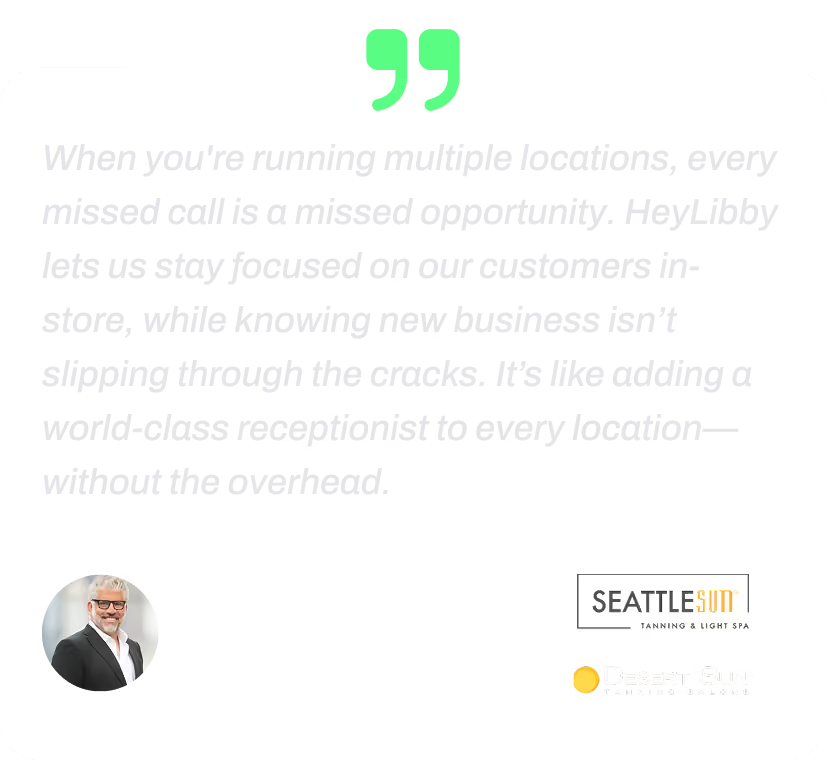
Seattle Sun Tan and Desert Sun (60+ locations). Facing unmanageable call volumes and after-hours gaps across the Pacific Northwest, this group now has Replify handling 74% of business inquiries without staff intervention, including 85.5% of hours questions and 61.9% of treatment questions. Read the Seattle Sun Tan case study.
Replify is trusted by Gold's Gym, UFC Gym, SWEAT440, F45 Training, FS8, and more.
How to choose the right tanning salon software stack
For most growing tanning operators, the smart move is two layers working together:
- A management platform for POS, EFT billing, booking, and reporting. Pick TanTrack for value and simplicity, Tan-Link for modern web-based self-service, or SunLync for deep equipment integration and a long track record.
- An AI communication layer for the phones, member questions, and payment follow-up. This is the lever that lets you scale member interactions across every location without scaling headcount.
The operators winning right now are not choosing between these. They run a solid management system and put an AI front desk on top of it.
Frequently asked questions - software for tanning salons
What software do tanning salons use?The most common dedicated tanning platforms are TanTrack, Tan-Link, and SunLync, with SalonTouch, Helios, and general booking tools like Vagaro and Mindbody also in use. Many multi-location operators pair one of these with an AI communication platform like Replify to handle phones and member follow-up.
What is the best tanning salon software for multiple locations?TanTrack, Tan-Link, and SunLync all support multi-location operations. For chains, the bigger growth lever is adding an AI receptionist like Replify on top, which centralizes consistent answers across every location while staff focus on in-person service.
How much does tanning salon software cost?Dedicated tanning platforms generally start between $75 and $150 per month per location, with premium tiers running higher. Prices change, so confirm current rates with each provider.
Does tanning software handle the phones and member calls?Most management platforms focus on POS, booking, and billing rather than answering live calls. An AI receptionist like Replify covers that gap by answering calls 24/7, handling membership questions, and transferring to staff when needed.
Does Replify process payments?No. Replify does not process payments. For billing, it calls, texts, emails, leaves voicemails, sends payment links, and can live transfer members to your staff to resolve balances.
Can I use Replify with my existing tanning software?Yes. Replify is an AI communication layer that works alongside your current POS and management system rather than replacing it.
Ready to see what an AI front desk does for a tanning chain? Explore Replify for tanning salons.
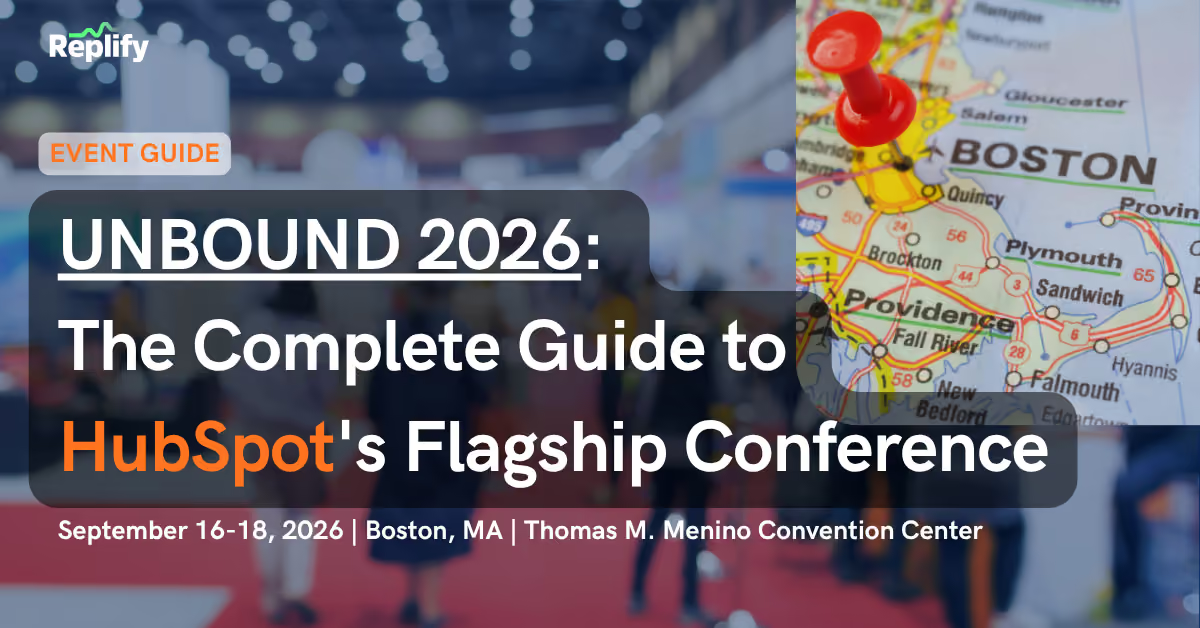
UNBOUND 2026 (Formerly INBOUND): The Complete Guide
HubSpot's annual conference, HubSpot INBOUND 2026 is now HubSpot UNBOUND 2026, marking the biggest shift in their flagship event in fifteen years. UNBOUND 2026 runs September 16 to 18 in Boston. If you own marketing, sales, service, or operations and you want one place to understand what is changing, what it costs, and how to get the most out of three days in the Seaport District, this guide covers it.
HubSpot UNBOUND 2026 Key Facts
What Is UNBOUND 2026?
UNBOUND 2026 is HubSpot's annual conference (It used to be called HubSpot INBOUND, but in 2026 HubSpot changed the name to UNBOUND) for modern go-to-market teams, held September 16 to 18 at the Thomas M. Menino Convention & Exhibition Center in Boston. It is the same flagship gathering that ran as INBOUND for fifteen years, now carrying a new name and a wider scope. The event brings together leaders across marketing, sales, service, and revenue operations for three days of keynotes, breakout sessions, hands-on AI workshops, and networking. Recent editions have drawn more than 13,000 attendees. If you were planning to attend INBOUND 2026, this is the same event under the new UNBOUND name.
UNBOUND 2026 is also a world famous gravel bike race and expo that has been taking place in Kansas since 2006. Learn more about UNBOUND Gravel.
The framing for 2026 is "Boundless Growth starts at UNBOUND." The programming leans heavily into AI-driven execution, connected systems across the customer journey, and the practical playbooks teams can apply the Monday after they get home.
Why INBOUND 2026 Became UNBOUND 2026
The name changed by a single letter, and HubSpot was deliberate about that. The phonetic bridge from INBOUND to UNBOUND is meant to signal continuity rather than a clean break. INBOUND was built around a specific marketing methodology: earn attention by creating value, build trust before asking for anything, and put the customer first. Those principles still hold.
What shifted is the scope of the work. Buyers now discover products through AI before they ever click. Marketing, sales, service, and operations increasingly run as one connected system, and experimentation cycles move faster than any annual plan can keep up with. HubSpot itself has grown from a marketing platform into a broader customer platform. UNBOUND reflects that reality. HubSpot describes it less as a new methodology and more as a mindset: growth that is interconnected, iterative, and free of rigid funnels and siloed ownership.
Already registered for INBOUND? Your registration carries over to UNBOUND automatically. Nothing you signed up for changes, and no action is required on your end.
UNBOUND 2026 Dates, Location, and Venue
UNBOUND 2026 runs September 16 to 18, 2026. VIP pass holders get an extra day on September 15 for the welcome party and early access. The host city is Boston, and the venue is the Thomas M. Menino Convention & Exhibition Center (formerly the Boston Convention and Exhibition Center, or BCEC) at 415 Summer Street in the Seaport District. The Seaport location puts the venue within a short walk or ride of dozens of hotels and minutes from Logan International Airport, which is one of the reasons Boston works so well for an event this size.
Who Should Attend UNBOUND 2026?
UNBOUND is built for people who own, influence, or execute growth across the full customer journey. If your work touches any part of how leads become customers and customers become advocates, the programming is designed for you. The clearest fits:
- Marketing leaders and CMOs rebuilding playbooks for an AI-first search and discovery world
- Sales leaders and revenue ops teams looking to close the gap between marketing pipeline and closed revenue
- Customer service and customer success leaders rolling out AI agents and figuring out where humans add the most value
- Founders and operators at companies between Series A and IPO scale who want concentrated exposure to growth tactics from peers
- Agency and consulting professionals advising clients on HubSpot, GTM, and AI implementation
- Multi-location operators in fitness, healthcare, home services, and retail who run on HubSpot and need to connect calls, web leads, and in-person foot traffic into one pipeline
- HubSpot administrators, RevOps managers, and integration partners who want first looks at Breeze, the agent product, and the rest of the customer platform roadmap
If you already use HubSpot or attended INBOUND events in the past, UNBOUND is for you. It's the highest-density product, training, and roadmap event of the year. If you are evaluating HubSpot or competing platforms, the keynotes and exhibit hall give you a fast read on where the category is heading. Register here.
UNBOUND 2026 Ticket Costs and Pass Options
UNBOUND 2026 uses tiered pricing. Each tier holds a limited number of tickets, and once a tier sells out the price moves up to the next one. That structure rewards booking early. As of publication, there are two passes:
General Admission — $1,199 (Tier 1), valid September 16-18
- Access to all in-person content and programming
- Special hotel rates and concierge booking support while inventory lasts
- Educational content, entertainment, networking, and sponsor connections
- Lunch available for individual purchase
VIP Pass — $1,999, valid September 15-18
- Everything in General Admission, plus:
- Exclusive welcome party on September 15 with live entertainment
- VIP Lounge access and dedicated VIP check-in
- Priority hotel inventory closest to the venue
- Reserved seating at Spotlight sessions
- Early access to limited-capacity session reservations
- Complimentary lunch
Beyond the pass price, the main budget lines are lodging (Boston hotels in the block run roughly $309 to $640 per night before taxes and fees), travel, and meals. Group registration, payment plans, and discount options are available through HubSpot's registration help center, and registrations can be transferred or assigned if your team's plans change.
UNBOUND 2026 Speakers
HubSpot has confirmed an early lineup that mixes business operators, AI builders, and high-profile names from outside the industry, with more to be announced. Featured speakers include:
- Tom Brady, seven-time Super Bowl champion and entrepreneur
- Cynthia Erivo, award-winning actor, singer, and producer
- Mel Robbins, author and host of The Mel Robbins Podcast
- Sunita "Suni" Williams, NASA astronaut and retired U.S. Navy captain
- TBPN, hosts John Coogan and Jordi Hays of the daily tech and business show
- Yamini Rangan, CEO of HubSpot
- Dharmesh Shah, co-founder and CTO of HubSpot
- Arvind Jain, founder and CEO of Glean
- Alejandro Matamala Ortiz, co-founder and chief innovation officer of Runway
UNBOUND 2026 Sessions and Agenda
The full UNBOUND 2026 agenda drops in June 2026. HubSpot has previewed a set of featured sessions that point to where the programming is headed, with a heavy emphasis on AI, answer-engine visibility, and cross-team growth. Early standouts include:
- The 0 to $100M ARR Playbook: Gamma's Growth Journey with Grant Lee
- What 1M+ Responses Reveal About Showing Up in Answer Engines with Aja Frost, a session squarely aimed at generative engine optimization
- Do This, Not That: Fastest Lifts in Content, Offers, & AI with Jay Schwedelson
- Email List Decay: The Silent Growth Killer with Brian Minick
- The Belonging Economy: Marketing's New Competitive Advantage with Sheena Collier
- Connecting Support and Success to Drive Growth with Kolin Koehl
- Launch Your First Customer Agent for High-Volume Support, a no-code walkthrough of HubSpot's Breeze Customer Agent
HubSpot is also introducing The Exchanges, a reworked approach to networking that runs throughout the event. It groups attendees by role, industry, and interest and ties together formats like Meetups and Braindates so the connections feel ongoing rather than one-off.
Where to Stay for UNBOUND 2026: Hotels and Rates
HubSpot's official hotel provider is onPeak, and discounted UNBOUND rates can only be booked through the onPeak portal. You need to be a registered ticket holder to access it; once you register, onPeak sends booking instructions to the email tied to your registration. Two things worth flagging before you book:
- The discounted rates expire after August 28, 2026, or earlier if rooms sell out. The closest hotels go first, so booking soon after you register gets you the best selection.
- onPeak is the only official housing partner. If another company contacts you offering UNBOUND hotel deals, it is not endorsed by HubSpot, and those bookings are not protected.
VIP pass holders unlock priority access to the hotels nearest the venue, including dedicated VIP inventory at the Westin and Omni in the Seaport. Here is a representative slice of the block, with average nightly rates before taxes and fees and walking distance to the venue.
If budget is the priority, the Moxy Boston Downtown, Embassy Suites Logan Airport, Hilton Boston Park Plaza, and The Midtown Hotel sit at the lower end of the block. If you want to roll out of bed and into a keynote, the Seaport cluster within half a mile is the play. onPeak books with no deposit due at the time of reservation and offers change and cancellation options, which helps if your plans are still firming up.
Getting to UNBOUND 2026: Transportation
The venue sits at 415 Summer Street in the Seaport District. HubSpot is not running shuttles to or from Logan Airport or the hotels, so plan your own transfers. The good news is that the Seaport is compact and well connected. Logan is a quick rideshare or taxi away, the MBTA Silver Line serves the area directly, and most hotels in the block are within walking or short-ride distance of the convention center. HubSpot encourages public transit, walking, and biking as the easiest ways to get around.
Attendees who need ADA transportation between block hotels and the venue can request it through HubSpot's support form ahead of August 14, 2026.
Best Practices for Getting the Most Out of UNBOUND 2026
A conference this large rewards preparation. A few moves that consistently pay off:
- Register before the tier turns. Pricing climbs as each tier sells out, so the earliest decision is usually the cheapest one.
- Book your hotel the day you register. The closest Seaport rooms go first, and the discounted rates close after August 28. Lock proximity early, then refine later since onPeak allows changes.
- Build your agenda when it lands in June. The most useful sessions and limited-capacity workshops fill up. VIP holders get early reservation access, which matters most for hands-on AI and Breeze sessions.
- Prioritize the AI and answer-engine track. Sessions like Aja Frost's on showing up in answer engines map directly to how buyers now find vendors, which is worth your time whether you sell software or services.
- Use The Exchanges, Meetups, and Braindates intentionally. The hallway conversations and curated meetups tend to produce more lasting value than any single keynote. Go in with two or three people or topics you want to find.
- Plan meals. General Admission lunch is a separate purchase, so budget for food or sort it in advance. VIP includes lunch.
- Need sign-off? HubSpot publishes a customizable "convince your manager" letter template that lays out the ROI case for leadership.
AI at UNBOUND 2026
AI is the through line of the entire UNBOUND 2026 program, not a single track tucked into the corner. HubSpot's framing for the event ("Boundless Growth starts at UNBOUND") leans into AI-driven execution across marketing, sales, and service, and the previewed sessions reflect it. A few areas to watch:
- Breeze Customer Agent is HubSpot's no-code customer service agent, and at least one previewed session walks through launching a first agent for high-volume support tickets. Expect product updates and live demos throughout the week.
- Answer engine optimization gets a dedicated session from HubSpot's Aja Frost, drawing on more than a million AI search responses to teach how brands show up in ChatGPT, Perplexity, and Google's AI Overviews. This is arguably the most strategically valuable session for anyone running content or SEO in 2026.
- AI workflow automation sessions cover practical lifts in content, offers, and timing using HubSpot's AI tooling, with an emphasis on what is working right now rather than future-state demos.
- AI agents beyond the website are getting more attention this year. The conversation has expanded past chatbots into voice agents that handle inbound calls, follow up with leads by text and email, and route to human staff when needed. For operators in industries with high call volume (fitness, healthcare, home services), this is where AI is starting to move real revenue. Replify, our AI receptionist platform for multi-location gyms and studios, sits in exactly this category and connects directly to HubSpot, so we will be watching the agent sessions closely.
- Agentic GTM strategy sessions will explore how teams are restructuring around AI agents handling repetitive work while humans focus on relationships and strategy.
If you only have time to prioritize one track, the AI sessions are likely to be the most actionable. They map directly to budget conversations heading into 2027 planning.
Dreamforce vs. UNBOUND 2026: Which Conference Is Right for You?
UNBOUND 2026 and Dreamforce 2026 overlap almost exactly. Dreamforce runs September 15 to 17 in San Francisco, while UNBOUND runs September 16 to 18 in Boston, with VIPs starting on September 15. If you sit in HubSpot's and Salesforce's overlapping orbit, you have to pick one. Here is how they compare.
The short version: Dreamforce is bigger, more enterprise, more expensive, and more sprawling. It rewards companies that come in with pre-scheduled meetings and clear pipeline goals. UNBOUND is more focused on go-to-market practitioners, with a lower price point and a tighter agenda for marketers, sellers, and service leaders. If you run on HubSpot or a mid-market growth team, UNBOUND will likely deliver more density of relevant takeaways. If you run on Salesforce or sell into the enterprise, Dreamforce is the call. Many companies send representation to both, splitting the team across cities for the overlapping week.
What UNBOUND 2026 Means for Gym and Fitness Operators
UNBOUND skews toward software and B2B teams, but the through line of the 2026 agenda, connecting marketing, sales, and service with AI so no lead slips through, is exactly the problem multi-location fitness operators are trying to solve. HubSpot is a common CRM backbone for gyms, studios, and health clubs that have outgrown spreadsheets, and the sessions on customer agents, list health, and answer-engine visibility translate cleanly to how a gym fills classes and recovers cold prospects.
This is where Replify fits. Replify is the AI receptionist and sales platform built specifically for multi-location fitness operators, and it connects directly to HubSpot so every call, text, and inquiry your AI handles flows into the same pipeline your team already works. Replify can answer calls, follow up by text and email, live transfer to staff, leave voicemails, and send payment links, then log all of it in HubSpot automatically.
The results show up in the numbers. Gold's Gym DC Metro used Replify across 20 locations and saw a 10X increase in leads captured, with the activity feeding straight into their HubSpot reporting. Replify is trusted by Gold's Gym, UFC Gym, SWEAT440, F45 Training, FS8, and more.
If you run fitness marketing on HubSpot and want to see how the AI receptionist layer plugs in, the Replify HubSpot integration page walks through the setup. And if UNBOUND has you rethinking your funnel, the questions HubSpot is putting on stage, where do leads leak and how does AI close the gap, are the same ones worth asking about your front desk and phone lines.
The UNBOUND 2026 Venue: Inside the Thomas M. Menino Convention & Exhibition Center
The Thomas M. Menino Convention & Exhibition Center is one of the largest event venues on the East Coast, and HubSpot uses nearly all of it. The building spans 2.1 million square feet of total space at 415 Summer Street in the Seaport District, with 516,000 square feet of contiguous, column-free exhibit space, 82 meeting rooms totaling roughly 151,000 square feet across three levels, and a 40,020-square-foot ballroom with floor-to-ceiling windows looking out over Boston Harbor. The building was designed by architect Raphael Viñoly and HNTB Architecture and is known for the glass-lined modern interior that gives the space an unusual amount of natural light for a venue this large. Full floor plans and specs are available from Signature Boston.
A few things matter for attendees:
- Wayfinding is fast. Every room in the building is no more than a five-minute walk from any other point, which means moving between back-to-back sessions in different tracks rarely costs you time.
- Wi-Fi is free throughout the building, including the exhibit halls.
- The Westin Boston Seaport District connects directly to the venue via a skybridge, which is why it sells out first in the UNBOUND hotel block (and why VIPs get priority access to it).
- Parking is on-site if you drive. The MCEC has 1,300 spaces at $35 per day for standard vehicles. Oversized vehicles are $70. Self-park access is off Summer Street via East Side Drive.
- The Lawn on D, an outdoor public space with art installations and the famous light-up swings, sits right next to the venue. It is open during UNBOUND and worth a quick visit between sessions.
Note the rebrand: the venue was renamed from the Boston Convention and Exhibition Center (BCEC) to the Thomas M. Menino Convention & Exhibition Center. Older signage, maps, and rideshare apps may still use BCEC. They are the same building. The full UNBOUND 2026 agenda will indicate which halls and rooms each session is using.
Getting to UNBOUND 2026: A Detailed Transportation Guide
Boston is one of the easier major U.S. cities to navigate without a car, and the Seaport District is well-connected. Here is how attendees actually get to the Menino Convention Center.
Flying into Logan International Airport (BOS)
Logan International Airport sits just across Boston Harbor from the Seaport, which makes it one of the closest major airport-to-venue rides of any U.S. conference. A taxi or rideshare from Logan to the venue runs about eight minutes in light traffic. Expect surge pricing during arrival waves on September 15 and 16.
MBTA Silver Line (the cheap, fast option)
The MBTA Silver Line bus runs directly between Logan Airport and the Seaport. The relevant stop for the venue is World Trade Center, which is directly across from the convention center.
- From Logan to the venue: free. The Silver Line is complimentary outbound from Logan.
- Back to Logan: $2.40. Drop-off is right at the terminal.
- Hours: 6:30 a.m. to 1:00 a.m., seven days a week.
The Silver Line also connects to the Red Line at South Station, which puts the rest of Boston (Back Bay, Cambridge, Harvard) within easy reach. The MBTA schedules and maps site has live timing.
Uber, Lyft, and Taxis
Rideshare is the default for most attendees. The convention center has a dedicated Uber/Lyft pickup and drop-off area accessible from Summer Street via East Side Drive. Boston also has a strong traditional taxi network if you prefer:
- Boston Cab: 617.536.5010
- Metro Cab: 617.782.5500
- Town Taxi: 617.536.5000
- Independent Taxi (ITOA): 617.825.4000
Booking a ride during conference rush hours (8-9 a.m. and 5-6 p.m.) is faster from Summer Street than from inside the rideshare zone.
Bluebikes (Boston's Bike Share)
Boston runs Bluebikes, a public bike-share system with around 600 stations and 5,600 bikes across Metro Boston, including multiple stations in the Seaport within a block or two of the venue. It is one of the fastest ways to move around downtown for short trips, especially if your hotel is in Back Bay, the North End, or the West End.
- Download the Bluebikes app to find stations, unlock bikes by QR code, and pay per ride or buy a short-term pass.
- The first 45 minutes of each trip is included with a membership; pay-as-you-go rates are available for single trips.
- E-bikes are available at select stations and marked with a lightning bolt symbol.
Amtrak from NYC, DC, Philadelphia, and the Northeast Corridor
If you are coming from another Northeast city, the Acela and Northeast Regional trains drop you at Boston South Station, which is a 15-minute walk or a five-minute rideshare from the venue. South Station is one of the cleanest, fastest ways into Boston and lets you skip airport security, baggage claim, and traffic on the airport access road.
Approximate Amtrak travel times to South Station:
- New York Penn Station to Boston South Station: about 3 hours 30 minutes on Acela, 4 hours 15 minutes on Northeast Regional
- Washington, DC (Union Station) to Boston: about 6 hours 45 minutes on Acela, 8 hours on Northeast Regional
- Philadelphia (30th Street) to Boston: about 5 hours on Acela, 6 hours on Northeast Regional
- Providence, RI to Boston: about 40 minutes on either
Book Acela in advance for the best fares. The Quiet Car works well if you want to get work done en route.
Driving and Parking
If you drive, the venue is a one-minute exit from I-90 and I-93 and easily accessible from I-95. On-site parking is 1,300 spaces at $35 per day (or $70 for oversized vehicles). Nearby garages list real-time availability and rates on Parkopedia.
ADA Transportation
HubSpot provides scheduled ADA transportation between block hotels and the venue for attendees who request it before August 14, 2026 through HubSpot's support form. Reach out to unbound@events.hubspot.com if you have questions.
What HubSpot Does Not Provide
HubSpot is not running shuttle service to or from Logan or the hotels in 2026. The combination of the Silver Line and rideshare makes shuttles largely unnecessary, but plan transfers ahead of time so you are not waiting for a ride on arrival day.
Boston Guide: What to See, Eat, and Do Around UNBOUND 2026
If you have a free morning, an open evening, or you are extending the trip into the weekend, Boston is one of the best conference cities in the country. Here is the short list of high-signal recommendations within easy reach of the venue.
Right Next to the Venue
- The Lawn on D. An outdoor space adjacent to the convention center with art installations and famous light-up swings. Free, casual, and a quick break between sessions.
- The Institute of Contemporary Art (ICA). Cantilevered over the harbor, a five-minute walk from the venue. Strong rotating exhibits and one of the best harbor views in the city.
Food and Drink in the Seaport (under 15-minute walk)
- Row 34 for oysters and craft beer
- Yvonne's (Downtown Crossing, short ride) for a stylish dinner
- The Daily Catch Seaport for North End-style Sicilian seafood
- Trillium Brewing Fort Point for one of New England's best craft breweries with a rooftop in season
- Flour Bakery for a quick coffee and pastry between sessions
Classic Boston Food Worth the Trip
- Neptune Oyster in the North End is the city's most famous lobster roll. No reservations, walk-ins only, and expect a wait.
- Mike's Pastry for cannoli (or Modern Pastry across the street, which is the local pick).
- Eventide Fenway for a more modern lobster roll if Neptune's line scares you off.
- Union Oyster House, the oldest continuously operating restaurant in the U.S., near Faneuil Hall.
Things to See
- The Freedom Trail. A 2.5-mile red-brick path connecting 16 historic sites including the Old North Church, Paul Revere's House, and Boston Common. Start at the Visitor Center on the Common and walk as much or as little as you want.
- Boston Public Garden and Boston Common. Adjacent green spaces in the heart of the city. Swan boats in season, swan-shaped pedal boats year-round.
- Faneuil Hall Marketplace. Tourist-heavy but a good lunch stop with dozens of food options under one roof.
- Fenway Park. A tour of the oldest ballpark in MLB is worth an hour even if you do not follow baseball. Red Sox home schedule permitting, you might catch a game on the 17th or 18th.
- Beacon Hill. Cobblestone streets, gas lamps, and Acorn Street (Boston's most photographed street). A quick walk through is one of the best free things you can do in the city.
- Boston Harborwalk. A continuous public path along the waterfront from the Seaport through the North End. Great morning run or walk.
Day Trips If You Are Extending the Stay
- Cambridge: Harvard Yard, Harvard Square, MIT campus, and the Charles River. A Red Line ride away.
- Salem, MA: About 30 minutes by commuter rail. Worth a half day, especially in September when the town starts gearing up for Halloween.
- Cape Cod or the Berkshires: Longer drives, but doable as a weekend extension after the conference.
September weather in Boston averages 60 to 75 degrees, with crisp mornings and warm afternoons. Pack a light jacket for the harbor breeze.
UNBOUND 2026 FAQ
What is UNBOUND 2026?
UNBOUND 2026 is HubSpot's annual conference for go-to-market leaders across marketing, sales, service, and operations. It is the rebranded version of INBOUND and takes place September 16 to 18, 2026, in Boston, MA.
Is UNBOUND the same event as INBOUND?
Yes. UNBOUND is INBOUND under a new name. After fifteen years, HubSpot renamed the event to reflect a broader scope that spans the full customer journey and an AI-driven approach to growth. The community, values, and practitioner-first programming carry forward.
When and where is UNBOUND 2026?
September 16 to 18, 2026, at the Thomas M. Menino Convention & Exhibition Center (formerly the BCEC) at 415 Summer Street in Boston's Seaport District. VIP pass holders also get access on September 15.
How much does a UNBOUND 2026 ticket cost?
General Admission starts at $1,199 in the first tier, and the VIP pass is $1,999. Pricing is tiered, so the cost rises as each tier sells out. The earlier you register, the lower the price.
What is the difference between General Admission and VIP?
General Admission covers all in-person content and programming September 16 to 18, with lunch available for purchase. VIP adds access starting September 15, an exclusive welcome party, VIP Lounge and dedicated check-in, priority hotel inventory, reserved Spotlight seating, early session reservations, and complimentary lunch.
I'm already registered for INBOUND. Do I need to do anything?
No. Your registration carries over to UNBOUND automatically, and everything you signed up for stays the same.
Where should I stay for UNBOUND 2026?
HubSpot's official housing partner is onPeak, and discounted rates are only available through the onPeak portal to registered ticket holders. Seaport hotels within half a mile of the venue are the most convenient, while options like the Moxy Boston Downtown and Embassy Suites Logan Airport sit at the lower end of the price range. Book early; the discounted rates expire after August 28, 2026.
How do I book a hotel for UNBOUND 2026?
Register for a ticket first, then watch for an email from onPeak with portal access instructions sent to the address tied to your registration. Only onPeak offers official UNBOUND rates, so avoid third-party companies claiming to provide event housing.
Who is speaking at UNBOUND 2026?
Confirmed featured speakers include Tom Brady, Cynthia Erivo, Mel Robbins, NASA astronaut Sunita Williams, TBPN, HubSpot CEO Yamini Rangan, HubSpot CTO Dharmesh Shah, Glean CEO Arvind Jain, and Runway co-founder Alejandro Matamala Ortiz, with more to be announced.
When is the full UNBOUND 2026 agenda released?
HubSpot has said the full agenda drops in June 2026. A set of featured sessions covering AI, answer-engine visibility, email health, and cross-team growth has already been previewed.
Are there shuttles from the airport or hotels?
No. HubSpot is not providing shuttle service to or from Logan Airport or the hotels. The Seaport is well served by rideshare, taxis, and the MBTA Silver Line, and ADA transportation between block hotels and the venue can be requested before August 14, 2026.
Can gyms and fitness businesses benefit from UNBOUND 2026?
Yes. The 2026 agenda centers on connecting marketing, sales, and service with AI, which is the same challenge multi-location fitness operators face. Many gyms run on HubSpot, and tools like Replify's AI receptionist plug into HubSpot to capture calls and inquiries that would otherwise be missed. Gold's Gym DC Metro saw a 10X increase in leads using Replify across 20 locations.
You don't have to wait until Unbound to set-up AI receptionists and AI sales for your business locations. Book a Replify demo now to explore how AI is already driving more revenue and improved customer satisfaction with leading brands.
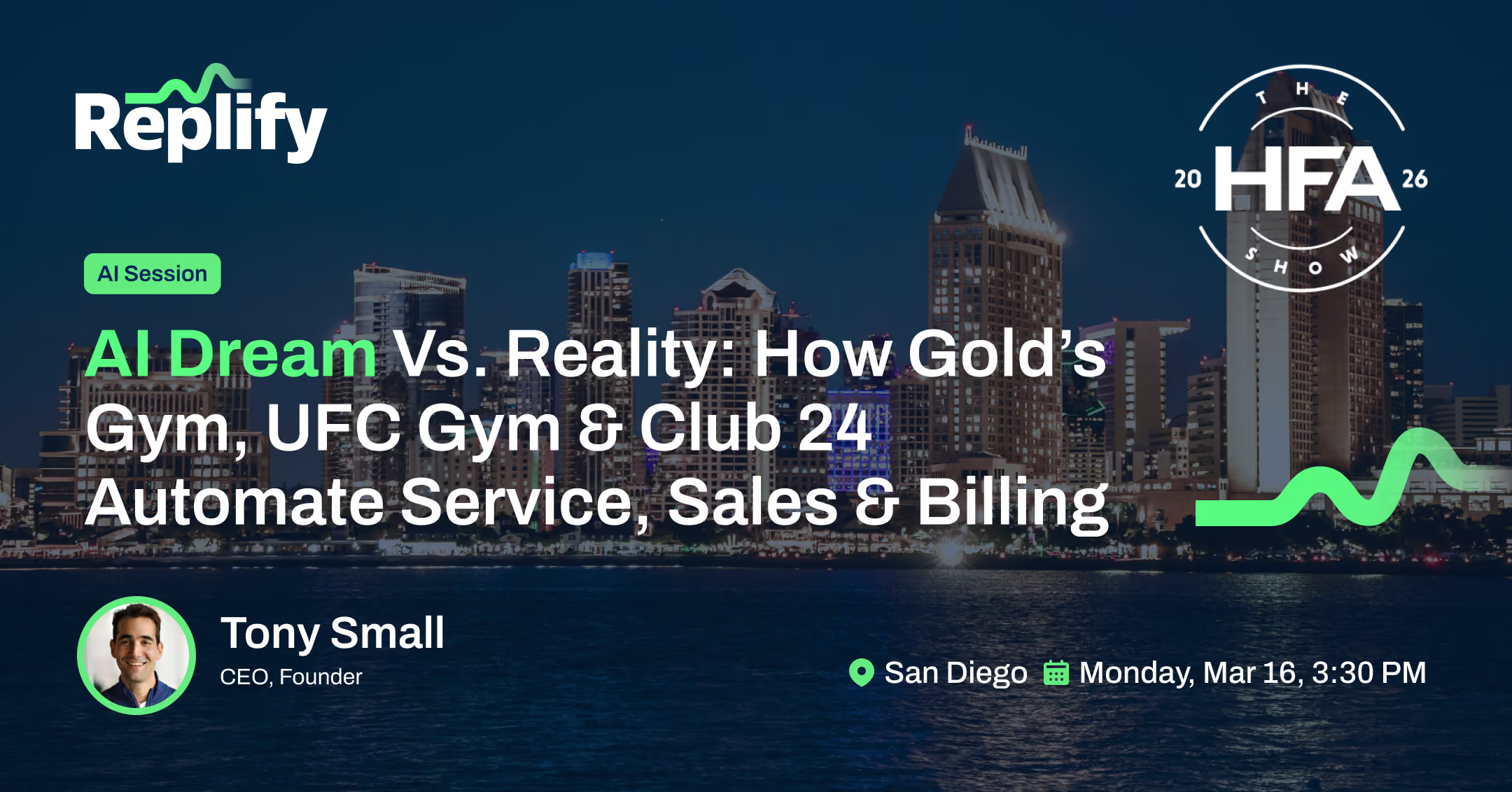
AI Dream vs. Reality: How Gold’s Gym, UFC Gym & Club 24 Automate Service, Sales & Billing
At the 2026 HFA Show in San Diego, Replify CEO and co-founder Tony Small took the stage for a 38-minute AI presentation that walked the room through a complete, practical picture of where AI stands right now for gym operators, what it can genuinely do today, where it still falls short, and what real results look like when you deploy it the right way.
Three multi-location operators joined him to share their own experiences: Chris Prevatte from Gold's Gym DC Metro, Val Nepomuceno from Club 24 Concept Gyms, and Ryan Ensmann from Dynamic Fitness.
Ready to explore Replify's AI receptionist and AI sales suite for your multi-unit operation? Schedule a demo.
AI Is Powerful. It Is Also Not Perfect.
Tony opened the HFA session the way more AI presentations should: with a reality check.
He showed the audience an AI-generated video avatar of himself, created in about 10 minutes, delivering a presentation in fluent Spanish. The capability was impressive. Then he played a clip from a YouTube channel where a director tries to get AI actors to perform a simple comedy scene. The result was a disaster of body-switching, overacting, and robotic delivery.
The point was clear. If you push AI to the bleeding edge of what it can do right now, you will be disappointed. But if you look at the capabilities that were cutting-edge 12 to 18 months ago, those tools are now mature, reliable, and ready to drive real ROI.
"If you look at where AI was really at the forefront one year ago and you take those technologies, those are pretty well baked," Tony told the audience. "AI phone didn't exist two years ago. Now it does, and it works really, really well."
He also referenced a conversation from earlier that day at HFA where another panelist was asked whether their AI deployment had been ROI-positive. The answer was no, they were barely breaking even. Tony's point was not to scare the room, but to acknowledge that bad AI experiences are real, and that the difference between a positive and negative outcome usually comes down to where and how you deploy it.
Why Buying AI Software Is Harder Than Buying Regular Software
Before getting into solutions, Tony laid out the obstacles that make AI adoption uniquely challenging for gym operators:
The possibilities feel endless, which makes it hard to define a starting point. There are too many vendors making far-fetched claims that collapse once you get into implementation. There is genuine concern about the technology, combined with limited IT bandwidth on most gym teams. And the downside risk is real: poor results, low ROI, and staff complaints.
"Buying software already is hard," Tony said, "but buying AI software is dramatically harder."
His framework for navigating this was practical. Learn from other customers who have already deployed. Be skeptical but stay open. Pilot with a few locations rather than going all-in. Start simple. Avoid long-term contracts. And above all, do not let perfect be the enemy of good.
The Problem: What Actually Happens When Someone Calls Your Gym
To ground the conversation in real data, Tony presented findings from a secret shopping study Replify conducted across 105 fitness facilities and 30 different brands.
The team called each gym during open hours, posed as prospective members, asked about pricing and hours, and documented every step of the experience.
The findings painted a picture that most operators in the room recognized:
Only 31% of calls connected directly to a live person. 28% went to voicemail. 38% landed in a phone tree, with mixed results from there. 3% got no answer at all. When callers could reach a person, the average wait was 50 seconds from first ring to conversation. To put that in context, Tony had the audience sit in silence for 25 seconds, half the average wait, and the discomfort in the room was palpable.
Only 33% of staff who answered asked any qualifying questions. Only 33% invited the caller for a tour or visit. And the number that hit the hardest: only 12% of gyms followed up in any way after the call. No text, no email, no callback.
As Tony pointed out, most gyms have a solid process for web form leads. Those go into the CRM and trigger automated follow-up sequences. But phone leads, often the highest-intent prospects of all, disappear into thin air.
The Solution: What AI Actually Looks Like in a Gym
With the problem established, Tony shifted to what the solution looks like in practice, starting with the highest-value, lowest-risk use case: AI-powered inbound call handling.
He played a live call recording from Gold's Gym DC Metro. The AI answered, identified itself clearly, offered Spanish language support, captured the caller's name, asked whether they were a current member, provided hours, offered a free pass via text, answered questions about class offerings and pricing, and wrapped the call naturally. The entire interaction sounded fluid, professional, and human.
Tony shared data on how callers actually interact with AI. Replify handles approximately 10,000 calls per day across its customer base, which gives them a large dataset on real-world behavior. The breakdown falls into roughly three groups: about 25-30% of callers want nothing to do with AI and immediately ask for a live person (Replify accommodates this with instant live transfers), another 30% or so recognize they're talking to AI and respond in clipped, robotic phrases ("membership, free trial"), and the remaining third simply have a normal conversation.
Beyond inbound, Tony walked through the outbound use cases that are working right now for gym operators:
Sales follow-up. When a prospect submits a lead form during off-hours, AI can call them immediately to book a tour rather than waiting until the next business day.
Billing collections. Instead of staff manually calling hundreds of past-due members hoping a few answer, AI handles the outreach and connects members to billing when they are ready to resolve.
Member retention and winbacks. Reaching out to former members who already have a relationship with your brand.
Announcements and promotions. Getting the word out about new offerings via phone, layered on top of email and text campaigns.
He was equally direct about what does not work yet. Cold outbound calling, reaching out to lists of prospects with no existing relationship, is not something AI handles well today. The technology is not yet fluid enough to replicate the nuance of an experienced salesperson navigating a cold pitch.
Tony also covered the operational capabilities that matter most for multi-location operators: omnichannel support across phone, text, email, and chat; bidirectional inbound and outbound communication; centralized management with the ability to push changes across 5, 50, or 500 locations at once; deep CRM integrations (including ABC Fitness, HubSpot, GleanTap, and others); automated lead capture and calendar booking; configurable live transfer rules by time of day; and multilingual support in over 20 languages.
The Results: Three Operators, Real Numbers
The most compelling part of the HFA presentation was not Tony's data. It was the operators who took the stage to share what happened when they put this into practice.
Chris Prevatte, VP of Sales & Operations, Gold's Gym DC Metro
20 locations | ~50,000 members
Chris evaluated multiple AI vendors in 2024, splitting his locations between Replify and a larger competitor, five clubs each. The difference in customer service and partnership was, in his words, night and day. Two things set Replify apart: the speed of onboarding (fully operational within a week) and the team's CRM background, which meant they could speak his language when it came to integration and data flow.
The lead capture results were dramatic. Gold's Gym DC Metro went from roughly 150 to 200 total phone leads across all clubs to more than 1,000 per month. Some individual locations now pull 150 to 200 leads just from inbound calls that previously went unanswered.
But Chris pushed the technology further than anyone else on stage. He worked with Replify to build an internal, employee-facing AI agent loaded with the company handbook, operational procedures, billing processes, and HR policies. Every Gold's Gym DC Metro location now has this agent on the front desk desktop, available to any team member at any time.
"Use AI like an employee," Chris told the audience. "You've got to learn from it and you want to train it. It's not set it and forget it."
He also described using Replify for targeted promotional campaigns, building out custom AI agents with specific promotion knowledge and driving measurable results, including 10 attributable memberships from a single grand opening campaign.
Val Nepomuceno, Operations Leader, Club 24 Concept Gyms
7 locations
Val oversees everything at Club 24, from sales and retention to billing, maintenance, and technology systems. After evaluating multiple AI companies and running demos and trials, Club 24 chose Replify for the hands-on customer support and the ease of deploying across all seven locations.
Replify now handles all standard inbound inquiries: hours, holiday hours, pricing, promotions, general facility questions, after-hours calls, and door access issues. But the outbound capability is where Club 24 saw the biggest operational shift. Staff had been spending approximately 20 hours per month per location on past-due billing calls, texts, and emails. That work was offloaded entirely. Now, when the AI runs past-due campaigns, the phones light up with members proactively calling in to update their billing.
Total inbound time saved across all seven locations: over 400 hours per month. And during Black Friday, Replify executed more than 3,600 outbound calls across all locations in just five days.
Ryan Ensmann, Director of Marketing, Dynamic Fitness
3 locations | Houston, TX
Ryan's team runs a disciplined sales process. Their challenge was not closing. It was making sure every lead that tried to engage with them actually got captured. Paid marketing was driving inbound interest, but phone inquiries were falling through the cracks.
With Replify handling inbound calls, every inquiry is now answered, qualified, and logged. The increase in captured leads translated directly to increased sales, and Ryan's team has confidence that their marketing spend is not being wasted on leads that ring out to voicemail.
"One of the biggest things AI can do that is most impactful for the business is handling customer service," Ryan shared. "That's ensuring a consistent great experience for your members and prospects, but it's also alleviating additional work for your team so they can focus on delivering a better experience, keeping the clubs clean, engaging with your members."
The Q&A: Real Questions From Operators
The HFA session closed with audience Q&A that surfaced the practical concerns operators are actually thinking about.
How do you handle unexpected closures like weather or power outages? Tony shared a real example from the day before the presentation: a UFC Gym in Hawaii lost power unexpectedly. The team updated their AI phone greeting in about 10 seconds. During the January 2026 East Coast snowstorms, Replify's call volume spiked 4x as members called to ask whether their gym was open. AI handled every call instantly with accurate, updated information.
What should a live transfer rate look like? Transfer rates across Replify's customer base range from 30% to 70%, depending on how each operator configures their system. Some prefer a soft transfer that asks the caller's issue first (which often allows the AI to resolve it), while others transfer immediately when someone requests a live person.
How do you deal with spam labeling on outbound calls? Replify handles the 10DLC registration process with wireless carriers on the customer's behalf and works to ensure calls display the correct caller ID. The goal is to show the gym's name, or at minimum the correct phone number, and avoid any spam flagging.
How long does integration take? As fast as two days for gyms using CRM systems Replify has already integrated with. A few weeks for custom integrations or operators who want to build out a comprehensive knowledge base before going live.
What makes operators successful with AI? Tony's answer was simple: openness to trying something new, combined with a willingness to treat it like an ongoing process rather than a one-time installation.
Watch the Full 38-Minute HFA AI Presentation
This article covers the key themes, but the full session has more: the live AI call demo, Tony's complete data walkthrough, extended operator commentary, and the full audience Q&A.
.avif)
Automated Member Services | The Complete Guide
The fitness industry is experiencing a transformation in how member services are delivered. According to the State of Health & Wellness 2025 report, the global wellness industry has reached $6.8 trillion, with fitness facilities facing mounting pressure to scale operations while maintaining personalized member experiences. Traditional member services teams struggle to keep pace with 24/7 member demands, billing inquiries, and service requests across multiple communication channels.
Automated member services represent the solution to this challenge. By leveraging AI-powered automation for gyms, fitness businesses can handle member communications, billing inquiries, and service requests without expanding their staff headcount. This guide explores how automated member services work, the specific applications for billing and collections, and how to select the right member services software for your fitness facility.
What Are Automated Member Services?
Automated member services use artificial intelligence to handle routine member communications and service requests that traditionally required human staff. Unlike simple chatbots for gyms that follow rigid scripts, modern automated member services can understand natural language, access member account information, and take action on member requests across multiple channels including phone calls, text messages, emails, and web chat.
For fitness businesses, automated member services typically handle:
- Membership inquiries and lead qualification
- Billing questions and payment processing assistance
- Class scheduling and reservations
- Account updates and membership changes
- Collections outreach and payment arrangements
- Facility information and hours inquiries
- Guest pass requests and follow-up
The key differentiator of effective automated member services is the AI-to-human handoff capability. When a member request requires human judgment or falls outside the AI's scope, the system seamlessly transfers the conversation to a staff member with full context. This approach ensures members receive immediate responses to routine questions while complex issues still receive personalized human attention.
Real-world results demonstrate the impact of automated member services. Gold's Gym DC Metro achieved 10X lead growth by implementing AI-powered member services that qualified leads and scheduled tours automatically. Seattle Sun Tan automated 74% of member communications across their 50+ locations, allowing their small team to manage a multi-location operation efficiently.
Automated Member Services for Billing Operations
Billing inquiries consume significant staff time at fitness facilities. Members call with questions about charges, payment methods, billing dates, and account balances. Each billing cycle generates a predictable surge of inquiries that strain front desk teams and distract from in-person member service.
Automated member services transform billing operations by handling common billing questions instantly. When a member texts asking why they were charged, the AI for billing and payments accesses their account information and provides a detailed explanation of the charge, including the membership type, billing date, and amount. If a member's payment failed, automated member services can reach out proactively via text or call to request an updated payment method.
The billing workflow typically operates as follows:
- Member initiates contact via their preferred channel (call, text, email)
- AI verifies member identity and accesses account information
- AI answers billing question or explains charge details
- For payment updates, AI sends secure payment link
- System confirms successful payment and updates account
- AI follows up to ensure member satisfaction
It's important to note that effective automated member services for billing should not process payments directly. Instead, the system should send secure payment links that integrate with your existing payment processor. This approach maintains PCI compliance while enabling automated billing assistance.
SWEAT440 reduced operational costs by 53% after implementing automated member services for billing operations. The AI handled routine billing inquiries automatically, allowing their team to focus on high-value member interactions and program development. Members received immediate answers to billing questions 24/7, improving satisfaction while reducing support tickets.
Automated Member Services for Collections
Collections represent one of the most time-intensive and uncomfortable tasks for fitness facility staff. Failed payments require persistent outreach across multiple attempts and channels. Staff members often delay collections calls or struggle to maintain consistent follow-through, resulting in write-offs and revenue leakage.
Automated member services excel at collections because AI doesn't experience call reluctance or fatigue. The system conducts persistent, professional outreach across every available channel until the member responds. A typical collections workflow includes:
Day 1: Text message notification of failed payment with secure payment link
Day 2: Email reminder with payment options and account status
Day 4: Phone call to discuss payment and offer assistance
Day 7: Voicemail with urgency messaging and final notice
Day 10: Live transfer to staff member if payment not resolved
The tone and messaging adapt based on the member's payment history and engagement. Long-term members with their first failed payment receive friendly reminders, while chronic late payers receive firmer messaging about account suspension.
Arena Sports achieved 60% automation of collections outreach with 10X ROI from their automated member services implementation. The AI conducted consistent follow-up on every failed payment, recovering revenue that previously would have been written off. Staff intervention was only required for the small percentage of members who needed payment plans or special arrangements.
The psychological advantage of automated member services for collections cannot be overstated. Members often ignore calls from staff names they recognize, but respond to persistent automated outreach. The system can call at optimal times, leave detailed voicemails, and follow up via text if the member doesn't answer. This multi-channel persistence, combined with professional tone, achieves higher recovery rates than traditional collections approaches.
Choosing the Right Automated Member Services Software
Selecting automated member services software requires evaluating capabilities across several dimensions. Not all solutions are created equal, and choosing the wrong system can result in frustrated members and staff while failing to deliver operational efficiency gains.
Essential Capabilities for Automated Member Services Software
True AI vs. Simple Chatbots: Many vendors claim to offer automated member services but actually provide basic chatbots with decision-tree logic. True AI-powered software for gyms can understand natural language variations, extract intent from conversational messages, and adapt responses based on context. Test this by asking the same question in multiple ways during vendor demonstrations.
Multi-Channel Communication: Members communicate via their preferred channels, which vary by generation and situation. Your automated member services software must handle phone calls, text messages, emails, and web chat from a single platform. The system should maintain conversation context across channels, so a member can start via text and continue via phone without repeating information.
Integration with Your Tech Stack: Automated member services software must integrate with your club management system, payment processor, scheduling platform, and CRM. Without real-time access to member data, the AI cannot provide accurate information or take action on requests. Verify specific integrations with your existing software vendors before committing.
AI-to-Human Handoff: The most critical capability is seamless transfer to human staff when needed. The system should recognize when a conversation requires human judgment, provide staff with full context from the AI conversation, and enable easy takeover without interrupting the member experience. Poor handoff implementation results in frustrated members who must repeat information.
Compliance and Security: Automated member services handle sensitive member information including payment details, health data (in some cases), and personal contact information. Verify that your software provider maintains SOC 2 compliance, uses encryption for data transmission and storage, and follows industry best practices for data protection.
Industry Specialization Matters for Automated Member Services
Generic automated member services platforms lack the fitness industry knowledge required to handle member conversations effectively. Fitness-specific automated member services software understands industry terminology, membership models, billing cycles, and common member requests without extensive customization.
Replify pioneered automated member services specifically for health clubs and gyms, building AI trained on millions of fitness member conversations. The system understands that "freeze" means membership suspension, "PT" refers to personal training, and "guest pass" means complimentary trial visit. This industry knowledge eliminates the months of training required with generic platforms.
The fitness industry specialization extends to understanding seasonal patterns, billing cycles around the first of the month, New Year resolution rushes, and summer slowdowns. Automated member services built for fitness adapt messaging and prioritization based on these industry rhythms without manual configuration.
Automated Member Services Implementation Strategy
Successful implementation of automated member services requires a phased approach that builds staff confidence and member adoption simultaneously. Rushing full deployment often results in gaps in coverage and negative member experiences that damage the technology's reputation internally.
Phase 1: Lead Qualification and Scheduling
Start with automated member services for lead qualification. Configure the AI to answer common questions about membership options, pricing, facilities, and class schedules, then schedule tours and guest visits automatically. This application delivers immediate value by ensuring no lead goes unresponded while your existing member service quality remains unchanged.
Track metrics including lead response time, tour scheduling rate, and lead-to-member conversion. Compare these to your historical baseline to quantify the impact. This data builds organizational confidence for expanding automated member services to other areas.
Phase 2: Billing and Account Inquiries
Once lead management is optimized, expand automated member services to handle billing and account questions from existing members. Start with simple inquiries about charge amounts, billing dates, and payment methods. Monitor the AI's response accuracy and member satisfaction before enabling payment link sending and failed payment follow-up.
Create clear escalation paths for billing disputes, refund requests, and complex account issues. The AI should recognize these situations and immediately transfer to staff rather than attempting resolution. Track what percentage of billing conversations resolve without staff intervention to measure the efficiency gain.
Phase 3: Collections Automation
After billing inquiries are handled smoothly, implement automated member services for collections outreach. Configure the multi-touch sequence including texts, emails, calls, and voicemails. Set clear rules for when the AI should attempt live transfer to staff versus leaving a message.
Monitor recovery rates closely and compare to your pre-automation baseline. Most fitness facilities see significant improvement in recovery rates because automated member services provide consistent, persistent follow-up on every failed payment rather than staff selectively pursuing collections.
Phase 4: Full Member Service Automation
The final phase extends automated member services to handle the full spectrum of member requests including schedule changes, class reservations, guest passes, and facility questions. This phase requires the most comprehensive integration with your club management system and represents the highest potential efficiency gain.
Maintain the AI-to-human handoff as your safety net. Staff should always be available to take over conversations when members request human assistance or when the AI encounters unfamiliar requests. Over time, the system learns from these handoffs and expands its capability.
Measuring Automated Member Services Success
Implementing automated member services without clear metrics makes it impossible to quantify ROI or identify improvement opportunities. Establish baseline measurements before implementation and track progress against these benchmarks.
Key Performance Indicators for Automated Member Services
Automation Rate: The percentage of member conversations handled completely by AI without staff intervention. Industry leaders achieve 60-75% automation rates after full implementation. Start by tracking automation rates by conversation type (billing, scheduling, general questions) to identify areas needing improvement.
Response Time: Measure the time between member inquiry and initial response. Automated member services should achieve sub-60-second response times 24/7 across all channels. Compare this to your baseline, which typically ranges from hours to days for email and overnight for after-hours calls.
Member Satisfaction: Survey members after automated member services interactions to measure satisfaction. Track this separately from human interactions to ensure the AI experience meets quality standards. Leading implementations achieve satisfaction scores within 5-10% of human interactions.
Staff Time Savings: Calculate staff hours saved by multiplying automation rate by average handle time for each conversation type. Multiply this by your staff's hourly cost to determine dollar savings. SWEAT440 documented 53% cost reduction by tracking this metric systematically.
Revenue Impact: For collections automation, measure recovery rate improvement and calculate recovered revenue. For lead management, track conversion rate changes and additional membership revenue. Gold's Gym DC Metro's 10X lead growth demonstrates the revenue potential when automated member services optimize lead response.
The Future of Automated Member Services
The fitness industry is moving rapidly toward comprehensive automated member services as AI capabilities expand and member expectations shift. The State of Health & Wellness 2025 report identifies AI-powered operations as a critical trend, with fitness facilities needing automation to compete in an increasingly sophisticated market.
Future developments in automated member services will include:
Predictive Member Service: AI that anticipates member needs based on behavior patterns and reaches out proactively. When a member's check-in frequency drops, automated member services will initiate retention conversations before the member ghosts.
Voice Cloning for Branded Experiences: Custom AI voices that match your brand personality and maintain consistency across all automated member services interactions. This technology is already available and will become standard.
Video-Based Automated Member Services: AI assistants that conduct video calls for tour scheduling and member onboarding, providing face-to-face interaction without requiring staff availability.
Multilingual Support: Automated member services that seamlessly switch between languages based on member preference, expanding accessibility without hiring multilingual staff.
The competitive advantage belongs to fitness facilities that implement automated member services now rather than waiting for the technology to mature further. Current AI capabilities already deliver significant operational efficiency and member experience improvements, with the gap between early adopters and laggards widening monthly.
Get Started with Automated Member Services
Replify provides the leading automated member services platform built specifically for fitness businesses. Unlike generic AI chatbots adapted for fitness, Replify was designed from the ground up for gyms, health clubs, studios, and wellness facilities.
The platform handles the complete spectrum of automated member services including lead qualification, billing support, collections outreach, scheduling, and general member inquiries. The AI conducts conversations via phone, text, email, and web chat with seamless handoff to your team when human judgment is required.
Fitness businesses using Replify achieve dramatic results:
- Gold's Gym DC Metro: 10X lead growth through automated lead response and qualification
- SWEAT440: 53% operational cost reduction from automated member services
- Seattle Sun Tan: 74% automation across 50+ locations with a small team
- Arena Sports: 60% automation rate with 10X return on investment
- Read these Replify AI Case-Studies and More
The implementation process takes 2-4 weeks from kickoff to launch, with Replify's team handling integration with your club management system, payment processor, and scheduling platform. The AI is pre-trained on fitness industry conversations, eliminating months of training time required with generic platforms.
Automated member services represent the most significant operational efficiency opportunity in the fitness industry today. Facilities that implement AI-powered automation gain competitive advantage through superior member service at lower cost, while competitors struggle with staffing challenges and limited hours of operation.
Contact Replify to discuss how automated member services can transform your member experience while reducing operational costs. The fitness facilities that automate now will dominate their markets as member expectations continue rising and labor costs increase.
Health Club Billing Software: The Complete Guide to Getting Paid on Time in 2026
Billing is the revenue engine of every health club. Get it right, and cash flow is predictable, members stay happy, and your team can focus on the floor instead of chasing payments. Get it wrong, and you're bleeding revenue every month through failed payments, manual follow-ups, and accounts that quietly slip into collections.
This guide covers everything health club operators need to know about billing software in 2026: what to look for, how the leading platforms compare, where AI is changing the game, and how to build a billing stack that actually recovers the revenue you've earned.
Whether you run a single-location health club or manage dozens of facilities, the billing decisions you make today directly impact your bottom line for years to come.
Why Health Club Billing Is Uniquely Challenging
Health club billing is not like billing in most other industries. The recurring membership model, combined with high member volume and frequent payment method changes, creates a set of challenges that generic payment processors were never designed to handle.
Most health clubs deal with a predictable set of billing headaches. Declined credit cards are the most common, driven by card expirations, lost or stolen cards, and insufficient funds.
Then there is the collections problem. When a member's payment fails, someone needs to reach out, and quickly. The longer a past-due balance sits, the less likely it is to be collected. Most clubs rely on front desk staff to make these calls, which means those calls compete with every other task demanding their attention: check-ins, tours, phone inquiries, and member questions. The calls rarely get made, and revenue disappears.
Add to that the operational complexity of managing freezes, cancellations, family accounts, annual fees, proration, tax calculations, and different billing dates across your membership base, and it becomes clear why health club billing software exists as its own category.
What to Look for in Health Club Billing Software
Not all billing platforms are created equal, and the features that matter most depend on your club's size, membership model, and growth plans. That said, there are core capabilities every health club billing system should deliver.
Automated Recurring Billing
This is table stakes. Your software should automatically process EFT/ACH and credit card payments at whatever interval your memberships require: monthly, biweekly, weekly, or annual. It should handle proration for mid-cycle joins, apply rate changes at renewal, and process annual fees on schedule without manual intervention.
Failed Payment Recovery (Dunning)
When a payment declines, your software needs to retry automatically on a configurable schedule. The best platforms also update expired card information through account updater services that pull new card details from the card networks before the payment even fails.
Collections Follow-Up
This is where most billing platforms fall short. Traditional health club billing software retries the payment and maybe sends an automated email. But emails are easy to ignore. The clubs recovering the most revenue are the ones reaching members across multiple channels: phone, text, and email.
This is exactly where AI-powered billing tools are making the biggest impact. Replify's AI billing and collections platform automates collections outreach via phone calls, text messages, and emails, reaching past-due members at scale without adding staff hours. Club 24 Concept Gyms, for example, uses Replify to execute over 6,000 automated billing and service calls per month across their locations.
PCI Compliance and Payment Security
Your billing platform must be PCI DSS compliant. This means it tokenizes and encrypts cardholder data, processes transactions through a certified payment gateway, and never stores raw card numbers on your systems. Non-compliance puts your club at risk of data breaches, fines, and loss of the ability to process card payments altogether.
Member Self-Service
Members should be able to update their own payment information through a portal or mobile app without calling your front desk. Every barrier you remove from the payment update process directly reduces your decline rate. The best platforms let members update cards, view billing history, download receipts, and manage freezes or cancellations on their own.
Reporting and Revenue Visibility
You need clear reporting on collections rates, aging balances, decline trends, revenue per member, and payment method breakdowns. These reports should update in real time, not require a manual export. Operators managing multiple locations need reporting that rolls up across all clubs while still allowing location-level drill-down.
Integration with Your Management Software
Billing does not exist in a vacuum. Your billing platform needs to sync with your membership management system so that member status, billing status, and access control all stay aligned. When a member's payment fails, their access status should update automatically. When they resolve the balance, access should restore without a phone call to your front desk.
Health Club Billing Software Comparison: 2026
The health club billing landscape includes dedicated billing providers, all-in-one management platforms with built-in billing, and newer AI-powered collections tools that layer on top of your existing stack. Here is how the major players compare.
Dedicated Billing and Payment Providers
Jonas Fitness (Compete) Jonas Fitness has been in the health club space for decades. Their Compete platform combines membership management with billing services, and their company founder actually pioneered EFT technology for the fitness industry. They offer dedicated billing specialists and a member services call center. Best suited for mid-size to large health clubs that want a single vendor handling both software and billing services.
ASF Payment Solutions (ClubOS) ASF has over 50 years in fitness payment processing and powers the billing side of ClubOS. They report that customers typically achieve a 95%+ collection rate within 30 days. Their integration with ClubOS means billing, memberships, and point-of-sale transactions all flow through one system. A strong option for health clubs that want tight coupling between their CRM and payment processing.
Twin Oaks Twin Oaks positions itself as a billing-first platform with management software built around it. They offer managed billing services, meaning their team handles returns, payment retries, and member outreach on your behalf. Their hands-on support model appeals to clubs that want to outsource the billing headache entirely. They also handle data migration from previous providers.
eFit Financial eFit combines gym management software with managed billing services and PCI Level I compliant payment processing. They serve a wide range of facilities, from boutique studios to large health clubs and even non-fitness membership businesses. Their managed billing service handles member payment issues directly, keeping your front desk out of the collections loop.
ABC Fitness ABC Fitness is one of the largest fitness software providers globally. Their platform covers full-service billing, reporting, and facility management, serving everything from independent gyms to major franchise brands. Their payment processing integrates directly with their Ignite management platform. Best suited for large operators and franchise groups that need enterprise-scale billing.
All-in-One Platforms with Built-In Billing
Mindbody Mindbody includes payment processing within its broader platform. It handles recurring memberships, class packages, and retail transactions. Widely used by boutique studios and wellness businesses. Billing is adequate for most small to mid-size operations but may lack the advanced collections capabilities that larger health clubs need. Mindbody integrates with Replify for AI-powered lead follow-up and billing outreach.
ClubReady ClubReady is built for larger fitness operations and includes integrated billing with robust automation and reporting. Their platform handles recurring billing, failed payment management, and member account administration. ClubReady integrates with Replify for automated AI sales and collections follow-up.
PushPress PushPress offers automated billing through Stripe integration, making it a flexible choice for independent gyms and boutique facilities. Their modular pricing means you can start with basic billing and scale up. PushPress integrates with Replify for AI-powered member communication.
Daxko Daxko (formerly Club Automation / Motionsoft) is purpose-built for YMCAs, JCCs, and community recreation centers. Their billing capabilities are tailored to the unique needs of non-profit fitness facilities, including family memberships, program registrations, and sliding scale pricing. Daxko integrates with Replify for AI sales and service automation.
GymMaster GymMaster provides cloud-based management software with integrated billing and 24/7 access control. Their platform handles automated billing, failed payment notifications, and member self-service portals. A solid choice for small to mid-size health clubs looking for an affordable all-in-one solution.
AI-Powered Billing and Collections
Replify Replify represents a fundamentally different approach to health club billing follow-up. Rather than relying on automated emails or manual staff calls, Replify's AI makes outbound phone calls, sends text messages, and emails past-due members automatically. It can also live transfer members to staff when needed and send payment links directly.
This matters because phone calls and text messages have dramatically higher response rates than email for collections. Most health clubs see email open rates under 30 percent on billing notices. Phone calls and texts reach members where they actually respond.
Club 24 Concept Gyms deployed Replify to handle billing collections across their locations and now automates over 6,000 calls per month, recovering revenue that previously fell through the cracks. The AI handles the repetitive outreach at scale while staff focus on in-person member engagement.
Replify integrates with most major health club management platforms, meaning it layers on top of your existing billing system to handle the collections communication your software alone cannot do. Starting at $300/month per location, it costs a fraction of a dedicated collections hire or outsourced agency.
Note: Replify does not process payments directly. It automates the billing communication and collections outreach (calls, texts, emails, payment links, live transfers) that drives members to resolve their balances. It works alongside your existing billing platform.
How AI Is Changing Health Club Billing and Collections
The biggest shift in health club billing in the last two years has not been in payment processing. It has been in collections communication. Traditional billing software handles the transaction. AI handles the conversation.
Here is why that distinction matters. When a member's payment fails, the transaction side is straightforward: retry the card, apply late fees if configured, flag the account. Every major billing platform does this. The hard part is what comes next: actually reaching the member, having a conversation, and getting them to update their payment method or resolve the balance.
Historically, clubs had three options for this: front desk staff (who are already busy), outsourced collections agencies (expensive and impersonal), or automated email sequences (low response rates). None of these are great.
AI-powered tools like Replify create a fourth option. The AI places outbound phone calls to past-due members, delivers a friendly and consistent message, answers questions, and can live transfer to staff or send a payment link on the spot. It follows up via text and email on a scheduled cadence. And it does this across hundreds or thousands of accounts simultaneously, something no front desk team can match.
The results are measurable. Clubs using AI-powered billing follow-up consistently report higher contact rates, faster balance resolution, and recovered revenue that more than covers the cost of the tool. For a deeper look at how this works in practice, the Club 24 Concept Gyms case study breaks down the numbers behind 6,000+ automated monthly calls.
This is not about replacing your billing software. It is about adding a communication layer that your billing software does not provide. The clubs recovering the most revenue in 2026 are using both: a solid billing platform for transaction processing and an AI tool for collections outreach.
Building Your Health Club Billing Stack
The most effective billing setup for health clubs in 2026 is not a single platform. It is a stack of tools working together, each handling what it does best.
Layer 1: Membership Management and Billing Core
This is your primary platform: Jonas Fitness, ABC Fitness, ClubReady, Mindbody, PushPress, Daxko, or similar. It handles member records, recurring billing, payment processing, and access control. Choose based on your club size, facility type, and integration needs.
For a broader comparison of management platforms across all categories, see our complete guide to the best software for fitness studios and health clubs.
Layer 2: AI-Powered Collections and Communication
This is where Replify's AI billing and collections fits. It connects to your management platform, identifies past-due accounts, and handles the outreach automatically via phone, text, and email. It also handles inbound calls from members responding to billing notices, resolving questions without tying up your front desk.
Layer 3: Payment Processing
Most management platforms include integrated payment processing (through partners like Stripe, ASF, or proprietary gateways). If your platform does not, you will need a standalone processor. Stripe is the most flexible option for health clubs that need custom billing logic. Authorize.net and Paysafe are also commonly used in the fitness space.
Layer 4: Reporting and Analytics
Your billing platform should provide core reporting. For operators that need advanced analytics, business intelligence tools like Looker, Tableau, or Power BI can pull billing data into custom dashboards that combine revenue metrics with operational data like attendance and retention.
Health Club Billing Best Practices
Software is only half the equation. How you configure and manage your billing processes matters just as much as the platform you choose.
Set Up Account Updater from Day One
Account updater services pull refreshed card information from Visa and Mastercard's networks before a payment attempt fails. If your billing platform offers this feature, turn it on immediately. It is the single highest-ROI billing feature available, preventing declines before they happen.
Build a Multi-Channel Dunning Sequence
Do not rely on email alone for failed payment follow-up. The most effective dunning sequences use a combination of channels over a 30-day window: an automated email on day one, a text message on day three, a phone call on day five, another text on day ten, and escalating from there. AI tools like Replify can run this entire sequence automatically.
Make Payment Updates Frictionless
Every extra step in the payment update process costs you revenue. Ensure your member portal allows one-click card updates. Include a direct payment link in every billing communication. The easier you make it, the faster members resolve their balances.
Track Your Collections Rate Religiously
Your collections rate (the percentage of billed revenue actually collected) is the single most important billing metric. Top-performing health clubs collect 96 to 99 percent of billed revenue. If you are below 95 percent, there is significant revenue to recover, and it is almost certainly a communication problem, not a payment processing problem.
Separate Billing Communication from Marketing
Members tune out billing notices that look like marketing emails. Your billing communications should be simple, direct, and clearly about their account. Use a different sender name, keep the design minimal, and lead with the action you need them to take.
Do Not Wait to Follow Up
The probability of collecting a past-due balance drops sharply after 30 days. By 90 days, most balances become uncollectable without a formal collections effort. Start outreach within 24 to 48 hours of a failed payment. AI tools make this possible at scale without requiring staff attention.
Health Club Billing and the Shift Toward AI-First Operations
The health and wellness industry is a $6.8 trillion global market, and the fitness segment is evolving fast. Trends like the "gym-as-clinic" model, the rise of Everything Gyms, and the women's health boom are reshaping how clubs operate and serve members. As clubs expand their services and revenue streams, billing complexity grows with them.
This is why more operators are looking at AI not just for billing, but across their entire operation. The same AI that handles collections calls can also serve as a 24/7 AI receptionist and sales agent, answering phones, booking tours, following up on leads, and routing inquiries. Gold's Gym DC Metro captured nearly 10X more leads after deploying Replify. Arena Sports reported a 10X ROI. SWEAT440 reduced customer service costs by 53 percent across their franchise locations.
The clubs that thrive in 2026 and beyond will be the ones that treat billing not as a back-office function, but as a revenue recovery operation. And the technology to automate that operation is available now.
Frequently Asked Questions About Health Club Billing Software
What is health club billing software?
Health club billing software automates the process of charging members for recurring memberships, processing one-time payments, managing failed transactions, and handling collections follow-up. It typically integrates with a club's membership management system to keep billing status and member access in sync.
How much does health club billing software cost?
Costs vary widely by platform and club size. All-in-one management platforms with billing range from $99 to $500+ per month depending on features and member count. Dedicated billing services often charge per-transaction or per-member fees. AI billing and collections tools like Replify start at $300 per month per location. Most health clubs spend $300 to $1,000 per month total on billing-related software and services.
What is the best billing software for health clubs?
There is no single best platform for every club. Large health clubs often use Jonas Fitness, ABC Fitness, or Twin Oaks for their managed billing services. Mid-size clubs frequently rely on ClubReady or Mindbody. For collections follow-up specifically, Replify's AI billing platform is the leading solution for automated phone, text, and email outreach on past-due accounts.
What is the difference between billing software and collections software?
Billing software processes transactions: charging cards, processing ACH, managing subscriptions. Collections software handles the outreach when those transactions fail: calling members, sending texts, emailing reminders, and facilitating payment resolution. Most billing platforms include basic collections (email reminders and auto-retries). AI-powered tools like Replify add phone calls, texts, live transfers, and payment link delivery on top of that.
Can AI really handle billing collections calls for a health club?
Yes. AI has reached the point where it can place outbound phone calls, deliver natural-sounding billing messages, answer member questions, send payment links, and live transfer to staff when needed. Club 24 Concept Gyms processes over 6,000 automated billing and service calls per month using Replify's AI, with consistent messaging across every call.
Does Replify replace my existing billing software?
No. Replify does not process payments. It automates the billing communication layer: outbound calls, texts, emails, payment links, voicemails, and live transfers to staff. It works alongside your existing billing and membership management platform (Mindbody, ClubReady, PushPress, ABC Fitness, Jonas Fitness, Daxko, and others) to recover revenue that billing software alone cannot.
How do I reduce my health club's decline rate?
The most effective strategies are enabling account updater services (which refresh expired card details automatically), making it easy for members to update payment methods through a self-service portal, sending proactive billing reminders before the charge date, and following up quickly on failed payments through phone and text outreach. Using an AI tool like Replify for multi-channel follow-up dramatically improves contact rates and balance resolution.
What collections rate should my health club target?
Top-performing health clubs collect 96 to 99 percent of billed revenue. If your collections rate is below 95 percent, you are leaving significant revenue on the table, and the gap almost always comes from inadequate follow-up on failed payments rather than problems with your payment processor.
What integrations matter most for health club billing?
The most critical integration is between your billing system and your membership management platform to keep billing status and member access synchronized. Beyond that, integration with a CRM, access control system, and an AI communication tool like Replify ensures that billing events trigger the right downstream actions, from member communication to access restriction.
Should I outsource health club billing or keep it in-house?
It depends on your resources and scale. Outsourced billing services (like those offered by Jonas Fitness and Twin Oaks) provide managed payment processing and member outreach, which can be valuable if you lack dedicated billing staff. However, outsourced services can be expensive and impersonal. AI-powered tools offer a middle ground: automated outreach at scale without the cost of a full-service billing agency or additional headcount.
Looking for a broader view of the fitness software landscape? Read our complete guide to the best software for fitness studios and health clubs.
Ready to automate your billing collections? Book a Replify demo and see how AI-powered outreach can recover the revenue your billing software misses.

The HFA Show 2027 | Complete Attendee Guide to Las Vegas & Mandalay Bay
Looking for the 2026 guide? Read the HFA Show 2026 Overview & Attendee Guide here.
The HFA Show is heading to Las Vegas in 2027. After a memorable run in San Diego for 2026, the fitness industry's largest annual gathering moves to Mandalay Bay for 2027, bringing thousands of gym owners, studio operators, equipment manufacturers, and technology providers together under one massive roof. Here's everything you need to know about attending The HFA Show 2027, from registration and travel logistics to venue details, weather tips, and making the most of your time in Vegas.
Key HFA Show 2027 Details at a Glance
Dates: March 10-12, 2027
Venue: Mandalay Bay Convention Center, Las Vegas, Nevada
Host Organization: Health & Fitness Association (HFA)
Address: 3950 South Las Vegas Boulevard, Las Vegas, NV 89119

What Is the Health & Fitness Association?
The Health & Fitness Association (HFA) is the leading trade organization for the global fitness industry, representing gyms, health clubs, fitness studios, and wellness businesses worldwide. Formerly known as IHRSA, the HFA's mission is to grow, promote, and protect the industry while advancing global health through physical activity.
The HFA community includes operators of all sizes, from single-location boutique studios to multi-national health club chains, along with the equipment manufacturers, technology providers, and service companies that support them.
The Fitness Industry in 2027: Why This Year Matters
The fitness industry is riding the longest sustained growth streak in its history. U.S. gym membership hit a record 77 million people in 2024, up 20% from 2019, and membership growth has continued to accelerate through 2025 and into 2026. Roughly one in four Americans (24.9% of the population aged six and older) now belongs to a gym, studio, or fitness facility.
U.S. fitness industry revenue has expanded to approximately $47 billion, with more than 114,000 fitness clubs operating nationwide. Globally, the health and fitness club market was valued at $121 billion in 2024, with projections to nearly double by 2032.
Several forces are shaping the conversation heading into 2027:
The $6.8 trillion global wellness industry continues to reshape what gyms look like and what services they offer. GLP-1 medications are changing how consumers think about weight management and fitness, pushing operators to rethink programming and member engagement. The "gym-as-clinic" model is gaining traction, with more facilities integrating health screenings, recovery services, and preventive care. The "Everything Gym" trend is accelerating, with operators bundling fitness, wellness, nutrition, and social experiences under one roof. And the women's health boom is creating entirely new programming categories and revenue streams.
Meanwhile, according to research from Datagonist and FIT-C (Q1 2026, n=2,500), the total fitness market opportunity is $128.4 billion, with current members representing $95.6 billion of that. Former members represent a $27 billion recapture opportunity, with 26.5 million Americans likely to rejoin a fitness facility. The top cancellation reasons remain cost (34%), free alternatives (23%), and low usage (20%).
For operators looking to capitalize on this growth, the key challenge is converting the 75% of Americans who still don't belong to a fitness facility and recapturing the millions who have lapsed. That's where AI-powered solutions like Replify's AI receptionist and sales agent come in, helping facilities respond to every lead 24/7 across phone, text, and email without ever missing a call or inquiry.
What Is The HFA Show?
The HFA Show is the must-attend annual conference and trade show where the global health and fitness community comes together. It brings together thousands of fitness professionals for education sessions, keynote presentations, hands-on workshops, and one of the largest trade show floors in the industry.
Here's what makes it worth attending:
Learn from the best. Dive into hands-on training sessions and breakout workshops covering everything from sales and marketing to programming, technology, leadership, and member retention.
See what's next. The trade show floor features hundreds of exhibitors showcasing the latest equipment, software, programming, and services, including AI for gyms and fitness studios.
Build your network. The HFA Show is where operators, vendors, consultants, and investors connect. Many of the most impactful business relationships in fitness start in the hallways and after-hours gatherings at this event.
Get energized. Between early morning workouts hosted by exhibitors, keynote presentations from visionary speakers, and the general buzz of being surrounded by thousands of people who love fitness, you'll leave recharged and full of ideas.
The HFA Show 2027 Venue: Mandalay Bay Convention Center
The 2027 HFA Show takes place at the Mandalay Bay Convention Center, one of the largest and most modern convention facilities in North America.
The numbers tell the story. Mandalay Bay's convention center spans 2.1 million square feet of total meeting and exhibit space, with approximately 1.1 million square feet dedicated to exhibit space alone. The facility includes roughly 75 distinct breakout and meeting rooms, multiple ballrooms (including the South Pacific Ballroom at approximately 44,000 square feet and the Islander Ballroom at approximately 31,000 square feet), and the Michelob Ultra Arena, which can seat up to 12,000 for general sessions or special events.
The convention center recently completed a $100 million renovation that updated all pre-function spaces, meeting rooms, and a million square feet of exhibit space with modern design, advanced technology, customizable LED display walls, and refillable water stations. The facility also features one of the nation's largest rooftop solar installations, with more than 26,000 panels.
What makes Mandalay Bay especially convenient for conference attendees is that it's an integrated resort. Your hotel, the convention center, restaurants, entertainment, and even an 11-acre beach with a wave pool are all connected under one complex. The resort includes roughly 4,750 room accommodations across Mandalay Bay (3,209 rooms), W Las Vegas (1,117 suites), and Four Seasons (424 rooms), plus a 135,000-square-foot casino, a full spa and fitness center, and more than two dozen restaurants.
For more details on the venue, visit Mandalay Bay Meetings & Groups or the Vegas Means Business listing for Mandalay Bay.
Getting to Mandalay Bay from the Airport
Mandalay Bay is one of the closest major Strip resorts to Harry Reid International Airport (LAS), sitting approximately 3 miles south. Depending on traffic, the drive typically takes between 10 and 20 minutes, though during major conventions and events, travel times can stretch longer.
Here are your main transportation options:
Rideshare (Uber/Lyft). This is the most popular option for conference attendees. The average ride from LAS to Mandalay Bay costs approximately $19 and takes about 13 minutes. Rideshare pickup is located at the airport's designated rideshare lot. Download both apps before you land, since surge pricing during major events can push costs higher, and having both apps gives you the ability to compare.
Taxi. Taxis are available at the airport's taxi stand and cost approximately $21-$26 to Mandalay Bay (Zone 1 from the airport), plus a $1 fuel surcharge. Taxis are metered and do not surge price, which can make them a better deal during peak convention times.
Airport shuttle. Shared shuttle services operate from LAS to most Strip resorts, including Mandalay Bay. Because Mandalay Bay sits at the south end of the Strip, it's typically one of the first or last stops on the shuttle route. Expect the ride to take 20-30 minutes with multiple hotel stops. Check with the airport for current shuttle schedules and pricing.
Rental car. If you're planning to explore beyond the Strip, a rental car gives you flexibility. Mandalay Bay has on-site parking structures. Self-parking and valet are both available.
Private car or town car. For a more premium experience, private sedan or limousine services can be arranged through Mandalay Bay's concierge or booked independently ahead of time.
A note for frequent Vegas visitors: Mandalay Bay does not operate its own complimentary airport shuttle. Plan your transportation before you land, especially if you're arriving during peak check-in hours on the days leading up to the show.
Las Vegas Weather in March
One of the perks of a March Vegas conference is the weather. Early March in Las Vegas is one of the most pleasant times of year, with average daytime highs in the upper 60s to mid-70s (Fahrenheit) and nighttime lows in the upper 40s to low 50s. You'll get roughly 10 hours of sunshine per day, minimal chance of rain (typically only 2-3 days of precipitation for the entire month), and low humidity.
That said, the desert can surprise you. Mornings and evenings can feel cool, especially if you're walking between buildings or attending an early morning workout. Temperatures can also swing, so layers are your friend. A light jacket for the evening and sunglasses for the daytime will serve you well.
The convention center itself is heavily air-conditioned, so even if the weather is warm outside, you'll want a layer for long sessions indoors.
What to pack for the weather:
- Light layers (a sweater or light jacket for evenings and air-conditioned rooms)
- Sunglasses and sunscreen (the desert sun is intense, even in March)
- Comfortable walking shoes (you'll cover 15,000-20,000 steps a day between sessions, the trade show floor, and dinner reservations)
- Workout clothes (you're at a fitness conference, take advantage of early morning sessions)

What to Expect at The HFA Show 2027
Important note: As of this writing, the Health & Fitness Association has confirmed the dates (March 10-12, 2027) and venue (Mandalay Bay, Las Vegas) but has not yet released the full schedule, session lineup, keynote speaker, registration pricing, hotel room blocks, sponsorship details, or exhibitor information. We will update this guide as those details become available. For the latest information directly from the HFA, visit healthandfitness.org/events.
Based on the structure of previous HFA Shows, here's what attendees can typically expect:
Pre-show day. Early check-in, potential pre-conference training, certifications, and informal networking.
Conference days (March 10-12). Education sessions, keynote presentations, the Hall of Fame ceremony, community events, and early morning workouts hosted by exhibitors. Day sessions typically run from around 8 a.m. to 5 p.m.
Trade show floor. Hundreds of exhibitors showcasing the latest equipment, programming, software, and services. The trade show typically opens on the second day of the conference.
Networking events. The HFA Show typically features a kick-off party, receptions, and informal gatherings that are some of the best networking opportunities at the event.
HFA Show 2027 Keynote Speaker
The keynote speaker for The HFA Show 2027 has not yet been announced. Previous keynote speakers have included entrepreneurs, thought leaders, and public figures who bring perspective from both inside and outside the fitness industry. The 2026 keynote, for reference, was Jesse Itzler, the serial entrepreneur behind Marquis Jet, Zico Coconut Water, and the 29029 endurance event series.
When the 2027 keynote is announced, we'll update this section. Check the HFA events page for the latest.
HFA Show Education Tracks
Based on previous years, The HFA Show typically features targeted education tracks covering:
Staff Management - Recruitment, team building, and performance management strategies for fitness businesses.
Sales & Marketing - Attracting and retaining members with proven techniques and innovative strategies. (Looking for an edge? Discover how AI sales agents are transforming lead conversion in the fitness industry.)
Research & Advocacy - Industry-leading research on global wellness and consumer trends from the Health & Fitness Association.
Technology & Operations - Tools and systems that enhance efficiency and integrate technology, including AI for recreation facilities.
Programming - Creating fitness programs that engage and inspire members across all demographics.
Retention & Experience - Techniques to improve the member experience and reduce churn.
Leadership & Career Growth - Leadership development insights and career strategies.
Studio - Trends shaping the boutique fitness and studio market. AI for spas and wellness centers is a growing topic.
Industry Partner - Research, equipment, and technology shaping the future of wellness.
The HFA Show also typically offers continuing education credits (CECs) across multiple sessions.
AI at The HFA Show 2027
AI was one of the most talked-about topics at The HFA Show 2026, and expect that momentum to accelerate in 2027. From dedicated education sessions on artificial intelligence in fitness operations to a growing number of AI-focused exhibitors on the trade show floor, the conversation around AI adoption in the fitness industry is no longer theoretical. It's operational.
At the 2026 show, Replify CEO Tony Small led a featured session on "AI as a Sales Agent for Fitness Businesses," walking attendees through real-world case studies showing how AI accelerates lead capture, improves customer touchpoints, and drives measurable ROI for multi-location operators. Sessions like Tony's reflect a broader shift in the HFA's programming toward practical, technology-driven solutions.
On the trade show floor, exhibitors are increasingly showcasing AI-powered products across categories including lead management, member engagement, billing and collections, front desk automation, and outbound sales. Whether you're evaluating AI for the first time or looking to expand your current stack, The HFA Show is where you'll see the widest range of fitness-specific AI solutions in one place.
What to look for in 2027:
- Education sessions focused on AI implementation, ROI measurement, and case studies from operators who have deployed AI at scale
- Live demos of AI products on the trade show floor, from AI receptionists and chatbots to outbound calling platforms and intelligent CRM integrations
- Panel discussions on the ethical and practical considerations of AI in member-facing environments
- Networking opportunities with other operators who are in various stages of AI adoption
If you're exploring how AI fits into your fitness business, the HFA Show is the best place to see, compare, and ask questions about AI solutions in a vendor-neutral environment. And of course, you can always visit the Replify booth for a hands-on demo.
HFA Show 2027 Promo Codes & Discounts
Looking for a deal on your HFA Show 2027 registration? Here's what we know so far.
Early-bird pricing. The HFA typically offers discounted registration rates for attendees who register early. Pricing for the 2027 show has not been released yet, but based on previous years, expect early-bird windows to open several months before the event. If you're planning to attend, register as soon as pricing goes live. Rates increase as the show approaches.
HFA member discounts. HFA members typically receive discounted registration rates compared to non-members. If you're not already an HFA member, it's worth evaluating whether the membership savings on conference registration (plus year-round benefits) make it worthwhile.
Exhibitor promo codes. Many exhibitors and industry partners distribute promotional discount codes to their customers and prospects ahead of The HFA Show. These codes can provide savings on conference registration. If you're a current Replify customer and want a discount code for The HFA Show 2027, reach out to your Replify contact. We'll do our best to help.
Group rates. If you're bringing a team, the HFA has historically offered group registration discounts. Check the HFA registration page when pricing is released.
We'll update this section with specific pricing and any confirmed promo codes as they become available.
Become an HFA Show 2027 Sponsor or Exhibitor
The HFA Show trade floor is one of the largest in the fitness industry, and sponsorship and exhibitor packages provide significant visibility in front of thousands of decision-makers, from gym owners and studio operators to fitness brand executives and investors.
Sponsorship and exhibitor details for 2027 have not yet been released. When they are, options typically include trade show booth packages in a range of sizes, sponsored sessions and speaking slots, brand visibility through lanyards, signage, app placements, and event sponsorships, as well as hospitality suite and reception sponsorships.
If you're a fitness technology company, equipment manufacturer, or service provider interested in exhibiting or sponsoring, keep an eye on the HFA sponsorship page and the HFA exhibiting page for updates.
For fitness operators evaluating vendor partnerships, the trade show floor is one of the most efficient ways to see demos, compare solutions, and negotiate deals in person.
HFA Registration, Hotels & Room Blocks
Registration pricing, hotel room blocks, sponsorship packages, and exhibitor information have not yet been released by the Health & Fitness Association for the 2027 show. When details are announced, we will update this guide. Early registrants typically receive discounted pricing, and HFA members receive additional discounts and exclusive networking opportunities.
We recommend bookmarking the HFA events page and checking back regularly for updates. Based on previous years, expect registration and hotel blocks to open several months before the show, with early-bird pricing available for a limited window.
A practical note on hotels: While Mandalay Bay itself will likely serve as the host hotel, Las Vegas has more than 150,000 hotel rooms across the city, including several properties within walking distance of Mandalay Bay. Adjacent options include the Delano (connected to Mandalay Bay), Luxor, and Excalibur. If you're on a budget, properties slightly further down the Strip or off-Strip offer significant savings. The Las Vegas Monorail and rideshare apps make getting around easy.
Book early. Room blocks at the host hotel fill up fast, and Las Vegas hotel rates fluctuate significantly based on demand.
Mandalay Bay Rewards: Save Money with MGM Rewards
Here's a money-saving tip that many conference attendees overlook: Mandalay Bay is part of the MGM Resorts portfolio, which means it participates in the MGM Rewards loyalty program. Signing up is free, takes about two minutes, and can save you real money during your stay.
What you get as a free MGM Rewards member (Sapphire tier):
- Earn points on hotel stays, dining, entertainment, and attractions at Mandalay Bay and all MGM properties
- Access to member-only rates when booking directly
- Ability to redeem points toward future hotel stays, dining, and entertainment
- Access to MGM Rewards Moments (curated experiences exclusive to members)
Higher-tier perks that matter for conference travelers:
- Pearl status (20,000 tier credits): Complimentary self-parking at all MGM properties, which alone can save you $20+ per day in Las Vegas
- Gold status (75,000 tier credits): Waived resort fees on direct bookings, priority check-in, and room upgrades when available
- MGM Rewards also matches with Marriott Bonvoy. Pearl members get Marriott Silver Elite status, Gold members get Marriott Gold Elite, and the tiers continue up from there. If you already have Marriott Bonvoy status, you may be able to match into MGM Rewards as well.
The practical takeaway: Even if you're just attending one conference, signing up for MGM Rewards before you book means you'll earn points on your room, meals, and any entertainment you enjoy during the show. And if you already have MGM Rewards or Marriott Bonvoy status, make sure your accounts are linked before you arrive to take advantage of parking, resort fee waivers, and check-in perks.
Sign up at mgmrewards.com before your trip.
Things to Do Near Mandalay Bay
Mandalay Bay sits at the south end of the Las Vegas Strip, and there's plenty to see and do beyond the convention center. Whether you have a free evening or you're extending your trip, here are some options within easy reach.
On-property at Mandalay Bay:
- Shark Reef Aquarium, a 1.6 million-gallon aquatic attraction with sharks, rays, and sea turtles
- The 11-acre Mandalay Bay Beach, including a wave pool (seasonal, but the pool area is often open in March)
- House of Blues for live music
- More than two dozen restaurants, from casual to fine dining
- Spa Mandalay for post-conference recovery
Walking distance:
- Luxor Hotel & Casino (connected via walkway)
- Excalibur Hotel & Casino (connected via walkway)
- Allegiant Stadium, home of the Las Vegas Raiders and major concert events
Short ride away:
- The Las Vegas Strip, including the Bellagio fountains, The Sphere, and dozens of world-class restaurants and shows
- Fremont Street Experience and the downtown arts district
- Red Rock Canyon for a desert hike (about 30 minutes by car)
- The Las Vegas Premium Outlets for shopping
Tips for Attendees
Register early. Prices go up, rooms get booked, and popular sessions fill. Don't wait.
Wear comfortable shoes. Expect to walk a lot. Mandalay Bay's convention center is massive, and you'll also be navigating the resort itself, restaurants, and potentially other Strip properties. Think 15,000 to 20,000 steps a day.
Pack workout clothes. You're at a fitness conference. Take advantage of the early morning workouts and try new programming from exhibitors.
Bring a light jacket. The convention center air conditioning runs strong, and Vegas evenings in March can be cooler than you'd expect.
Talk to people. The fitness community is genuinely welcoming. The people you meet in sessions, on the trade show floor, and at the hotel bar may become your most valuable business contacts. This is your chance to connect with peers from around the world.
Download rideshare apps before you land. Have Uber and Lyft ready on your phone. You'll use them for airport transfers and for exploring Vegas beyond Mandalay Bay.
Explore Las Vegas. While the convention and trade show will fill your days, Las Vegas offers incredible dining, entertainment, and nightlife. Take at least one evening to experience the Strip, catch a show, or try one of the city's world-class restaurants.
Stay hydrated. The desert air is dry, and between walking, early morning workouts, and the occasional evening out, dehydration sneaks up on you. Carry a water bottle and drink more than you think you need.
Sign up for MGM Rewards before your trip. It's free, and you'll earn points on everything from your hotel room to dinner. See the section above for details.
The Business Case for Attending
The operators who will thrive in 2027 and beyond are those who invest in learning, networking, and technology adoption. The HFA Show is where you'll find all three in one place.
With membership dues accounting for approximately 76% of fitness facility revenue (according to the HFA's benchmarking data), operators are increasingly focused on diversifying into wellness, recovery, and ancillary services. The trade show floor is where you'll discover new revenue streams, technology solutions for multi-location businesses, and strategies from operators who are outperforming the industry median.
For small and medium fitness businesses looking to compete with larger chains, The HFA Show provides actionable strategies and technology partnerships that level the playing field.
Don't Miss Replify at The HFA Show 2027
Visit the Replify booth on the trade show floor to see our AI sales agent and AI receptionist in action. We'll have live demos, real-time Q&A, and AI-powered strategies tailored for fitness operators of all sizes.
Why stop by:
- See how AI handles leads 24/7 across phone, text, and email, freeing your staff to focus on member experience
- Learn from real-world case studies showing how gyms and studios are achieving measurable ROI with AI
- Experience Replify's outbound AI sales and AI billing and collections capabilities firsthand
Ready to see what Replify can do before the show? Book a demo or call/text 206-231-5978 to try it now.
HFA Show 2027 FAQ
When is The HFA Show 2027?
March 10-12, 2027.
Where is The HFA Show 2027?
Mandalay Bay Convention Center, 3950 South Las Vegas Boulevard, Las Vegas, NV 89119.
How big is the Mandalay Bay Convention Center?
The convention center offers 2.1 million square feet of total meeting and exhibit space, with approximately 1.1 million square feet of exhibit space and roughly 75 breakout and meeting rooms.
How do I register for The HFA Show 2027?
Registration details have not been released yet. Visit healthandfitness.org/events for the latest information. Based on previous years, expect registration to open several months before the show, with early-bird discounts available.
How much does The HFA Show cost?
Pricing has not been announced for 2027. Previous HFA Shows have offered tiered pricing including full conference + trade show passes and trade-show-only passes, with discounts for HFA members and early registrants.
Are there HFA Show 2027 promo codes or discount codes?
Early-bird pricing and HFA member discounts are typically the best deals. Many exhibitors also share promo codes with their customers. If you're a Replify customer, contact us for a discount code when registration opens.
What hotel should I stay at for The HFA Show 2027?
Hotel room blocks have not been announced yet. Mandalay Bay will likely serve as the host hotel. Adjacent properties include Delano (connected to Mandalay Bay), Luxor, and Excalibur. Book early once room blocks are released.
How far is Mandalay Bay from the Las Vegas airport?
Approximately 3 miles from Harry Reid International Airport (LAS). By rideshare or taxi, the trip typically takes 10-20 minutes depending on traffic.
How much does a ride from the airport to Mandalay Bay cost?
Rideshare (Uber/Lyft) averages around $19. Taxis cost approximately $21-$26 plus a fuel surcharge. Shared airport shuttles cost approximately $12.
Does Mandalay Bay have an airport shuttle?
No. Mandalay Bay does not operate a complimentary airport shuttle. Guests arrange their own transportation via rideshare, taxi, shuttle, rental car, or private car service.
What's the weather like in Las Vegas in March?
Expect daytime highs in the upper 60s to mid-70s (F) and nighttime lows in the upper 40s to low 50s (F). Sunny skies, low humidity, and very little chance of rain. Pack layers, sunglasses, and sunscreen.
What should I wear to The HFA Show?
Smart casual is the standard. Athleisure and sneakers are completely acceptable. Prioritize comfort since you'll be on your feet all day.
Who is the keynote speaker at The HFA Show 2027?
The keynote speaker has not been announced yet. Check the HFA events page for updates.
Will there be AI-focused sessions at The HFA Show 2027?
Based on the 2026 show, expect multiple sessions covering AI in fitness operations, including topics like AI for lead conversion, member engagement, and billing automation.
How do I become an HFA Show 2027 sponsor or exhibitor?
Sponsorship and exhibitor information has not been released for 2027. Visit the HFA sponsorship page or the HFA exhibiting page for details when available.
Will there be virtual attendance options?
The HFA has not announced virtual options for 2027. Check with HFA closer to the event.
Can I earn continuing education credits (CECs)?
Based on previous years, yes. The HFA Show typically offers CECs across multiple sessions. Specific details for 2027 have not been released.
Is there parking at Mandalay Bay?
Yes. Mandalay Bay offers both self-parking and valet parking. MGM Rewards members with Pearl status or higher receive complimentary self-parking.
Can I earn loyalty points during my stay at Mandalay Bay?
Yes. Mandalay Bay participates in MGM Rewards. Sign up for free at mgmrewards.com to earn points on hotel, dining, and entertainment. MGM Rewards also matches with Marriott Bonvoy.
What is there to do near Mandalay Bay after hours?
Mandalay Bay has 24+ restaurants, House of Blues, Shark Reef Aquarium, and an 11-acre beach. It's also connected via walkway to Luxor and Excalibur, and the rest of the Strip is a short rideshare away.
What about The HFA Show 2028?
Already on the calendar: March 13-15, 2028, at the Henry B. Gonzalez Convention Center in San Antonio, Texas.
Industry Resources
Before you attend, catch up on the latest industry insights:
- HFA Events & Registration - Official event details and registration
- Mandalay Bay Convention Center - Venue details and meeting facilities
- Mandalay Bay Convention Facilities - Floor plans and capacity details
- Vegas Means Business: Mandalay Bay - Las Vegas convention planning resources
- Replify AI Blog - AI strategies for fitness businesses
- Replify Case Studies - Real results from gyms using AI sales agents
- Replify Events - See where we'll be throughout the year
About This Guide
This guide is published by Replify to help fitness professionals plan for The HFA Show 2027. We will update this page as the Health & Fitness Association releases additional details, including registration pricing, hotel room blocks, the session schedule, keynote speakers, and exhibitor information.
The fitness industry has never been stronger, with record-setting membership numbers, accelerating revenue growth, and an unprecedented wave of technology adoption transforming how gyms and studios operate. The operators who invest in learning, networking, and technology will be the ones who lead the next chapter. Las Vegas is the place to be in March 2027.
See you at Mandalay Bay.
Sources: Health & Fitness Association (HFA) 2025 Annual Report and Benchmarking Report; IBISWorld, Gym, Health & Fitness Clubs in the US, February 2026; Datagonist/FIT-C, "The Fitness Membership Divide," Q1 2026 (n=2,500); Fitt Insider, "State of Health & Wellness 2025"; Fortune Business Insights; Mandalay Bay Convention Center / MGM Resorts International; Las Vegas Convention and Visitors Authority.
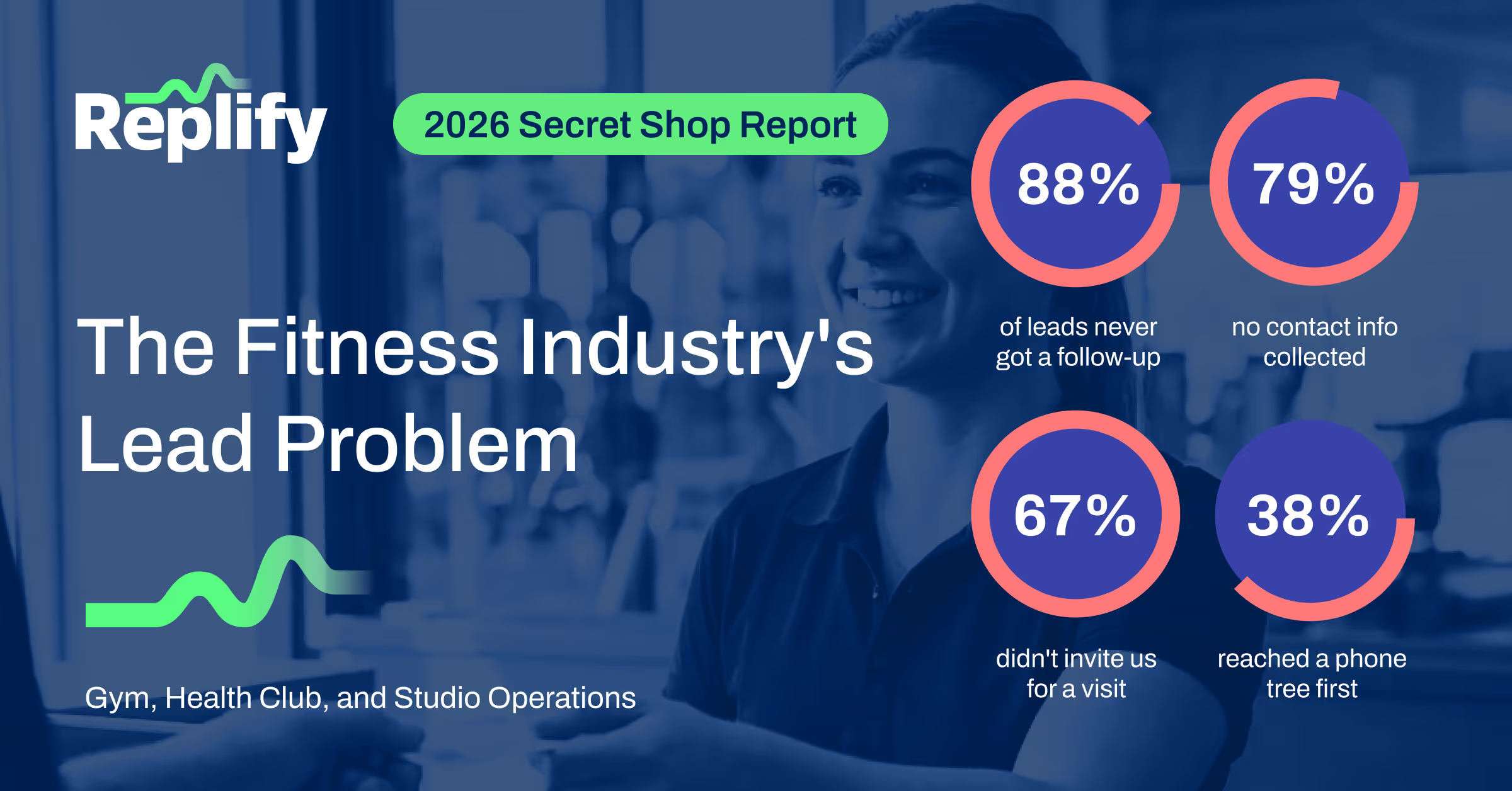
The Fitness Industry's Lead Problem: What 105 Secret Shop Calls Reveal About How Gyms Handle New Leads
The fitness industry is thriving. Revenue is up 9.9% year over year. Membership growth is climbing at 5.5%. EBITDA margins sit at a healthy 23.6%. By all financial measures, this is an industry firing on all cylinders.
But there is a crack in the foundation that most operators either do not see or choose to ignore: the way gyms handle inbound leads is fundamentally broken.
Replify conducted an over-the-phone secret shop study of 105 fitness facilities across the United States, placing real membership inquiry calls to gyms ranging from single-location studios to national franchise locations. The results were stark.
- 39% of calls never reached a live person
- 79% of conversations failed to collect contact info
- 88% of leads received zero follow-up
These are not edge cases. These are not outliers from struggling gyms. These numbers represent the industry norm. For every 100 prospective members who pick up the phone and express interest in joining a gym, the vast majority walk away without anyone knowing who they are, what they want, or how to reach them.
This report examines why the problem exists, why traditional fixes fall short, and what the data says about the approaches that actually work. The findings point toward a clear conclusion: purpose-built AI automation designed specifically for fitness is the most effective, scalable, and cost-efficient path to solving the industry's lead management crisis.

Fitness Industry Context: A Booming Market With a Hidden Problem
By any standard measure, the health and fitness industry is in a remarkable growth phase. The global wellness economy now exceeds $6.8 trillion, with fitness at its core. In the United States alone, gym membership penetration has reached 24.9%, and the high-value, low-price (HVLP) segment continues to expand aggressively into markets previously underserved by traditional operators.
The Health and Fitness Association (HFA)'s 2025 Fitness Industry Benchmarking Report, drawing on data from 175 companies operating more than 17,000 locations, paints a picture of an industry in strong financial health. Median annual revenue per location sits at approximately $2.5 million. Membership dues account for 76.5% of revenue, providing a stable recurring revenue base. High-profit operators are posting EBITDA margins above 35%.
The opportunity is enormous. According to William Blair's analysis of the HVLP fitness segment, roughly 75% of Americans still do not belong to a gym. That gap represents tens of millions of potential members. Demographic tailwinds, the rise of GLP-1 medications driving new exercise adoption, the "gym as clinic" wellness model, and the growing focus on health insurance re-imbursement are all expanding the addressable market.
But Here Is the Problem; Poor Lead Processes are Leading to Lost Revenue
All of that growth depends on one thing: converting interest into membership, and customer lifetime values (CLV), that justify hefty acquisition costs. And the single most common way a prospective member signals interest is deceptively simple. They pick up the phone and call.
What happens next determines whether that person becomes a dues-paying member or drifts to a competitor, gives up on the idea entirely, or never hears from the gym again. Our data shows that in the overwhelming majority of cases, that critical moment is being fumbled.
This is not a reflection of bad people. Front desk staff at most gyms are working hard. They are checking members in, answering questions about class schedules, handling billing issues, managing facility concerns, and doing everything they can to serve the members already in the building. When a phone rings during a busy afternoon, picking it up often means turning away from the person standing right in front of them.
The result is predictable. The phone goes unanswered, rolls to voicemail, or gets routed through an automated phone tree that feels more like calling an insurance company than a health club. The lead cools off. The moment passes.
Fitness Business Study Methodology
Between Q3 and Q4 2025, Replify conducted a blind secret shop study targeting 105 fitness facilities across the United States. The sample included a cross-section of the industry: single-location independent gyms, regional multi-site operators, and nationally franchised brands across the HVLP, mid-market, and premium segments.
Each facility was contacted via phone by a researcher posing as a prospective new member. The caller expressed genuine interest in learning about membership options and signing up. Calls were placed during standard business hours across multiple days of the week.
For each interaction, researchers tracked:
- Initial contact experience: Who or what answered the phone (live person, voicemail, automated phone tree, AI, or no answer)
- Live engagement: Whether the caller ultimately reached a live person, regardless of initial answer method
- Qualification effort: Whether the staff member asked any qualifying questions about the caller's fitness goals, experience level, or preferences
- Visit conversion attempt: Whether staff attempted to schedule an in-person visit or tour
- Contact information capture: Whether the gym collected the caller's name, phone number, or email address
- Follow-up activity: Whether the gym made any follow-up contact within 72 hours after the initial call
The methodology was designed to replicate the exact experience of a real prospective member calling a gym for the first time. No special handling was requested. No appointments were pre-scheduled. This is the raw, unfiltered experience that thousands of potential members encounter every single day.
Note on sample sizes: Not all metrics apply to all 105 calls. Qualifying questions, visit booking, and contact collection were only measurable for calls that reached a live person or advanced past an automated system (n=82). Follow-up tracking was measured for interactions where the caller provided a callback number (n=41). All percentages reflect the applicable denominator for each metric.
Results: What We Found When We Called Gyms & Studios
.avif)
First Contact: Who Answered the Phone?
The very first barrier a prospective member faces is whether anyone picks up at all. Of the 105 calls placed, the results were sobering.
- 31% were answered by a live person
- 28% went straight to voicemail
- 38% landed in an automated phone tree
- 3% received no answer at all
- 0% were answered by AI
Only 31% of calls were answered directly by a live person. More than a third (38%) landed in an automated phone tree, the kind of system that asks callers to "press 1 for membership, press 2 for billing, press 3 for class schedules." Another 28% went straight to voicemail. Three percent received no answer at all.
Perhaps most striking: not a single gym in our sample used AI to handle inbound calls. Zero out of 105. In an industry where technology adoption is accelerating across scheduling, billing, member management, and marketing, the phone -- the primary point of entry for new revenue -- remains almost entirely unautomated.
Including those who eventually navigated through phone trees and callbacks, 61% of callers ultimately reached a live person. That means 39% of prospective members who called a gym during business hours were unable to speak with anyone at all.
The Lead Funnel Breakdown
For the calls that did reach a live person, the picture does not improve much. Each step of the lead funnel represents another opportunity to convert interest into action, and at every stage, the majority of gyms fell short.
- Reached a live person: 61%
- Asked qualifying questions: 33%
- Attempted to book a visit: 33%
- Collected contact information: 21%
- Followed up: 12%
.avif)
Qualifying Questions: 33%
Only one in three staff members asked any qualifying questions at all. No "what are your fitness goals?" No "have you worked out before?" No "what's bringing you in today?" Without these basic discovery questions, there is no way to tailor the pitch, create urgency, or make the prospective member feel understood. It is the sales equivalent of a doctor skipping the examination and jumping straight to the prescription.
.avif)
Visit Booking: 33%
The ultimate goal of any inbound membership inquiry is to get the prospect through the door. A facility tour, a trial class, a personal training consultation -- any in-person visit dramatically increases conversion likelihood. Yet only one-third of staff members even attempted to schedule one.
.avif)
Contact Information: 21%
This may be the most damaging finding in the entire study. Nearly 4 out of 5 gyms failed to collect basic contact information from a person who called them expressing interest in membership. No name. No phone number. No email. The lead called, the conversation happened, and then the prospect vanished into the ether with zero way for the gym to ever reach them again.
.avif)
What Percentage of Gyms Follow-Up on Leads: 12%
Of the leads where contact information was available for follow-up tracking, only 12% received any subsequent contact from the gym. No call back. No text. No email. Nothing. Research consistently shows that the probability of converting a lead drops dramatically with each passing hour. MIT's research on lead response has found that the odds of qualifying a lead decrease by over 10x if you wait longer than five minutes to respond. The industry's 88% follow-up failure rate is not just a missed opportunity. It is revenue left on the table, compounding across every location, every day.
What's the Fix to Poor Lead Capture at Gyms?
The data makes the problem clear. The question is what to do about it. Operators generally have three paths available, each with meaningfully different trade-offs in cost, scalability, consistency, and effectiveness.
Option 1: Improve Gym Staff Training
The most intuitive response to poor phone handling is to train staff to do it better. And to be fair, better training can absolutely make a difference. Teaching front desk teams to ask qualifying questions, collect contact information, and attempt to book visits is a reasonable and well-intentioned strategy.
But it runs headfirst into several structural realities that limit its effectiveness.
- Cost and time investment. Comprehensive sales training programs can run thousands of dollars per employee. For multi-location operators with high staff turnover (the fitness industry averages turnover rates well above 50% annually), training becomes a recurring expense that never fully compounds.
- The capacity problem. Even the best-trained front desk associate cannot answer a phone while simultaneously checking in a member, resolving a billing question, and handling a facility issue. During peak hours, the phone will still go unanswered.
- Zero coverage outside business hours. Prospective members do not limit their interest to 9-to-5. Evenings, weekends, holidays, early mornings -- these are prime times when people think about fitness and reach out. A training-based approach leaves those hours entirely unaddressed.
- Consistency is nearly impossible. Even with the same training program, execution varies widely based on individual personality, motivation, workload, and day-to-day conditions. What works at Location A may fall apart at Location B.
Option 2: Outsourced Call Centers for Gyms
A second approach gaining traction in fitness is outsourcing inbound call handling to third-party call centers or virtual receptionist services. This model addresses some of the capacity and coverage gaps that training cannot.
Outsourced solutions can provide extended hours and scalable staffing, ensuring that calls are answered during off-peak times and high-volume periods alike. For operators stretched thin on front desk coverage, this can be an immediate improvement over the status quo.
However, the model carries its own significant limitations.
- Cost scales linearly. Most outsourced services charge per call, per minute, or per agent hour. As call volume grows (which is the goal), so does the expense. For a multi-location operator running promotional campaigns or experiencing seasonal surges, costs can escalate quickly and unpredictably.
- The member experience is variable. Outsourced agents are handling calls for dozens or hundreds of clients simultaneously. They may not know that your Tuesday 6pm spin class is your most popular, that your Maple Street location has limited parking, or that your January promotion ended last week. The result is often a generic, script-driven interaction that lacks the warmth and specificity prospective members expect.
- Integration gaps are common. Connecting an outsourced call center to your CRM, scheduling system, and membership management platform requires ongoing configuration and maintenance. Data handoff between the call center and in-house staff can introduce delays, errors, and dropped leads.
Option 3: Purpose-Built AI Automation for Fitness Studios and Clubs
The third path, and the one most strongly supported by both the data and the broader trajectory of business technology, is AI-powered lead management built specifically for fitness. Established AI receptionists and AI sales agents like Replify provide a turn-key option for gyms wanting to stop the lead bleed.
This is not a generic chatbot bolted onto a website. The AI systems making the biggest impact in fitness are purpose-built platforms designed to handle the full lifecycle of a lead interaction: answering inbound calls and texts, asking qualifying questions, collecting contact information, scheduling visits, and executing automated follow-up sequences. They are trained on fitness-specific workflows and integrate directly with the CRM and management tools operators already use.
The MIT NANDA State of AI in Business 2025 report offers an important framing here. Their research found that 95% of generative AI implementations fail to deliver meaningful business results. The successful 5% share a common trait: they are learning-capable, workflow-specific systems designed for defined business processes, not generic AI tools applied broadly. In other words, the AI that works is the AI built for the job.
What AI automation for gyms solves:
- 100% lead capture. Every call, text, web inquiry, and social media message is answered and logged. No leads fall through the cracks, regardless of time of day, call volume, or staffing levels.
- Consistent qualification. AI asks the right questions every time -- fitness goals, experience level, scheduling preferences -- creating a qualified lead profile that gives your sales team what they need before the prospect walks through the door.
- Instant response. AI responds in seconds, not hours or days. This alone dramatically increases the probability of conversion, as research consistently shows that speed-to-lead is among the strongest predictors of sales success.
- Automated follow-up. No more relying on busy staff to remember to call back. AI executes follow-up sequences across phone, text, and email on a configurable cadence -- persistently and consistently.
- Seamless handoff to humans. When a lead is ready for a deeper conversation, tour, or close, AI can live-transfer the call to staff, send a text notification, leave a voicemail, or trigger a task in the CRM. The AI handles the top of the funnel so your team can focus on the moments that matter.
- Location-specific intelligence. Unlike generic outsourced agents, AI can be configured with knowledge about each location's classes, pricing, promotions, hours, and amenities -- delivering a personalized experience at scale.
Case Studies: AI in Action
The theoretical case for AI automation is compelling. But operators rightly want to see real-world results. Here is what fitness brands are reporting after implementing purpose-built AI lead management.
Gold's Gym DC Metro: 10x Lead Growth
Gold's Gym DC Metro, a multi-location franchise group, deployed AI-powered lead management across its facilities and saw inbound lead volume increase by 10x. The AI captured every inquiry -- calls, texts, web chats, and social messages -- and funneled qualified prospects to the sales team with complete context. Staff could focus their energy on closing rather than chasing.
SWEAT440: 53% Support Costs Reduction
SWEAT440, one of the fastest growing fitness franchises in North America, achieved a 53% support cost reduction, by reducing their reliance on outsourced customer service by deploying AI. Prospective member conversations were handled entirely by AI, from initial contact through qualification and visit scheduling, without requiring any staff involvement. As SWEAT440 scales to 100s of franchise locations, the scale provided by AI customer service and sales is invaluable to their growth trajectory.
UFC Gym: 100% Lead Capture
UFC Gym implemented AI lead management to ensure that every single inbound inquiry -- regardless of channel or time -- receives an immediate, intelligent response. The result: 100% lead capture with zero calls going to voicemail or falling through phone trees. The AI qualifies prospects, books tours, and hands off to sales staff only when the lead is ready for a human conversation.
Read more AI receptionist and AI sales case studies.
The Fitness Industry Average vs. AI Automation
The Path Forward
The fitness industry does not have a demand problem. Membership interest is at an all-time high. Consumer awareness of the importance of physical activity -- amplified by the GLP-1 revolution, the wellness boom, and the post-pandemic return to in-person fitness -- is creating a wave of new prospects that shows no signs of cresting.
What the industry has is a conversion problem. And that conversion problem is not a mystery. It is measurable, it is documented, and most importantly, it is solvable.
The 105 secret shop calls in this study tell a consistent story: prospective members are reaching out, and gyms are letting them slip away. Not because staff do not care, but because the systems and processes in place were never designed to handle this moment effectively.
Front desk teams are doing their best with competing priorities. Phone trees and voicemails are relics of an era before consumers expected instant, personalized engagement. Training helps but cannot scale. Outsourcing adds cost without adding intelligence.
Purpose-built AI automation addresses every failure point identified in this study -- immediately, consistently, and at a fraction of the cost of the alternatives. It captures 100% of leads. It qualifies every prospect. It books visits. It follows up. It does all of this 24 hours a day, 365 days a year, across every location in a portfolio, with the same quality every time.
The operators who recognize this shift early will compound their advantage as the market continues to grow. Those who do not will continue to invest heavily in marketing that drives interest to a front door that cannot capture it.
Every missed call is a missed membership. Every uncollected contact is a lead that cannot be followed up. Every unanswered inquiry is revenue walking out the door. The data is clear. The technology exists. The only question is when you decide to fix it.
About The Fitness Industry's Lead Problem Report
This report was produced by Replify, the AI growth engine built specifically for fitness businesses. Replify's platform handles inbound and outbound lead management across phone, text, email, web chat, and social media, delivering 24/7 AI-powered engagement with seamless human handoff for gyms, health clubs, and wellness facilities of all sizes.
The secret shop data, analysis, and conclusions presented here are based on primary research conducted by the Replify team. Industry data and benchmarks are sourced from the HFA 2025 Fitness Industry Benchmarking Report, the William Blair HVLP Fitness Industry Report (July 2025), the MIT NANDA State of AI in Business 2025 Report, and the Fitt Insider State of Health and Wellness 2025 Report.
For more information, schedulea a demo to learn how AI-powered lead management can transform your gym's growth.
The Fitness Industry's Lead Problem Report Frequently Asked Questions (FAQ)
How many gyms answer the phone with a live person?
According to Replify's 2025 secret shop study of 105 fitness facilities, only 31% of calls were answered directly by a live person. Another 38% reached an automated phone tree, 28% went to voicemail, and 3% received no answer at all. When factoring in callers who eventually navigated through phone trees, 61% ultimately reached a live person, meaning 39% of prospective members were unable to speak with anyone during business hours.
What percentage of gyms collect contact information from prospective members?
Only 21% of gyms in the study collected contact information (name, phone number, or email) from callers expressing interest in membership. That means 79% of prospective members called, had a conversation, and then disappeared with no way for the gym to ever follow up. This represents one of the most significant revenue leaks in the fitness industry.
How often do gyms follow up with leads after an initial inquiry?
The study found that only 12% of leads received any follow-up contact from the gym within 72 hours of the initial call. That means 88% of prospective members who expressed interest in joining heard nothing back. Research from MIT has shown that the odds of qualifying a lead drop by over 10x when response time exceeds five minutes, making the industry's follow-up failure rate a major contributor to lost revenue.
How many gyms use AI to answer membership inquiry calls?
Zero. Out of 105 fitness facilities in the study, not a single gym used AI to handle inbound calls. Despite rapid AI adoption in scheduling, billing, and member management, the phone -- the primary entry point for new revenue -- remains almost entirely unautomated across the fitness industry.
What is the current state of the fitness industry financially?
The fitness industry is in a strong growth phase. According to the HFA 2025 Fitness Industry Benchmarking Report, median EBITDA margins are 23.6%, revenue growth is 9.9% year over year, and net membership growth is 5.5%. Median annual revenue per location is approximately $2.5 million, with high-profit operators exceeding 35% EBITDA margins. The global wellness economy exceeds $6.8 trillion, and U.S. gym penetration has reached 24.9%.
Why do gyms struggle to answer phone calls from prospective members?
Front desk staff at most gyms are managing multiple responsibilities simultaneously: checking members in, answering questions about class schedules, handling billing issues, and resolving facility concerns. When a phone rings during a busy period, picking it up often means turning away from a member standing right in front of them. The problem is not a lack of effort or care. It is a structural capacity issue where in-person service and inbound lead handling compete for the same limited resource.
What are the options for fixing gym lead management?
Operators generally have three options. First, better staff training, which improves individual call quality but cannot solve the capacity problem, does not cover after-hours inquiries, and is difficult to maintain consistently across locations with high turnover. Second, outsourced call centers, which provide extended coverage but scale linearly in cost, deliver variable member experiences, and often lack location-specific knowledge. Third, purpose-built AI automation, which captures 100% of leads across all channels 24/7, qualifies every prospect, books visits, executes follow-up sequences, and integrates with existing CRM and management tools at a fraction of the cost of alternatives.
How effective is AI lead management for gyms and fitness facilities?
Real-world case studies show significant results. Gold's Gym DC Metro saw 10x lead growth after deploying AI. SWEAT440 achieved a 74% automation rate for lead interactions across its franchise locations. Seattle Sun Tan maintained 74% automation across 50+ locations with consistent quality. UFC Gym achieved 100% lead capture with zero calls going to voicemail. AI platforms built specifically for fitness deliver 100% lead capture, instant response times, consistent qualification, and automated follow-up at every location.
What percentage of Americans belong to a gym?
U.S. gym membership penetration has reached 24.9%, according to industry analysis from William Blair. That means roughly 75% of Americans still do not belong to a gym, representing a massive untapped market for fitness operators. Trends including GLP-1 medications driving new exercise adoption, the wellness boom, and the growing gym-as-clinic model are expanding the addressable market further.
How many fitness facilities were included in the secret shop study?
The study included 105 fitness facilities across the United States, spanning single-location independent gyms, regional multi-site operators, and nationally franchised brands across the HVLP (high-value, low-price), mid-market, and premium segments. Each facility was contacted via phone by a researcher posing as a prospective new member during standard business hours.
Ready to explore AI for your health clubs, gyms, or fitness studios? Schedule a demo.

AI Billing & Collections for Gyms: The Complete Guide to Automating Payment Recovery in 2025
The fitness industry is experiencing unprecedented growth, with the global wellness market now valued at $6.8 trillion according to the Fitt Insider's State of Health & Wellness 2025 report. Yet despite this massive opportunity, gym owners face a persistent challenge that drains resources and impacts profactability: billing and collections.
The average gym loses 50% of its members every year, with most fitness businesses maintaining a retention rate of approximately 71.4% according to the International Health, Racquet & Sportsclub Association (IHRSA). Failed payments and billing issues contribute significantly to this churn. Traditional approaches to billing and collections require significant staff time, create uncomfortable member interactions, and often fail to recover revenue efficiently.
AI billing and collections technology is changing that equation. By automating the entire payment recovery process through intelligent calling, texting, and email outreach, fitness businesses are recovering more revenue while reducing staff workload. This guide explores how AI is transforming gym billing and collections, what solutions are available, and why leading fitness brands are making the switch.
The Cost of Manual Billing and Collections in Fitness
When a gym membership payment fails, staff typically face a time-consuming manual process:
- Identifying failed payments across multiple billing systems and membership platforms
- Attempting to contact members through phone calls that go to voicemail
- Sending follow-up emails that members may never open
- Making repeated contact attempts over days or weeks
- Updating payment information when members finally respond
- Processing the missed payment once new payment details are secured
The cost extends beyond labor. Failed payments that aren't addressed quickly become increasingly difficult to recover. Industry data shows that:
- Invoices less than 90 days overdue can achieve recovery rates of 70% or more
- Invoices over 180 days overdue see recovery rates drop below 15%
According to payment recovery research, the timing of collection attempts directly impacts success rates. Manual billing processes simply can't deliver the speed and consistency required for optimal revenue recovery.
Why Traditional Billing Software Falls Short
Most gyms use membership management systems with built-in billing features like Mindbody, Zen Planner, or Glofox. While these platforms excel at processing successful payments, they typically offer limited support for failed payment recovery:
- Automated email templates that members often ignore
- Basic reporting on failed payments requiring manual follow-up
- No phone or text outreach for immediate member contact
- Limited personalization in automated messaging
- No intelligent follow-up based on member response patterns
The result is that billing software handles successful transactions efficiently, but failed payments still require manual staff intervention.
How AI Transforms Gym Billing and Collections
AI-powered billing and collections systems represent a fundamental shift in how fitness businesses approach payment recovery. Instead of reactive manual processes, AI enables proactive, multi-channel automation that reaches members instantly when payments fail.
Intelligent Multi-Channel Outreach
Modern AI billing systems contact members through their preferred communication channels:
- Automated phone calls that sound natural and conversational
- Text messages with billing links for instant payment updates
- Email sequences that escalate based on member response
- Voicemail drops when calls go unanswered, ensuring the message is delivered
This omnichannel approach increases contact rates dramatically. While front desk staff might leave a voicemail on billing calls, AI systems can send a text message with a payment link immediately after leaving a voicemail, then follow up with an email if the text isn't opened.
24/7 Availability
Failed payments don't only occur during business hours. AI billing systems work around the clock:
- Immediate outreach when payment failures are detected
- Evening and weekend contact when members are most available
- Instant response to member questions about billing
- Payment link delivery at any time of day
This constant availability ensures that billing issues are addressed immediately, maximizing recovery rates before accounts become delinquent.
Intelligent Escalation and Personalization
Advanced AI billing systems learn from member interactions and adjust outreach strategies accordingly:
- Personalized messaging based on member tenure and payment history
- Automatic escalation to live staff for complex billing questions
- Customized payment plans for members experiencing financial difficulty
- Retention-focused communication that maintains positive member relationships
The goal isn't just to collect payments but to preserve member relationships while recovering revenue efficiently.
Billing & Collections Automation with AI powered by Replify
Replify's AI-powered billing, customer service, and sales suite is purpose-built for the fitness industry. Replify customers include Gold's Gym, UFC Gym, SWEAT440, and Anytime Fitness. The platform automates the entire billing and collections process while maintaining the personal touch that keeps members engaged.
How Replify AI Billing Works
When a membership payment fails, Replify's AI immediately springs into action:
- Instant notification from your membership management system triggers the AI
- Automated outbound calling reaches the member with a natural, conversational message about the failed payment
- Text message follow-up includes a secure billing link for instant payment update
- Email sequence provides additional payment options and account details
- Voicemail delivery ensures the message reaches members even when calls go unanswered
- Live transfer capability connects members to staff for complex billing questions
Importantly, Replify doesn't process payments directly. Instead, the AI sends secure billing links that direct members to update their payment information in your existing membership management system, or live transfers members to your front desk staff when they prefer to speak with someone directly. This ensures full compliance with payment card industry (PCI) standards while keeping your existing billing workflows intact.
Key Features for Replify's AI Billing & Collections for Fitness
- Integration with major fitness platforms including Mindbody, Zen Planner, ClubReady, Glofox, and ABC Fitness
- Customizable messaging that reflects your brand voice and member relationships
- Multi-touch campaigns with intelligent timing and channel selection
- Real-time reporting on outreach activity and revenue recovery
- Member self-service through automated responses to common billing questions
- Escalation protocols that route complex issues to appropriate staff
The platform operates 24/7, handling billing outreach while your staff focuses on delivering exceptional member experiences.

Case Study: How Club 24 Concepts Gyms Automated 6,000+ Calls Monthly
Club 24 Concepts Gyms faced a challenge common to multi-location fitness businesses: scaling consistent billing and collections processes across multiple clubs while maintaining the personal touch members expect.
With membership bases spanning multiple locations, billing issues occurred constantly. Front desk staff spent hours each day attempting to reach members about failed payments, expired credit cards, and account updates. The manual process was inconsistent, time-consuming, and often delayed revenue recovery by days or even weeks.
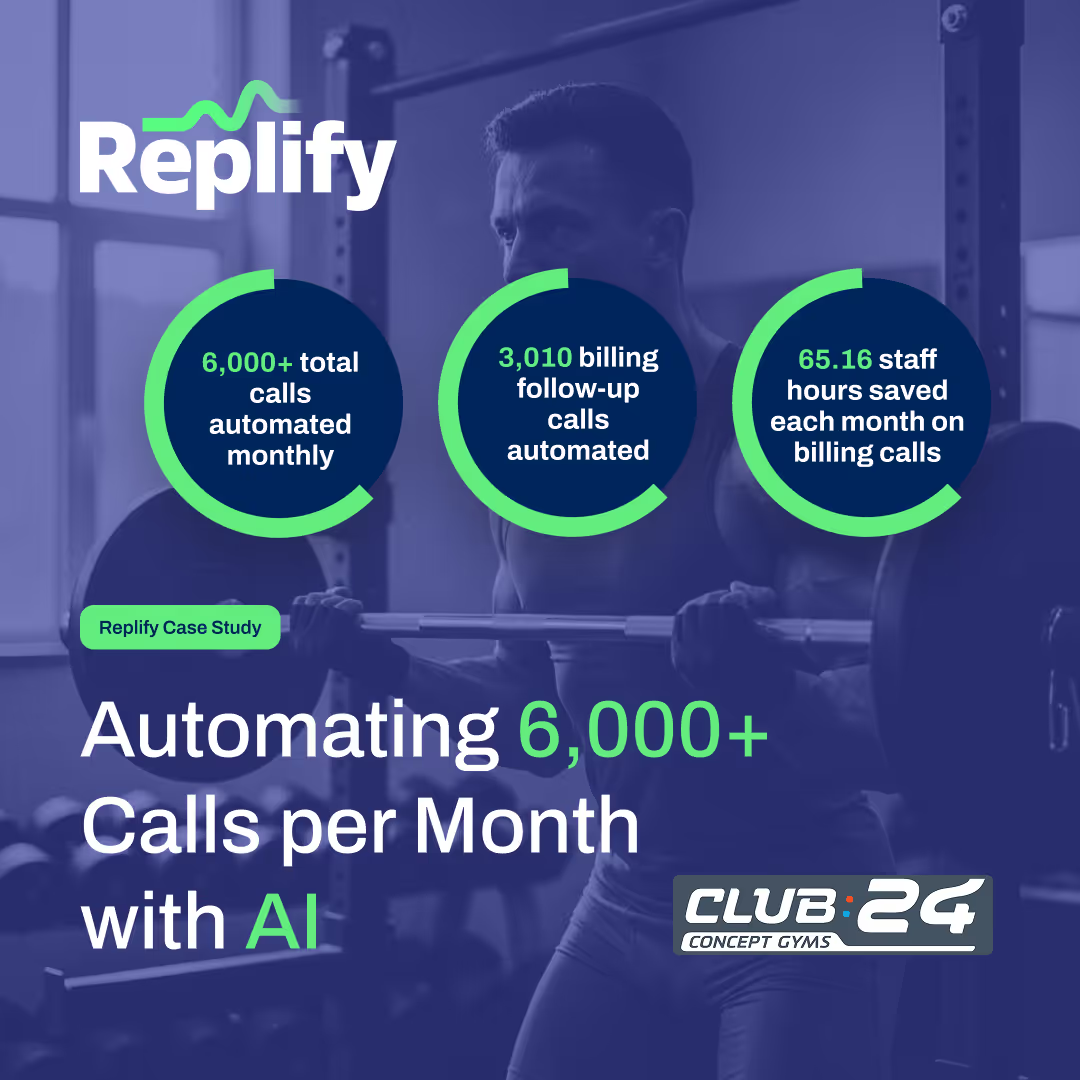
After implementing Replify's AI automation, Club 24 Concepts transformed their billing operations:
Automation at Scale
- 6,000+ automated calls per month handling billing inquiries, payment updates, and collections
- Instant member contact when payment failures occur
- Consistent messaging across all locations
- 24/7 availability for billing questions and payment link delivery
Staff Productivity Gains
By automating routine billing outreach, Club 24 Concepts freed their staff to focus on high-value member interactions. Front desk teams that previously spent hours daily on billing calls now dedicate that time to member onboarding, retention conversations, and facility operations.
Improved Member Experience
Members receive immediate, professional billing communications through their preferred channels. Text messages with payment links allow instant self-service payment updates. Members who prefer speaking with staff can be live transferred directly from the AI to the front desk.
The result is a billing and collections process that scales effortlessly across multiple locations while maintaining the personal touch that drives member retention.
Learn more about Club 24 Concepts' complete AI implementation in our detailed case study.
Aldous and Associates: Legal Expertise for Gym Collections
For fitness businesses facing serious collections challenges, particularly with significantly delinquent accounts or legal compliance questions, Aldous and Associates provides specialized legal expertise for the health club industry.
As a law firm focused specifically on fitness industry collections and compliance, Aldous and Associates offers:
Specialized Health Club Collections
- Legal collection services for accounts in serious delinquency
- Compliance expertise with state and federal collection regulations
- Industry-specific knowledge of membership agreements and billing practices
- Mediation and dispute resolution for complex member account issues
When Legal Collections Make Sense
While AI automation handles the vast majority of billing issues efficiently, certain situations benefit from legal expertise:
- Accounts more than 90 days delinquent with significant balances
- Members disputing charges or membership agreements
- Collection activities requiring legal compliance documentation
- Situations requiring formal demand letters or legal action
Combining AI Automation with Legal Expertise
Smart fitness businesses use a tiered approach to collections:
- AI automation handles immediate failed payment outreach and standard collections (0-60 days)
- Staff intervention for members requiring payment plans or account adjustments (60-90 days)
- Legal collections for seriously delinquent accounts requiring formal action (90+ days)
This approach maximizes revenue recovery at each stage while ensuring compliance and maintaining positive member relationships whenever possible.
Aldous and Associates' deep fitness industry experience makes them a valuable partner when legal collection action becomes necessary, complementing AI automation for routine billing issues with legal expertise for complex situations.
ABC Ignite: Automated Billing & Revenue Recovery Platform
ABC Ignite represents another approach to fitness billing automation, offering an integrated platform specifically designed for revenue recovery.
Automated Billing & Revenue Recovery
ABC Ignite focuses on maximizing collection rates through systematic billing automation:
How ABC Ignite Works
The platform automates the billing lifecycle:
- Recurring payment processing handles successful membership billing
- Failed payment detection triggers automated recovery workflows
- Multi-channel outreach through email and text messaging
- Systematic escalation over the 90-day recovery window
- Reporting and analytics on collection performance
ABC Ignite vs. AI-Powered Collections
While ABC Ignite provides valuable billing automation, there are key differences compared to AI-powered platforms like Replify:
- Channel limitations: ABC Ignite focuses primarily on email and text, while AI platforms add automated phone calling and voicemail delivery
- Platform integration: ABC Ignite works best within the ABC Fitness ecosystem, while AI platforms integrate with any membership management system
- Conversational capabilities: AI platforms can handle member questions and objections conversationally, while traditional automated billing is limited to pre-written message sequences
- Live escalation: AI platforms can instantly transfer members to staff when needed, while traditional systems require members to initiate contact separately
For fitness businesses using ABC Fitness platforms and seeking integrated billing solutions, ABC Ignite offers solid automation. For businesses seeking more comprehensive AI-powered outreach across all communication channels, dedicated AI platforms provide greater flexibility and contact rates.
Outsourcing Collections vs. AI Automation
Many fitness businesses consider outsourcing collections to third-party agencies. Understanding the trade-offs helps determine the right approach for your business.
Traditional Collection Agency Model
Collection agencies typically:
- Charge 25-50% commission on recovered revenue
- Focus on severely delinquent accounts (usually 90+ days)
- Use aggressive collection tactics that can damage member relationships
- Report to credit bureaus which members may find objectionable
- Operate independently from your staff and membership platform
Advantages of Collection Agencies
- No upfront cost (commission-based pricing)
- Legal expertise for complex situations
- Handles accounts you've written off internally
- Removes collection burden from your staff entirely
Disadvantages of Collection Agencies
- High commission rates reduce recovered revenue
- Potential damage to member relationships and brand reputation
- Members may dispute charges or cancel memberships entirely
- No control over communication tone or collection methods
- Agencies lack context about member relationships
AI Automation: A Superior Alternative
AI-powered billing and collections offers compelling advantages over traditional outsourcing:
Cost Efficiency
- Flat monthly pricing typically under $500/month regardless of collection volume
- No commission on recovered revenue (you keep 100% of collected payments)
- Lower total cost even at high collection volumes
Member Relationship Preservation
- Professional, respectful outreach that maintains your brand voice
- Early intervention prevents accounts from becoming seriously delinquent
- Self-service payment options that empower members
- Seamless escalation to your staff for personal assistance
Control and Integration
- Full control over messaging, timing, and escalation protocols
- Integration with your membership management system
- Real-time visibility into all collection activity
- Consistent experience aligned with your overall member communication
The financial and relationship benefits of AI automation make it the clear choice for modern fitness businesses.
The ROI of AI-Powered Billing and Collections
AI billing automation delivers returns across multiple dimensions:
Direct Revenue Recovery
- Improved collection rates: Early intervention through AI automation yields significantly better recovery rates than delayed manual follow-up
- Faster payment recovery: Hours instead of days or weeks
- Higher member retention: Professional outreach preserves relationships
- Reduced write-offs: Early intervention prevents seriously delinquent accounts
Operational Efficiency
- Significant reduction in staff time spent on billing calls
- Elimination of manual follow-up tracking and coordination
- Consistent execution of billing protocols across all locations
- Scalable growth without proportional staff increases
Member Experience Enhancement
- Immediate response to billing questions 24/7
- Convenient self-service payment options
- Professional, respectful communication
- Reduced friction in the billing process
Research consistently shows that acquiring a new customer is 5 to 25 times more expensive than retaining an existing one, according to Harvard Business Review. Better billing experiences contribute directly to member retention, reducing the need for costly new member acquisition.
Implementation Costs
AI billing platforms typically cost:
- $300-$500/month for mid-sized fitness businesses
- $500-$1,000/month for large multi-location operations
- Integration fees: Usually $500-$2,000 one-time setup
Compared to the cost of even one part-time staff member dedicated to billing ($2,000-$3,000/month), AI automation delivers exceptional ROI.
Getting Started with AI Billing Automation
Implementing AI-powered billing and collections is straightforward:
1. Audit Your Current Billing Process
- Calculate monthly failed payment volume and total revenue at risk
- Measure staff time currently spent on billing outreach
- Document current collection rates and timelines
- Identify pain points in your existing process
2. Choose the Right AI Platform
Look for platforms offering:
- Integration with your membership management system
- Multi-channel outreach (phone, text, email, voicemail)
- Fitness industry specialization and customer references
- Customizable messaging aligned with your brand
- Live transfer capabilities for complex situations
- Real-time reporting on activity and results
Replify serves over 1,000 fitness businesses and integrates with all major membership management platforms. Learn more about Replify's AI billing and collections automation.
3. Plan Your Implementation
- Define messaging templates for different billing scenarios
- Establish escalation protocols for staff intervention
- Set up integration with your membership platform
- Train staff on handling escalated billing inquiries
- Create reporting dashboards to monitor performance
4. Launch and Optimize
- Start with a pilot approach for one location or member segment
- Monitor member feedback and adjust messaging accordingly
- Track collection rates and compare to historical performance
- Expand to full deployment after validation
- Continuously optimize based on results
Most fitness businesses see positive ROI within the first month of implementation.
Transform Your Billing and Collections with AI
Failed payments and collections don't have to drain your staff time and damage member relationships. AI-powered billing automation recovers more revenue, preserves member satisfaction, and frees your team to focus on what matters most: delivering exceptional fitness experiences.
Whether you're a single-location boutique studio or a multi-location fitness brand, AI billing and collections technology scales to your needs while maintaining the personal touch your members expect.
Ready to eliminate billing headaches and recover more revenue? Explore how Replify's AI-powered platform can transform your billing and collections process.
For comprehensive guidance on selecting the right software solutions for your fitness business, read our complete guide to the best software for fitness studios and clubs.
Sources
- Fitt Insider: State of Health & Wellness 2025 Report
- International Health, Racquet & Sportsclub Association (IHRSA): Industry retention and membership statistics
- Chaser HQ: "When to Send Unpaid Invoices to Collections" - Payment recovery rate data
- Harvard Business Review: "The Value of Keeping the Right Customers" - Customer acquisition vs. retention cost analysis
- Glofox: "The Gym Membership Statistics You Need to Know" - Member retention and churn data
- Exercise.com: Gym membership retention statistics and industry benchmarks
Replify serves 1,000s fitness locations with AI-powered automation for billing, collections, lead follow-up, appointment scheduling, and member service. Join Gold's Gym, UFC Gym, SWEAT440, Anytime Fitness, and hundreds of other leading fitness brands using AI to drive growth and operational efficiency.
AI Software for YMCA: The Complete Guide to Transforming Member Services
YMCAs across the United States serve over 21 million people through more than 2,700 locations in 10,000 communities. From youth development programs and fitness classes to childcare services and senior wellness initiatives, the modern YMCA operates as a complex, multi-service organization with communication demands that stretch staff capacity to its limits.
The challenge is clear: how do you maintain the personal, mission-driven connection that defines the YMCA experience while managing an ever-increasing volume of member inquiries, program registrations, and tour requests? The answer lies in AI software designed specifically for fitness and wellness organizations.
This guide explores how AI software is transforming YMCA operations, from automating routine communications to freeing staff to focus on what matters most: building relationships and strengthening communities.
What is YMCA?
The YMCA (Young Men's Christian Association) is one of the oldest and largest nonprofit community service organizations in the world. Founded in London in 1844, the organization has evolved far beyond its original mission to become a cornerstone of community health, wellness, and social services.
Today's YMCA operates across three core focus areas: Youth Development, which nurtures the potential of every child and teen; Healthy Living, which improves individual and community health and well-being; and Social Responsibility, which gives back and provides support to neighbors. This mission-driven approach means YMCAs serve an incredibly diverse population, from infants in childcare programs to seniors participating in wellness classes, all under one organizational umbrella.
The operational complexity of running a modern YMCA is substantial. A single location may offer swim lessons, summer camps, before-and-after school programs, group fitness classes, personal training, youth sports leagues, community outreach programs, and financial assistance services. Each of these programs generates its own stream of inquiries, registrations, and follow-up communications.
YMCAs also face unique challenges that differentiate them from commercial fitness centers. Their nonprofit status means operating with leaner staff ratios. Their commitment to accessibility means serving members across all income levels, requiring financial assistance processing. Their community focus means responding to local needs, which can change seasonally or in response to community events.
What is AI Software?
AI software refers to computer programs that use artificial intelligence to perform tasks that traditionally required human intelligence. For YMCAs and community fitness organizations, this typically means software that can understand and respond to member inquiries, automate routine communications, and handle administrative tasks without constant human oversight.
The most impactful AI applications for fitness organizations fall into several categories. Conversational AI includes chatbots and virtual assistants that can answer member questions via phone, text, web chat, or email. These systems use natural language processing to understand what members are asking and provide helpful, contextually appropriate responses. Marketing automation uses AI to send personalized communications based on member behavior, preferences, and engagement patterns. Lead management AI qualifies and follows up with prospective members automatically, ensuring no inquiry falls through the cracks.
Unlike generic chatbots that simply match keywords to pre-written responses, modern AI software learns from interactions, understands context, and can handle nuanced conversations. For a YMCA, this means the difference between a system that can only answer “'What are your hours?”' and one that can discuss childcare program availability, explain financial assistance options, and schedule a facility tour, all in a single conversation.
Why YMCAs Need AI Software
The operational realities facing YMCAs make AI software not just helpful, but increasingly essential. Research shows that without intervention, 63% of new members stop exercising within six months of joining a YMCA, with membership termination often following. The key to retention? Early engagement and consistent communication, exactly what AI software excels at delivering.
Studies also reveal that members who have few or no interactions with staff in their first month are 50% less likely to return the following month. For YMCAs operating with limited staff resources, AI provides a scalable way to ensure every new member receives timely, personalized outreach during this critical period.
The staffing challenge is particularly acute for YMCAs. Many organizations experienced significant workforce reductions during and after the COVID-19 pandemic, with some reporting 40% staff reductions. Even as operations have recovered, attracting and retaining staff remains a constant challenge due to competitive wage pressures.
Meanwhile, member expectations have evolved. People expect quick responses to inquiries, easy online registration, and seamless communication across channels. When a prospective member calls about childcare availability at 8 PM, they expect an answer, not a voicemail that may or may not get returned the next business day.
See AI in Action: Discover how fitness organizations are using AI to capture more leads and reduce staff workload. Schedule a Replify demo to see how it works for community fitness centers.
Key AI Software Capabilities for YMCAs
24/7 Member Communication
AI-powered communication systems answer calls, texts, and web inquiries around the clock. For a YMCA serving working families, this means prospective members researching childcare options at 9 PM or seniors with questions about water aerobics on a Sunday morning all receive immediate, helpful responses. The system handles routine questions, freeing staff to focus on in-person member interactions that require human connection.
Automated Lead Follow-Up
Research shows it can take 5-7 contacts before a prospective member responds and commits to visiting. AI software maintains consistent, personalized follow-up sequences that would be impossible for staff to execute manually. Some YMCAs using AI assistants report that prospects frequently ask to speak with their “'AI assistant”' by name, unaware they're communicating with an automated system, a testament to how natural these interactions have become.
Tour and Appointment Scheduling
AI systems can check staff availability and book facility tours or program consultations directly on calendars. This eliminates the back-and-forth scheduling process that often causes prospective members to lose interest. The prospect gets immediate confirmation, and staff arrive prepared for each scheduled visit.
Program Information and Registration Support
AI can provide detailed information about specific programs, from swim lesson schedules to summer camp dates to fitness class offerings. Advanced systems can guide members through registration processes, answer questions about pricing and financial assistance, and escalate complex inquiries to human staff when needed.
Member Retention Outreach
AI identifies members showing signs of disengagement, such as missed visits or expired payment methods, and initiates personalized outreach. This proactive approach addresses retention risks before they become cancellations, maintaining the consistent member engagement that research shows is critical to long-term retention.

Benefits of AI Software for YMCA Operations
Operational Cost Savings
YMCAs implementing comprehensive technology solutions have reported substantial cost savings. The YMCA of Delaware, for example, documented $500,000 in annual operational cost savings after deploying integrated automation systems. These savings come from reduced administrative burden, fewer missed opportunities, and more efficient staff allocation.
Increased Member Conversion
AI-powered lead follow-up dramatically improves conversion rates. The YMCA of Memphis and the Mid-South saw their membership conversion rate increase from 3-4% to 35-40% after implementing automated engagement systems. This improvement came from consistent follow-up that ensured no prospective member was forgotten or lost in the shuffle.
Improved Staff Experience
When AI handles routine inquiries and administrative tasks, YMCA staff can focus on high-value activities that drew them to community service work in the first place: building relationships with members, leading programs, and supporting community initiatives. This shift improves job satisfaction and can help with staff retention, a critical challenge for many YMCAs.
Enhanced Member Experience
Members benefit from faster response times, consistent information, and easier access to services. The YMCA of Delaware quadrupled its online program registrations after implementing digital engagement tools, with 80% of program registrations now completed online. This convenience matches modern member expectations while reducing administrative bottlenecks.
Scalable Community Impact
AI allows YMCAs to serve more people without proportionally increasing staff. This scalability is particularly important for mission-driven organizations committed to accessibility. By automating routine tasks, YMCAs can extend their reach into underserved communities and respond more effectively to local needs.
Real Results from Fitness Organizations: Gold's Gym achieved a 10X increase in leads captured. Dynamic Fitness saves 180 staff hours monthly. Learn what Replify can do for your YMCA.
AI Software Implementation Considerations
Integration with Existing Systems
Effective AI software should integrate seamlessly with your existing member management system, whether that's a CRM platform like Salesforce, a YMCA-specific solution like Daxko or Traction Rec, or other operational software. This integration ensures member data flows smoothly between systems and AI interactions are captured in member records. Replify connects with over 1,000 tools and platforms, including ABC Fitness, WellnessLiving, ZenPlanner, and major CRM systems.
Multi-Location Support
For YMCAs with multiple branches, AI software should support location-specific information while maintaining organizational consistency. Prospects should be able to ask about programs at a specific branch and receive accurate, location-specific responses. Similarly, leadership should be able to monitor performance and standardize processes across all locations.
Human Handoff Capabilities
The best AI software knows its limitations. Complex inquiries, sensitive situations, or high-value opportunities should escalate smoothly to human staff with full context of the AI conversation. This ensures the technology enhances rather than replaces the human connection that defines the YMCA experience.
Training and Customization
AI systems perform best when trained on YMCA-specific terminology, programs, and processes. Look for solutions that can be customized to reflect your organization's voice, values, and specific program offerings. Generic AI tools designed for commercial gyms may not understand the nuances of YMCA membership categories, financial assistance programs, or community service initiatives.
Budget and ROI Considerations
For nonprofit organizations, technology investments must demonstrate clear return on investment. The most compelling AI solutions offer transparent pricing and measurable outcomes. Consider the cost of AI software against the cost of additional staff, missed membership opportunities, and administrative inefficiency. Many YMCAs find that AI software pays for itself through improved conversion rates and operational savings within months of implementation.

AI Software vs. Traditional Communication Methods
Traditional YMCA communication relies heavily on staff availability. Phone calls go to voicemail during busy periods. Email inquiries may wait days for responses. Walk-in visitors compete for attention with program supervision and member assistance. Each missed or delayed interaction represents a potential lost member.
AI software addresses these limitations without replacing human interaction. Calls are answered immediately, even during peak times. Text inquiries receive instant responses. Website visitors get real-time answers to their questions. When AI handles the first touchpoint effectively, staff conversations can focus on relationship building rather than basic information sharing.
The key distinction is that AI handles volume and consistency while humans provide depth and connection. A prospective member's first interaction might be with an AI system that answers their questions about swim lesson schedules and books a tour. Their second interaction is with a staff member who gives them a personalized facility tour and discusses how the YMCA can support their family's specific needs. Both interactions are essential; AI makes the first one scalable.
How to Choose AI Software for Your YMCA
Selecting the right AI solution requires evaluating vendors against your specific operational needs. The best AI for fitness organizations shares several characteristics: purpose-built for fitness and wellness rather than generic business applications, proven track record with multi-location operators, transparent pricing without hidden fees, and responsive customer support.
Key questions to ask potential vendors: Does the AI handle phone calls, or only text and chat? Can it integrate with your existing member management system? How quickly can you get up and running? What kind of reporting and analytics are available? Can the AI be customized for YMCA-specific terminology and programs?
The answers to these questions will help you identify solutions that fit your YMCA's specific situation. Avoid vendors who require long-term contracts before you can evaluate performance, or who charge significant setup fees before you see results.
The Future of AI in YMCA Operations
The YMCA movement is actively embracing AI technology. The World YMCA has partnered with technology providers to develop Hyper-Y, an AI platform designed to connect YMCAs globally and provide staff, volunteers, and members with easy access to information across the network. This initiative reflects recognition at the highest levels that AI is fundamental to the YMCA's future.
As AI technology continues to advance, expect to see deeper integration with member wellness journeys, more sophisticated personalization, and enhanced predictive capabilities. YMCAs that invest in AI infrastructure now will be better positioned to adopt these capabilities as they emerge.
The organizations seeing the greatest success with AI maintain a clear focus on their mission: AI exists to enhance human connection, not replace it. Technology frees staff to focus on building relationships and strengthening communities, which is the work that brought most YMCA employees to the organization in the first place.
Frequently Asked Questions
What is AI software for the YMCA?
AI software for YMCA is technology that uses artificial intelligence to handle member communications, automate administrative tasks, and support sales and retention efforts. This includes AI-powered phone systems that answer calls 24/7, chatbots that respond to website inquiries, and automated follow-up systems that keep prospective members engaged. The goal is to help YMCAs serve more people effectively without proportionally increasing staff.
How much does AI software cost for a YMCA?
AI software pricing varies based on features and the number of locations. Solutions like Replify offer month-to-month pricing with no setup fees, making it accessible for nonprofit organizations with budget constraints. Most YMCAs find that AI software costs significantly less than hiring additional staff while delivering comparable or better results in lead capture and member communication. Many operators report ROI within the first few months of implementation.
Will AI replace YMCA staff?
No. AI software is designed to complement staff, not replace them. AI handles routine, repetitive tasks like answering common questions, scheduling tours, and following up with leads. This frees staff to focus on high-value activities that require human connection: giving facility tours, building member relationships, leading programs, and supporting community initiatives. The most successful implementations use AI to make staff more effective, not to eliminate positions.
Can AI software integrate with existing YMCA management systems?
Yes. Leading AI solutions like Replify integrate with popular fitness management platforms, including Daxko, ABC Fitness, Salesforce, and Traction Rec. These integrations allow AI to access member data, sync lead information, and update records automatically. When evaluating vendors, confirm they support your specific systems and ask about the integration process and timeline.
How long does it take to implement AI software at a YMCA?
Implementation timelines vary, but many AI solutions can be operational within days rather than weeks or months. Platforms like Replify are designed for rapid deployment, with facilities able to start answering member inquiries on day one. More complex implementations involving deep integrations with existing systems may take longer, but the AI can typically begin handling basic inquiries immediately while integrations are completed.
Is AI software effective for nonprofit organizations like YMCAs?
Absolutely. YMCAs and other nonprofit fitness organizations often see even greater benefits from AI than commercial gyms because they typically operate with leaner staff ratios and tighter budgets. AI provides enterprise-level communication capabilities at a fraction of the cost of additional staff. Case studies show YMCAs achieving significant cost savings and membership growth through AI implementation.
What results can a YMCA expect from AI software?
Results vary by organization, but fitness facilities using AI typically report 60-70% of inquiries automated, significant increases in lead capture rates, faster response times (immediate vs. hours or days), and substantial staff time savings. The YMCA of Delaware saved $500,000 annually through technology automation. The YMCA of Memphis and the Mid-South increased conversion rates from 3-4% to 35-40% with consistent automated follow-up.
Can AI handle YMCA-specific programs like childcare and summer camps?
Yes. AI systems can be trained on your specific programs, schedules, pricing, and policies. This includes YMCA-specific offerings like childcare, summer camps, swim lessons, youth sports, senior programs, and financial assistance options. The AI learns your organization's terminology and can answer detailed questions about program availability, registration requirements, and costs.
How does AI handle sensitive member situations?
Quality AI software includes escalation protocols for complex or sensitive situations. When the AI detects a conversation that requires human judgment, empathy, or decision-making authority, it seamlessly transfers the interaction to staff with full context of the conversation. This ensures members receive appropriate support while protecting the YMCA from inappropriate automated responses in sensitive situations.
What's the difference between AI software and a basic chatbot?
Basic chatbots match keywords to pre-written responses and can only handle simple, predictable questions. AI software uses natural language processing to understand context, handle complex conversations, and learn from interactions over time. For YMCAs, this means AI can discuss childcare program availability, explain financial assistance options, and schedule a facility tour all in a single conversation, something a basic chatbot cannot do.
Conclusion
AI software represents a significant opportunity for YMCAs to address operational challenges while staying true to their mission. By automating routine communications, ensuring consistent member engagement, and freeing staff for high-value interactions, AI helps YMCAs serve more people more effectively.
The YMCAs achieving the best results with AI share common characteristics: they choose solutions designed for community-focused organizations rather than generic fitness industry tools, they integrate AI with their existing systems for seamless data flow, they maintain clear human handoff protocols for complex situations, and they measure outcomes against their mission, not just their metrics.
For YMCA leaders evaluating AI software, the question is no longer whether to adopt these tools, but how to implement them most effectively. The organizations that move forward thoughtfully will be best positioned to strengthen their communities for years to come.
Transform Your YMCA with Replify
Replify provides AI-powered receptionist and outbound sales solutions purpose-built for fitness and wellness organizations, including YMCAs. Our AI handles phone calls, texts, and web inquiries 24/7, qualifies leads, schedules tours, and seamlessly hands off to your staff when a human connection is needed most.
See how leading fitness organizations like Gold's Gym, UFC Gym, and community fitness centers are using Replify to grow membership while reducing operational burden. With no setup fees, no long-term contracts, and month-to-month pricing designed for nonprofit budgets, Replify makes AI accessible for YMCAs of all sizes.
Schedule a demo to see how AI can transform your YMCA’s member communication, or call/text (206) 231-5978 to experience Replify firsthand.
Related Reading
AI for Health Clubs: The Complete Guide
Best AI for Gyms: 2026 Buyer's Guide
10 Ways to Effectively Use AI at Your Gym
What is Replify? Features and Use Cases
Best Software for Fitness Studios and Clubs

AI Software for Gyms: The Complete Guide to Automating Your Fitness Business in 2026
The fitness industry has entered a new era. With membership sales happening at 10 PM on a Sunday and prospects expecting instant responses, gym owners face an impossible choice: hire round-the-clock staff or watch leads slip away to competitors who respond faster. AI software for gyms solves this problem by automating the conversations that drive revenue while freeing your team to focus on what matters most: member experience.
This guide covers everything you need to know about AI technology for fitness businesses, from understanding what these systems actually do to evaluating vendors and implementing automation that delivers measurable results.
What Is AI Software for Gyms?
AI software for gyms refers to artificial intelligence systems designed specifically to handle communication, sales, and operational tasks at fitness facilities. Unlike generic chatbots that provide scripted responses, modern gym AI platforms use natural language processing to hold genuine conversations with prospects and members across multiple channels including phone, text, web chat, email, and social media.
The technology has evolved dramatically over the past few years. Early chatbots frustrated users with rigid decision trees and an inability to handle questions outside their programming. Today's AI systems understand context, remember previous interactions, and can navigate complex conversations about pricing, class schedules, membership options, and facility amenities without human intervention.
The core functions of AI software for gyms typically include inbound lead response, appointment scheduling, membership inquiry handling, outbound sales campaigns, and basic member support. More advanced platforms integrate directly with gym management software to access real-time data about class availability, membership pricing, and facility information.
Why Gyms Need AI Technology Now
The economics of gym operations have shifted fundamentally. Labor costs continue rising while member expectations for instant communication have never been higher. According to industry research, the average gym loses 30% to 50% of leads simply due to slow response times. When a prospect fills out a contact form at 8 PM and doesn't hear back until the next business day, they've likely already visited a competitor.
This challenge compounds for multi-location operators. Maintaining consistent response quality across dozens or hundreds of locations requires either massive staffing investments or accepting significant lead leakage. Neither option makes financial sense when AI can handle 60% to 80% of routine communications automatically.
The fitness market itself is also transforming. The Fitt Insider "State of Health & Wellness 2025" report documents a $6.8 trillion global wellness industry with trends like the gym-as-clinic model and "Everything Gyms" reshaping member expectations. Today's fitness consumers want seamless digital experiences that match what they receive from other service providers. AI software enables gyms to deliver that experience without proportionally increasing operational costs.
How AI Software for Gyms Actually Works
Understanding the technology behind gym AI helps operators set realistic expectations and evaluate platforms effectively.
Natural Language Processing
Modern AI systems use large language models trained on millions of conversations to understand human communication patterns. When a prospect texts "hey, how much is a membership?", the AI doesn't just pattern-match against keywords. It understands the intent behind the message, considers the context of any previous interaction, and generates a response that moves the conversation toward a desired outcome like booking a tour or trial class.
This natural language capability allows AI to handle the messy reality of how people actually communicate. Misspellings, abbreviations, multiple questions in one message, and changing topics mid-conversation all get handled gracefully. The AI maintains conversational context so prospects don't need to repeat themselves.
Multi-Channel Communication
Effective gym AI platforms operate across every channel where prospects and members communicate. This typically includes SMS and text messaging, phone calls with voice AI, website chat widgets, Facebook and Instagram direct messages, email, and WhatsApp in applicable markets.
Channel unification matters because prospects often switch between channels. Someone might start on web chat, continue via text, and eventually call to finalize their membership. AI software maintains conversation history across these transitions so the experience feels continuous rather than fragmented.
Replify is the leading AI provider in the health club, fitness studio, and gym communications space.
Integration with Gym Management Software
AI systems need accurate, real-time data to provide helpful responses. Integration with platforms like ABC Fitness, ClubReady, Mindbody, Mariana Tek, and other gym management systems allows AI to access current pricing, class schedules, trainer availability, and membership options.
These integrations also enable AI to take actions beyond just responding to questions. Booking appointments, updating member information, and logging interactions in CRM systems happen automatically. This eliminates the manual data entry that traditionally consumed hours of staff time.
Human Handoff Protocols
No AI system should operate without clear escalation paths to human team members. Quality platforms include intelligent handoff triggers that route complex situations, upset members, or high-value opportunities to staff members who can provide personalized attention.
The best implementations make these handoffs seamless. The human receives full conversation context before taking over, so the member never needs to repeat their situation. This hybrid approach captures the efficiency benefits of AI while preserving the human connection that builds lasting member relationships.
Key Features to Look for in Gym AI Software
Evaluating AI vendors requires understanding which capabilities actually impact business outcomes versus features that sound impressive but deliver little value.
Speed to Lead Response
The primary value proposition of gym AI is eliminating response delays. Look for platforms that engage new leads within seconds, not minutes. Research consistently shows that responding within five minutes dramatically improves conversion rates compared to even 30-minute response times.
Conversation Quality
Request sample conversations or access to a demo environment where you can test how the AI handles various scenarios. Quality indicators include natural-sounding responses that don't feel robotic, accurate information about your specific offerings, appropriate handling of objections and hesitations, and graceful recovery when the AI doesn't understand something.
Booking and Scheduling Capability
AI that can only answer questions provides limited value. Systems that actively schedule tours, trial classes, and appointments convert significantly better because they capture commitment while prospect interest is highest. Verify that integrations with your scheduling tools actually work before committing.
Outbound Campaign Support
Beyond reactive lead response, AI can proactively reach out to cold leads, expired trials, and lapsed members. Outbound capabilities typically include automated follow-up sequences for leads who haven't converted, win-back campaigns for former members, promotional outreach for special offers, and referral request automation.
Analytics and Reporting
You can't improve what you can't measure. Strong platforms provide visibility into conversation volumes, response times, conversion rates, and the specific points where leads drop off. This data enables continuous optimization of AI responses and overall sales processes.
Fitness Industry Specialization
Generic AI platforms require extensive customization to handle gym-specific conversations effectively. Purpose-built solutions for the fitness industry come pre-trained on the terminology, objections, and conversation patterns unique to gym sales and member service. This specialization typically delivers better results with less implementation effort.
Implementing AI Software at Your Gym
Successful AI implementation follows a structured approach that minimizes disruption while maximizing adoption.
Phase 1: Assessment and Planning
Start by documenting your current lead flow and response processes. Map out where leads originate, how quickly they currently receive responses, and what percentage convert to tours, trials, and memberships. This baseline enables measuring AI impact accurately.
Identify the specific problems you want AI to solve. Common priorities include extending response coverage to nights and weekends, reducing front desk phone burden, improving follow-up consistency, and scaling sales capacity without proportional staffing increases.
Phase 2: Platform Configuration
Work with your chosen vendor to configure the AI for your specific situation. This includes training on your membership types, pricing structures, class offerings, and facility details. Provide the AI with information about promotions, unique selling points, and common questions your team receives.
Define your handoff protocols clearly. Specify which situations should escalate to humans, how those escalations route to appropriate team members, and what information transfers with the handoff.
Phase 3: Soft Launch and Testing
Begin with AI handling a subset of communications while you monitor quality. Many gyms start with after-hours coverage only, then expand to daytime overflow as confidence grows. Review conversations regularly during this phase to catch issues early.
Collect feedback from both prospects and staff. Front desk teams often identify scenarios the AI handles poorly that internal testing missed. Prospects occasionally provide direct feedback about their experience that guides improvements.
Phase 4: Full Deployment and Optimization
Expand AI coverage once quality meets standards. Continue monitoring key metrics including lead response time, conversation-to-appointment conversion rate, appointment show rate, and member satisfaction scores.
Use analytics to identify optimization opportunities. If prospects frequently ask questions the AI struggles with, provide additional training data. If certain conversation paths show low conversion, test alternative approaches.
Measuring ROI from Gym AI Software
Calculating return on investment for AI software requires tracking several metrics before and after implementation.
Direct Cost Savings
Calculate the staff hours previously spent on tasks now handled by AI. This includes answering routine phone calls, responding to web inquiries, sending follow-up messages, and scheduling appointments. Multiply hours saved by fully-loaded labor cost to determine direct savings.
For multi-location operators, these savings compound significantly. If AI saves 15 hours per week at each of 50 locations, that represents 750 hours weekly or roughly 19 full-time positions.
Revenue Impact
The harder but more valuable calculation involves revenue attribution. Compare conversion rates before and after AI implementation. Even modest improvements in lead-to-tour or tour-to-sale conversion translate to significant revenue when applied across lead volume.
Consider also the revenue from leads that would have been lost entirely due to slow response. If your gym receives 100 new leads monthly and 40% previously went uncontacted for over 24 hours, capturing even a fraction of those lost opportunities generates meaningful revenue.
Operational Benefits
Some AI benefits resist direct quantification but provide real value. Staff freed from repetitive communication tasks can focus on member engagement, facility maintenance, and sales activities that require human judgment. Consistent response quality across locations builds brand reputation over time.
Common Concerns About AI for Gyms
Gym operators frequently raise legitimate concerns when evaluating AI software. Understanding these issues helps make informed decisions.
Will AI Feel Impersonal?
Members value human connection at their gym. However, research indicates most people prefer fast, accurate responses over slow human ones for routine inquiries. Modern AI delivers surprisingly natural conversations that many recipients don't identify as automated.
The key lies in appropriate use cases. AI excels at initial inquiry response, information provision, and appointment scheduling. Human staff remain essential for complex situations, member retention conversations, and relationship building on the gym floor.
What About Accuracy Concerns?
AI systems occasionally provide incorrect information or misunderstand questions. Quality platforms minimize these issues through extensive training and clear fallback behaviors. When AI encounters uncertainty, it should acknowledge limits rather than guess.
Human oversight remains important. Regular conversation review catches accuracy issues before they compound. Continuous improvement processes ensure AI learns from mistakes rather than repeating them.
How Do Members React?
Most fitness consumers have interacted with AI in other contexts and accept it as normal. Transparency often works well: explicitly identifying AI in initial messages can set appropriate expectations without reducing effectiveness. Some operators prefer seamless AI that doesn't self-identify, which also works when conversation quality is high.
Member feedback on AI interactions typically focuses on speed and helpfulness rather than whether responses came from humans or software. Solving problems quickly matters more than who or what provides the solution.
AI Software Options for Fitness Businesses
The market includes several categories of AI solutions for gyms.
Fitness-Specific AI Platforms
Purpose-built solutions for the fitness industry come pre-configured with gym terminology, common objection handling, and integrations with major gym management platforms. These solutions typically require less customization and deliver faster time to value for fitness businesses. Companies like Replify focus exclusively on serving gyms, studios, and wellness businesses with AI specifically trained for fitness industry conversations.
General Business AI Tools
Horizontal platforms serving multiple industries can work for gyms but require significant customization. Generic chatbot builders, conversational AI platforms, and business communication tools offer flexibility but demand more implementation effort to handle gym-specific scenarios effectively.
Point Solutions
Some tools address specific communication channels or use cases rather than comprehensive AI coverage. Separate products for phone AI, text messaging, web chat, and social media can work together but require coordination across vendors and systems.
The Future of AI in Fitness
AI capabilities continue advancing rapidly. Current trends suggest several developments on the horizon for gym operators.
Predictive Member Retention
AI systems are beginning to identify members at risk of cancellation before they express intent to leave. By analyzing engagement patterns, check-in frequency, and communication history, AI can flag retention opportunities and trigger proactive outreach.
Personalized Programming Recommendations
Integration between AI communication tools and member performance data enables personalized suggestions for classes, training programs, and services based on individual goals and activity history.
Voice AI Advancement
Phone remains a primary communication channel for many gym prospects, particularly older demographics. Voice AI technology continues improving, enabling more natural phone conversations without human staffing.
Deeper Integration with Wellness Services
As gyms expand into health services following the gym-as-clinic trend, AI will handle increasingly complex conversations about nutrition coaching, physical therapy, health screenings, and other offerings beyond traditional fitness.
Getting Started with AI for Your Gym
If you're considering AI software for your fitness business, start with these concrete steps.
First, audit your current lead response metrics. Measure how quickly leads receive responses across channels, what percentage convert at each stage, and where prospects drop off. This data identifies your biggest opportunities and creates baseline measurements.
Second, define your requirements clearly. Document must-have integrations, channels you need to cover, handoff scenarios, and reporting requirements before evaluating vendors.
Third, request demonstrations from multiple providers. Test conversation quality personally by interacting with each platform as a prospect would. Ask about implementation timelines, training requirements, and ongoing support.
Fourth, start focused rather than comprehensive. Pilot AI on a single channel or location before expanding. This approach limits risk while building organizational familiarity with the technology.
The gyms achieving the strongest results with AI share common characteristics: clear implementation plans, realistic expectations, ongoing optimization efforts, and leadership commitment to making AI work. Technology alone doesn't transform results. Thoughtful implementation combined with quality platforms delivers the outcomes that justify investment.
Frequently Asked Questions About AI Software for Gyms
How much does AI software for gyms cost?
Pricing varies significantly by platform capabilities and gym size. Basic chatbot tools may start under $100 monthly while comprehensive AI platforms with voice, text, and full integration typically range from $300 to $1,000+ monthly for single locations. Multi-location operators often receive volume discounts with per-location pricing decreasing as location count increases.
Can AI completely replace front desk staff?
AI handles many front desk communication tasks but works best alongside human team members rather than as a complete replacement. Staff remain essential for in-person member interactions, complex situations, and the relationship building that drives long-term retention. AI typically reduces staffing requirements rather than eliminating positions entirely.
How long does implementation take?
Basic chat implementations can go live within days. Comprehensive deployments including phone AI, multiple channel integration, and custom training typically require two to four weeks. Complex multi-location rollouts may extend longer depending on configuration requirements and integration complexity.
What results can gyms expect from AI?
Results vary by starting point and implementation quality. Common outcomes include 50% to 80% reduction in response times, 20% to 40% improvement in lead-to-appointment conversion, and 40% to 60% of routine communications handled without human involvement. Some operators report cost reductions exceeding 50% for specific functions like after-hours coverage.
Does AI work for small independent gyms or only large chains?
AI technology serves gyms of all sizes. Single-location operators often see proportionally larger impact because they have fewer staff members to cover communication gaps. The key consideration is whether monthly software costs align with expected value given your lead volume and current conversion rates.
How do prospects and members respond to AI communication?
Response is generally positive when AI provides fast, helpful, and accurate service. Most fitness consumers have interacted with AI in banking, retail, and other contexts and view it as normal. Complaints typically arise from poor AI quality rather than AI existence. High-quality platforms deliver experiences that satisfy users regardless of whether they realize AI powers the interaction.
What happens when AI can't answer a question?
Quality platforms include clear escalation paths to human team members. When AI encounters questions outside its training, complex emotional situations, or high-stakes conversations, it should seamlessly hand off to staff while transferring full context. This hybrid approach maintains service quality across all interaction types.
Ready to see how AI can transform lead conversion at your gym? Explore Replify's AI sales and AI customer service suite designed for the unique needs of gyms, studios, and wellness businesses.
What is Replify? A Definitive Overview of Replify's Features and Use Cases
Replify is a Seattle-based AI sales and AI customer service platform built specifically for the fitness industry. The platform provides gyms, fitness studios, spas and wellness centers, and recreation facilities with AI-powered tools that handle phone calls, texts, emails, and chat inquiries around the clock. Originally launched as heyLibby, the company rebranded to Replify in November 2025 to better reflect its expanded capabilities.
The company was founded in 2023 by Tony Small (CEO), Spencer Rascoff (CEO of Match Group and co-founder of Zillow), and Anna Rodriguez (CTO). Replify has raised $4.5 million to expand its AI team member technology across the wellness and fitness sector.
The Problem Replify Solves
Fitness facilities face a consistent operational challenge. The average gym receives 50 to 100 inquiries per week but converts only 10 to 15 percent into memberships. Research suggests that facilities lose 40 to 60 percent of potential members simply due to slow or inconsistent lead follow-up.
The math creates a difficult situation for operators. According to the 2025 US Health & Fitness Consumer Report, membership dues account for 76.5 percent of facility revenue, while payroll expenses consume 38.4 percent of total revenue. Average EBITDA margins sit at just 23.6 percent. Member retention stands at 66.4 percent, meaning operators must constantly refill their sales pipelines to maintain growth.
Front desk teams face nonstop demands. Between greeting members, checking people in, answering calls, and managing emails, messages pile up and calls go unanswered. The global AI fitness and wellness market reached $9.8 billion in 2024 and is projected to climb to $46.1 billion by 2034, indicating strong demand for automation solutions.
Core Features of the Replify Platform
AI Receptionist
The AI receptionist answers inbound calls, texts, emails, and chat messages 24 hours a day, 7 days a week. The system captures lead information, qualifies prospects, answers common questions about pricing, class schedules, and membership options, and books appointments directly into the facility's calendar. When a caller needs human assistance, the AI performs a live transfer to the appropriate staff member.
The platform supports up to 50 live transfer scenarios, allowing facilities to route calls based on specific trigger phrases or inquiry types. Staff receive instant notifications when leads come in, and all interactions are logged with full transcripts and recordings.
AI Growth Engine for Outbound Sales
Replify's AI Growth Engine launched in November 2025 as an automated outbound sales platform. The system handles calling, texting, and email campaigns to re-engage prospective members without requiring dedicated sales staff. Operators connect their lead databases, configure outbound sequences across multiple channels, and the AI executes campaigns at scale.
When paired with the AI receptionist, operators get a continuous cycle of inbound capture and outbound follow-up, reducing dropped inquiries and helping each location convert more of the demand they already have.
Knowledge Base and Training
The AI learns from website content, uploaded documents, and custom training data provided by the facility. Operators can configure the AI with their specific pricing, membership options, class schedules, policies, and frequently asked questions. The system gets smarter over time, learning from all interactions to improve response quality.
Integrations
Replify connects to over 1,000 tools and platforms. Key integrations include CRM systems like HubSpot, Salesforce, and GoHighLevel, fitness management software like ABC Fitness, WellnessLiving, ZenPlanner, and TeamUp, and calendar tools like Google Calendar, Outlook, Calendly, and Cal.com. The platform also supports Zapier and Make for custom automation workflows.
Who Uses Replify
Replify serves multi-location fitness operators, boutique studios, wellness centers, and recreation facilities. The platform works for facilities of all sizes, from single-location boutique studios to national chains with hundreds of locations.
Gyms and Fitness Studios
Large fitness chains and independent gyms use Replify to handle member inquiries, capture leads, and automate sales follow-up. The platform addresses the challenge of maintaining consistent communication across multiple locations while keeping staff focused on in-person member experience.
Spas and Wellness Centers
Spas and wellness centers use the platform to manage appointment bookings, answer service questions, and handle high inquiry volume during peak demand periods.
Recreation and Sports Facilities
Sports and recreation facilities with complex programming, including sports leagues, camps, classes, and facility rentals, use Replify to route inquiries to the right department and provide instant answers to common questions.
Case Studies and Results
Documented implementations across major fitness brands demonstrate consistent operational and financial gains.
Gold's Gym DC Metro: 10X Lead Growth
Gold's Gym DC Metro, the top gym in the Washington D.C. metro area, operates 20 locations. VP of Sales and Operations Christopher Prevatte faced challenges with missed calls, slow follow-up, and leads slipping through the cracks. After evaluating over a dozen vendors and running a head-to-head trial at five locations, Gold's Gym DC Metro chose Replify.
Results included a 10X increase in leads captured, faster speed to contact, better member experience through instant responses, and freed general managers to spend more time on the floor with members instead of behind desks managing phones.
Arena Sports: 60% Automation and 10X ROI
Arena Sports, a five-location recreational sports provider in Seattle, was overwhelmed by high call and email volume, rising labor costs, and the demands of serving thousands of families and athletes. After implementing Replify across all locations, the company achieved 60 percent automation of incoming inquiries, 24/7 response capability, a 15 percent reduction in labor costs, and a 10X return on investment.
Seattle Sun Tan: 74% Automation Across 50 Locations
Seattle Sun Tan deployed Replify across its 50 locations and achieved 74 percent automation of customer inquiries. Owner Scott Swerland noted that staff love how much time the platform saves while customers appreciate getting assistance around the clock.
Club 24 Concept Gyms: 6,000+ Automated Calls Monthly
Club 24 Concept Gyms, a seven-location operator, now processes over 3,000 automated outbound calls monthly through the AI Growth Engine platform. Director of Operations Val Nepomuceno reported a 35 percent reduction in cost per acquisition and a 60 percent increase in contact rate.
SWEAT440: Franchise-Scale Customer Service
SWEAT440, a boutique fitness franchise with classes starting every ten minutes and a front-deskless operational model, needed automation to support member communication at scale. Replify enabled the franchise to standardize customer service across locations while allowing instructors to remain on the training floor during all classes.
Zoom Tan: 50% Inquiry Resolution
Zoom Tan, a 100-location operator, now resolves 50 percent of repetitive customer inquiries with AI. Director of Development Jared Stresen-Reuter noted that automating daily calls freed thousands of staff hours for higher-value work.
Dynamic Fitness: 180 Staff Hours Saved
Dynamic Fitness uses Replify to save 180 staff hours monthly while generating 6X more leads. Marketing Director Ryan Ensmann highlighted that the biggest impact was time savings, with staff getting almost two hours back per day at each club.
Pricing and Getting Started
Replify offers transparent pricing with no setup fees and no long-term contracts. The pricing model aims to lower barriers to AI adoption among gym operators who are often wary of expensive software implementations. Plans scale based on location count and feature requirements.
Operators can schedule a demo to see the platform in action or try the AI directly by calling or texting (206) 231-5978. The setup process takes minutes, with facilities able to start answering customer inquiries on day one.
Industry Context
The fitness industry serves 77 million Americans with memberships at fitness facilities. Revenue across fitness and wellness grew 9.9 percent year-over-year in 2024, and 91 percent of surveyed facilities anticipate continued growth in 2025. However, 25 percent of consumers now belong to multiple facilities, and emerging formats like pickleball (which has doubled in participation) and Pilates are fragmenting the market.
These dynamics create pressure on operators to capture and retain members more effectively. The automation of lead management and member engagement represents one lever operators can pull without expanding physical footprint or increasing headcount.
Additional Resources
For operators interested in learning more about AI applications in the fitness industry, Replify publishes regular content on its AI blog, including guides on AI for health clubs and best software for fitness studios.
The company maintains partnerships with industry organizations including the Health & Fitness Association, the Fitness Industry Technology Council, and REX Roundtables. Replify exhibits at major industry events including Connected Health & Fitness, The HFA Show, and SIBEC.
For questions or support, visit the FAQ, documentation, or contact page.
AI for Health Clubs: The Complete Guide to Transforming Your Gym with Artificial Intelligence
Introduction: The AI Revolution in Fitness
Artificial intelligence is no longer a futuristic concept for health clubs. It has become the engine driving technological growth across the fitness industry. The global AI fitness and wellness market reached $9.8 billion in 2024, and projections indicate it will climb to $46.1 billion by 2034, representing a compound annual growth rate of 16.8%.
For gym owners and health club operators, AI presents an unprecedented opportunity to solve persistent challenges: member retention, lead conversion, staffing constraints, and operational complexity. Whether you run a single boutique studio or manage dozens of locations, AI tools can help you work smarter, serve members better, and grow your business sustainably.
This comprehensive guide explores ten practical applications of AI for health clubs, drawn from industry research and real-world implementations at facilities like Gold's Gym, Arena Sports, and Club 24 Concept Gyms. You will learn how AI-powered solutions from platforms like Replify are helping fitness operators capture more leads, retain more members, and free their staff to focus on what matters most: building relationships and delivering exceptional in-person experiences.
1. AI Sales Assistants: Never Miss a Lead Again
Sales represent the lifeblood of any fitness business, but following up with every lead can be difficult. Staff often get pulled into front desk tasks, classes, or phone calls, leaving new inquiries waiting. Research suggests that fitness facilities lose 40 to 60 percent of potential members simply due to slow or inconsistent lead follow-up.
This is where AI sales assistants make a measurable difference. AI can qualify leads, answer sales questions, and follow up across multiple channels including phone, email, chat, and SMS automatically. Each response is fast, personalized, and consistent, helping more prospects move from interest to sign-up.
Gold's Gym DC Metro provides a compelling example of this transformation. After implementing Replify's AI assistant, they achieved a 10X increase in leads captured. Instead of sending prospects to voicemail or relying on overworked staff, the AI answered inquiries instantly, booked appointments, and kept the pipeline moving around the clock. The sales team could focus on closing memberships and delivering a strong in-gym experience.
The key advantage of AI sales assistants lies in their consistency. The AI keeps conversations warm, hands off qualified leads to staff when needed, and reports results back into the CRM for tracking. The outcome is a steady increase in new memberships without extra workload on your team.
2. AI Receptionist and Customer Service: 24/7 Member Support
Front desk teams are often the heartbeat of a fitness business, but they face nonstop demands. Between greeting members, checking people in, answering calls, and managing emails, messages pile up and calls go unanswered. Every missed call represents a missed opportunity.
An AI receptionist acts as a virtual front desk assistant that never clocks out. It handles inbound calls, texts, chats, and emails automatically, recognizing returning customers, providing accurate information about classes, memberships, and pricing, and routing complex questions to the right staff member.
Arena Sports, a five-location recreation facility operator, uses AI to handle over 60 percent of all customer inquiries automatically. Members get immediate answers at any hour, and staff can focus on in-person service. The results include a 10X ROI and a 15 percent reduction in labor costs.
AI-enabled entry systems can also display personalized greetings and alert staff when a VIP or at-risk member walks in. This creates a welcoming environment where members feel recognized and valued from the moment they arrive.
3. Proactive Member Retention: Predict and Prevent Churn
For decades, member retention has been a reactive numbers game, essentially a post-mortem analysis of why people left. AI transforms retention into a proactive, predictive science. It provides clubs with tools to see the most probable version of the future and act before a member ever thinks of walking away.
The core capability lies in sophisticated behavioral analysis. AI platforms monitor a constellation of data points that signal a member's engagement level. Machine learning analyzes historical cancellations to predict which current members are at high risk, sometimes weeks before they vocalize dissatisfaction.
AI can detect subtle changes that a busy staff member might easily miss, such as declining workout intensity, shorter session durations, reduced class attendance, or decreased app usage. These patterns serve as early warning signs of disengagement.
Once a member is flagged as high-risk, a range of automated, intelligent interventions can be triggered. This could be a hyper-personalized message acknowledging their absence, an automated offer for a complimentary personal training session, or a prompt to try a new class. For high-value members, AI can send alerts to staff, prompting a timely phone call or face-to-face check-in.
One case study from FitLife Gym in Ontario showed a 25 percent reduction in member attrition in just six months after launching an AI-based churn prediction system. Industry data indicates that average member retention currently stands at 66.4 percent, meaning operators who leverage AI for retention gain a significant competitive advantage.
4. Personalized Training Programs: Dynamic Fitness Journeys
Modern gym-goers expect more than a one-size-fits-all approach. AI can analyze a member's preferences, fitness goals, and usage patterns to create unique training plans that evolve over time. This removes the guesswork and intimidation factor, ensuring a better workout experience every visit.
AI uses intake forms, assessments, and wearable data like heart rate, VO2 max, or step count to generate baseline fitness metrics and create personalized starting points. But the real power lies in continuous adaptation. Traditional programs cannot adjust for missed workouts or a poor night's sleep, but AI can automatically increase intensity for fast-improving members or scale back when needed.
Connected equipment can determine settings, adapt resistance, set pace, or vary difficulty in real time to match each member's fitness goals and level. AI-powered cameras and sensors provide real-time form correction, reducing injury risk. Live performance metrics on screen create gamified experiences that boost engagement.
Research indicates that 78 percent of personal trainers now use AI to create individualized workout plans. For members, this level of personalization helps them feel seen and valued, which directly boosts satisfaction and loyalty.
5. AI-Powered Hybrid Coaching: Technology Plus Human Touch
A common concern about AI is that it will replace human workers. In fitness, however, the most effective model emerging is one of partnership, not replacement. The future of coaching is a human-AI hybrid.
While AI excels at data analysis, consistency, and personalization at scale, it has clear limitations. AI is less effective for emotional engagement. It lacks the nuanced rapport that live instructors provide. Motivation, empathy, and community are human strengths, not algorithmic ones.
This is where the hybrid model thrives. AI acts as the ultimate assistant, handling complex and time-consuming tasks of program design and data tracking. It can create and update personalized workout plans automatically based on progress data. That frees trainers to spend less time on programming and more time coaching.
AI-led classes work well for structure and consistency, especially during off-peak hours. But the most successful approach combines AI handling the technical programming and tracking while live coaches focus on motivation and interaction. Let AI handle the science and let humans perfect the art of coaching.
6. Automated Billing and Payment Recovery
Billing conversations can be uncomfortable for staff and frustrating for members. Missed payments, expired cards, or unclear invoices often lead to back-and-forth calls that consume valuable time. AI helps gyms handle these situations with empathy and accuracy while keeping communication consistent and professional.
With AI, billing reminders and payment follow-ups happen automatically. The system reaches out through text or email to let members know about an issue, provide payment links, or confirm updates to their account. It uses friendly and conversational language rather than formal collection notices, giving members the benefit of the doubt.
Club 24 Concept Gyms, a multi-location fitness brand, uses AI to manage member billing outreach. Before using AI, their staff spent hours each week chasing overdue payments and correcting card errors. Now AI automatically notifies members of payment problems, answers common billing questions, and processes over 6,000 calls monthly. If someone picks up, the AI transfers straight to the front desk to resolve the issue.
7. Outbound AI Sales Campaigns: Re-Engage Lost Leads
Most fitness facilities have databases filled with former members, expired trial users, and prospects who showed interest but never converted. Manually reaching out to these contacts requires dedicated sales staff and significant time investment.
AI-powered outbound sales platforms automate this process entirely. Gym operators connect their lead databases, configure outbound sequences across phone, SMS, and email channels, and the AI system executes campaigns at scale. The platform integrates with existing CRM and gym management software systems.
When paired with an AI receptionist, operators get a continuous cycle of inbound capture and outbound follow-up, reducing dropped inquiries and helping each location convert more of the demand they already have. Industry surveys suggest the average facility receives 50 to 100 inquiries per week but only converts 10 to 15 percent into memberships. The primary failure point is not the sales pitch but speed to contact and consistency of follow-up.
8. Operational Efficiency: Automate the Back Office
While members experience the direct benefits of AI through personalized workouts and engagement, AI is becoming the invisible engine of operational efficiency, automating an array of back-of-house tasks and freeing staff to be more productive and member-facing.
AI handles class bookings, waitlist management, and attendance logging. It can forecast busy periods to create intelligent staff schedules, reducing both over-staffing and under-staffing. It can even manage equipment through predictive maintenance, where sensors analyze vibration and usage data to schedule service only when needed, cutting costs and preventing downtime. Clubs using AI-driven predictive maintenance report 25 to 50 percent reduction in maintenance costs.
By embedding generative AI into existing gym tools, operators reduce low-value tasks that need to be accomplished. For example, AI solutions integrated into social media and SEO practices can auto-generate review responses, social posts, and business profile management to maintain online presence without consuming staff hours.
Zoom Tan, a 100-location operator, now resolves 50 percent of repetitive customer inquiries with AI, demonstrating the scale possible with proper implementation. As one industry expert noted, AI turns operational complexity into streamlined simplicity. See the full Replify case studies for more examples.
9. Data-Driven Business Intelligence
Health club operators have long collected vast amounts of data including check-ins, class attendance, and purchases. But much of it remained siloed and underutilized. AI changes that equation, turning raw data into strategic business intelligence that drives revenue and growth.
With AI, clubs shift from gut-driven to data-driven decisions. Member segmentation, targeted marketing, and accurate revenue forecasting are now powered by real-time insights. AI can identify which members bring the most value to your business by analyzing their spending habits, attendance patterns, and overall engagement.
Real-time analytics sit at the heart of this transformation. Managers no longer need to wait for monthly reports. AI enables live occupancy tracking, engagement heatmaps, and churn prediction dashboards. This empowers clubs to act in the moment, rescheduling underperforming classes or reallocating resources to capitalize on successful campaigns.
AI-powered tools allow fitness clubs to analyze vast amounts of data, tracking trends like class attendance, digital engagement, and the popularity of various services. These insights help clubs personalize member experiences more effectively than ever before.
10. Staff Empowerment and Training Support
AI does not just help members; it helps staff perform better too. With less time spent manually creating training plans, answering repetitive questions, or chasing administrative tasks, gym employees can become much more efficient and focused on high-value activities.
AI platforms can serve as internal knowledge bases that support managers and level up newer employees. Instead of relying on busy managers for every question, junior staff can access the same high-quality information on their own. This saves time for managers, improves response accuracy, and helps every team member feel confident when handling member interactions.
By allowing trainers to generate workout plans in just a few clicks, AI cuts onboarding times in half, freeing up more time to focus on complex tasks and providing personalized assistance. This also helps optimize labor costs, allowing for scalable member support and increased operational efficiency.
AI in Fitness: Key Statistics
Understanding the market context helps operators make informed decisions about AI adoption:
- $9.8 billion: AI fitness and wellness market valuation in 2024, projected to reach $46.1 billion by 2034
- 49%: Percentage of consumers using AI-based fitness or wellness apps daily
- 78%: Percentage of personal trainers now using AI to create individualized workout plans
- 77 million: Americans with memberships at fitness facilities
- 38.4%: Percentage of gym revenue consumed by payroll expenses
- 66.4%: Average member retention rate across the industry
- 25-50%: Reduction in maintenance costs for clubs using AI-driven predictive maintenance
- 55%: Percentage of consumers concerned about privacy and data protection with AI
Getting Started with AI at Your Health Club
The question is not whether AI will transform club operations, but how leaders should best use it and what they need to prepare for next. Here is a practical framework for implementation:
Start Small and Scale
Begin with a simple use case like automating missed-call responses or lead follow-ups. From there, expand into billing outreach, retention campaigns, and multi-channel marketing. Most AI platforms offer quick onboarding and live support to guide you through each step.
Focus on Integration
Choose AI tools that connect with your existing systems. Modern AI assistants integrate with calendars, CRMs, phone systems, gym management software like Mindbody and ABC Fitness, and email platforms. This allows them to book tours, track leads, sync data, and trigger automated follow-ups without adding extra tools. Learn more about Replify integrations.
Measure and Optimize
Track key metrics before and after AI implementation: lead response time, conversion rates, member retention, staff hours saved, and customer satisfaction. Use these data points to refine your approach and demonstrate ROI.
Address Privacy Concerns
With 55 percent of consumers expressing concerns about privacy and data protection, transparency matters. Adopt clear privacy policies and communicate how member data is used. Choose AI vendors with strong security practices and data handling standards.
The Future of AI in Health Clubs
As transformative as AI already is, the fitness industry is only scratching the surface of its potential. Emerging developments include computer vision for movement analysis that can assess form without wearables, digital twins for fitness that create virtual models of a member's body to simulate and optimize movement, and generative AI coaches that adapt conversationally.
Some platforms are exploring emotion AI that reads facial expressions and adjusts lighting and music based on member mood. The foundation for this future is deep biometric integration, with unified wellness profiles aggregating data from workouts, wearables, and nutrition.
In the long term, AI may emerge as the foundational engine of a new fitness industry that leaves no one behind, because of its hyper-personalization abilities. Clubs will evolve into all-encompassing wellness hubs where every interaction is smart and tailored.
Conclusion: AI That Serves People
The future of AI in fitness is not about more data or more technology for its own sake. It is about the human behind the numbers. AI is not about replacing people but empowering them. It is about creating smarter, more human experiences.
For health club operators, AI offers a clear path forward: better member experiences, stronger retention, streamlined operations, and more opportunities for growth. Clubs that adopt AI to serve people better will be the ones that lead.
Fitness businesses provide an incredible service to their communities, but the operations are capital, labor, and time-intensive. AI helps operators handle more calls, texts, and messages without hiring more staff, freeing teams to focus on what matters most: building relationships and creating great in-person experiences. Ready to explore how AI can transform your health club? Schedule a demo with Replify to see AI in action.
Take the Next Step
Ready to bring AI to your health club? Replify offers AI sales and customer service solutions specifically designed for gyms, fitness studios, and recreation facilities.
- Explore AI for Gyms and Fitness Studios
- AI for Recreation and Sports Facilities
- View Customer Success Stories
- See Pricing
- Schedule Your Free Demo
- Learn About Outbound AI Sales
About Replify
Replify is a Seattle-based AI company providing sales and customer service automation for the fitness industry. Founded by Tony Small, Spencer Rascoff (CEO of Match Group and co-founder of Zillow), and Anna Rodriguez, Replify (formerly heyLibby) offers 24/7 AI-powered phone, text, email, and chat services for gyms, fitness studios, and multi-location recreation facilities. Trusted by Gold's Gym, F45 Training, UFC Gyms, Zoom Tan, and leading operators nationwide.
Connected Health & Fitness 2026 | Overview & Attendee Guide
It's the event where fitness executives talk about wearables, AI, and GLP-1s while eating croissants at a five-star hotel. And honestly? It's worth every calorie. The Connected Health & Fitness Summit brings together the sharpest minds in fitness technology, wellness innovation, and health-tech for three days of strategy, networking, and the occasional existential crisis about whether your gym's app is good enough. (Spoiler: it probably needs work.)
This article covers what to expect at CHFS 2026, plus helpful tips, pricing details, and how to survive three days of back-to-back panels without your brain turning into oatmeal. See you in Los Angeles, February 18 to 20.
What Is the Connected Health & Fitness Summit?
The Connected Health & Fitness Summit (CHFS) is where the business side of fitness gets serious. Organized by Kisaco Research, this isn't your typical trade show with booth babes handing out protein samples. It's an executive-level gathering of 450+ senior leaders from brands like HYROX, Xponential, Google, Netflix, 24 Hour Fitness, Cleveland Clinic, Orangetheory, and CrossFit.
Returning for its 7th year, CHFS has evolved from a niche conference into the industry's premier gathering for fitness, wellness, and health technology leaders. If The HFA Show is where the entire fitness industry convenes, CHFS is where the C-suite meets to discuss what's actually going to happen next.
The event is built around four core themes:
- Growth & Strategy - How to actually make money (revolutionary, we know)
- Health & Longevity - Because "wellness" now includes living to 120
- Data & Tech - Wearables, AI, and why your members' sleep scores matter
- Community & Member Experience - Keeping people from canceling in February
For gyms and fitness studios trying to stay ahead of the curve, this is where you find out what curve you should even be on. And if you're running multi-location recreation facilities, the operational insights alone are worth the trip.
Quick Facts
When is CHFS 2026?Wednesday, February 18 to Friday, February 20, 2026Where is it?Fairmont Century Plaza, Los Angeles, CaliforniaWho attends?450+ senior executives from fitness, wellness, and health-techHow many speakers?Approximately 56 industry leadersWhat should I wear?Business casual. You're at a luxury hotel in LA, not a CrossFit box.Do I need to book early?Yes. Early bird pricing saves up to $800. Your CFO will thank you.
Going to CHFS 2026? Stop by and say hello to the Replify team. We'll show you how AI-powered sales automation is helping fitness operators convert more leads while their competitors are still checking voicemail. Or just book a demo now and skip the small talk.
The Venue: Fairmont Century Plaza
Let's talk about the upgrade. CHFS 2026 is happening at the Fairmont Century Plaza, and if you've never been, prepare yourself. This isn't a conference hotel. This is where Ronald Reagan hosted state dinners. This is where the Emmy Awards happen. This is where you'll wonder why your gym's locker room doesn't have Le Labo amenities.
Located in Century City, the Fairmont offers:
- Nearly 24,000 square feet of meeting and event space
- The Los Angeles Ballroom - the largest ballroom in West Los Angeles
- A Forbes Five-Star rated spa (perfect for recovering from day two's networking happy hour)
- A rooftop pool (in case you need to practice what you preach)
- Lumière Brasserie - French cuisine with a California twist, because this is LA
The hotel is a 5-minute walk from Westfield Century City, steps from Beverly Hills, and about 30 minutes from LAX. Translation: you can fly in, absorb three days of industry insights, and still have time to Instagram yourself on Rodeo Drive before your flight home.
Check out the venue details and 2026 floorplan to plan your navigation strategy.
The vibe is professional but never stuffy. Think "we're here to do deals" meets "is that a celebrity at the bar?" Welcome to Los Angeles.
Why CHFS Matters in 2026
The fitness industry isn't just growing, it's transforming. According to William Blair's July 2025 industry report:
- 24.9% of Americans now belong to a fitness club (up 600+ basis points in a decade)
- Membership grew nearly 6% in both 2023 and 2024
- Millennials and Gen Z account for 65% of fitness club members
- The 75% of Americans who don't belong to a gym represent the biggest growth opportunity
But here's the thing: growth isn't just about more locations. It's about smarter operations, better technology, and new revenue streams. The HFA's 2025 Benchmarking Report shows high-profit operators achieving 35%+ EBITDA margins compared to the 23.6% median. What separates them? Often, it's technology, including AI-powered customer service that ensures no lead goes unanswered.
CHFS is where you learn what technology actually moves the needle, not from vendors pitching you, but from operators who've already deployed it. Check out our case studies to see how operators are already using AI to drive results before you even get to LA.
The 2026 Agenda: What You'll Actually Learn
The CHFS 2026 agenda is built around sessions that go beyond buzzwords. Download the overview brochure for the full picture, but here's what's on the menu:
GLP-1 Medications and the Fitness Industry
This is the elephant in the room, and CHFS isn't ignoring it. With 55+ million GLP-1 prescriptions filled in 2023 (triple 2020 levels) and 8-10% of Americans already taking them, fitness operators need a strategy.
Sessions will cover:
- Designing programs that complement GLP-1s (muscle preservation, nutrition)
- Partnering with healthcare providers
- Positioning fitness as essential, not optional, for medication users
Your members on Ozempic still need your gym. CHFS will show you how to make sure they know that. And if you're wondering how to reach those members proactively, Replify's AI Growth Engine can help you stay in touch without burning out your staff. Our outbound AI capabilities mean you can check in with at-risk members before they cancel.
AI and Personalization at Scale
According to CHFS research, clubs applying AI personalization saw renewals climb by ~18%. That's not a rounding error. Sessions will explore:
- Personalized coaching at scale using wearable data
- Predictive maintenance to prevent equipment downtime
- Forecasting class attendance and staffing needs
- AI-powered lead conversion that works 24/7
For operators still relying on "Hi, thanks for calling, please hold," the AI sessions will be a wake-up call. A friendly one, but still. Check out how Replify works to see what modern lead handling looks like. You can also read our blog for AI strategies specific to fitness businesses.
Wearables, Data, and Integration
The numbers are staggering: 40% of U.S. adults use health apps, 35% use wearables, and 61% wear devices daily. Members are generating data constantly. The question is whether you're doing anything with it.
CHFS sessions will show how to:
- Link management systems with wearable data
- Validate data accuracy (because garbage in, garbage out)
- Turn analytics into decisions that actually improve retention
Speaking of integrations, Replify connects with the gym management software you're already using. No rip-and-replace required.
Longevity and the $6.3 Trillion Wellness Economy
The global wellness economy hit $6.3 trillion in 2023 (about 6% of global GDP). More than 60% of consumers rank healthy aging as "very important," and 70% of U.S. consumers increased longevity spending last year.
CHFS will dig into:
- How early movers are monetizing wellness extensions
- Building multi-pillar offerings beyond traditional fitness
- Separating longevity science from longevity hype (there's a lot of hype)
For spas and wellness centers, the longevity trend represents a massive opportunity to expand services and capture new revenue streams. Replify's AI can help you handle the increased inquiry volume that comes with launching new service lines.
Schedule Overview
Here's what to expect at CHFS 2026. Check What's On for the latest updates.
Pre-Day (Tuesday, February 17)
CHFS is kicking things off early with optional experiences:
- Pre-day workshops for deep dives on specific topics
- A hike (because fitness conference)
- Cocktail reception to start networking before the official start
Day 1-3 (Wednesday-Friday, February 18-20)
- Two stages running simultaneous sessions
- Keynotes from industry leaders
- Panels and case studies across all four themes
- Innovation Showcase - startups pitch to 650+ industry elite
- CHFS Awards - celebrating the best gyms, studios, and clubs
- CEO & Founder's Forum - exclusive networking for executives
- 1-2-1 Networking - curated meetings with the people you actually want to talk to
Download the full agenda to plan your schedule.
The Innovation Showcase
Five startups. Five minutes each. 650+ decision-makers watching.
The Innovation Showcase is CHFS's version of Shark Tank, minus the sharks but plus actual industry buyers. Finalists pitch on the main stage, face Q&A from active fitness investors, and compete for:
- A trophy (for your office shelf)
- 3 hours of mentoring from the Selection Committee
- A dedicated interview with CHFS
- A free VIP pass to CHFS 2027
- Exposure to the people who can actually write checks
If you're a startup in the fitness-tech space, applications close November 21. If you're an operator, this is where you'll spot the next tool that transforms your business, maybe even an AI solution that handles your leads while you sleep.
The CHFS Awards
Let's be honest, everyone loves an awards show. The CHFS Awards night celebrates operators who are actually innovating, not just talking about it. Categories include:
- Growth Champion
- Longevity Leader
- Connected Experience Architect
- Personalization Pioneer
- Community Catalyst
- Workplace Experience Innovator
Previous winners include SoulCycle (for redefining feel-good fitness), ROOK (for wearable health data APIs), and The Perfect Step (for paralysis recovery programming). This isn't participation-trophy territory.
Who's Speaking?
CHFS 2026 features approximately 56 speakers from companies including:
- HYROX - the competitive fitness racing phenomenon
- Xponential Fitness - the largest franchisor of boutique fitness brands
- Google - including their Health and Performance team
- Netflix - yes, that Netflix
- 24 Hour Fitness - legacy brand, modern challenges
- Cleveland Clinic - healthcare meets fitness
- Orangetheory Fitness - heart-rate based training pioneer
- CrossFit - the original functional fitness disruptor
Speakers include executives like Eloiza Tecson (CEO of LWI/Lindora, former Orangetheory Global Operations leader) and wellness leaders from Google's organizational well-being team. View the full speaker lineup for the complete list.
Who Attends CHFS?
CHFS attracts a curated audience of decision-makers. Check out The Collective - Operator Directory and the audience overview to see who you'll be networking with.
Typical attendees include:
- CEOs, COOs, and CMOs from gym chains and studio brands
- VPs of Product, Strategy, and Innovation from fitness-tech companies
- Investors and private equity professionals focused on wellness
- Healthcare executives exploring fitness partnerships
- Technology leaders building for the connected fitness ecosystem
This isn't a conference where you'll be pitching to front desk managers. These are the people who sign contracts and approve budgets, the same decision-makers who choose solutions like Replify for their organizations.
Partners & Sponsors
CHFS 2026 is supported by leading companies in fitness, wellness, and health-tech. Current partners include:
- Korr Medical
- Groe Solutions
- Butter Payments
- Truemed
- Sleep Cycle
- FiveOneFour
- Flex
- Herman Scheer
- NASM
- InBody
- Life Fitness
- True Fitness
Interested in becoming a partner? Download the 2026 Partnerships Brochure or learn how to become a partner.
Registration & Pricing
CHFS offers tiered pricing that rewards early commitment. Register here.
Operators (Gyms, Studios, Health Clubs)
If you run fitness facilities, you're the star of this show. Operator pricing is designed to be accessible because your insights make the conference valuable for everyone else.
Solution Providers (Software, Equipment, Services)
For companies selling into the fitness ecosystem. Higher pricing, but access to 450+ decision-makers who actually have budgets.
Lifestyle Brands
Consumer-facing brands with partnership opportunities in fitness, wellness, or healthcare.
Early Bird Savings: Up to $800 off if you register before deadlines.
View current pricing and register
Hotels & Logistics
Staying at the Fairmont
The obvious choice. You'll be steps from every session, and the networking opportunities that happen in elevators and lobbies are half the value of attending. Plus, that Forbes Five-Star spa.
Room rates are luxury-tier (this is the Fairmont), but the convenience factor is real. Ask about conference room blocks when you register. Check venue details for more information.
Alternative Options
Century City and the surrounding area offer plenty of options:
- Beverly Hills hotels (5-minute drive)
- West Hollywood (10-15 minutes)
- Santa Monica (20-30 minutes, but beach access)
Getting There
- LAX: About 30 minutes to Century City (without traffic, so... plan accordingly)
- Rideshare: Uber and Lyft are everywhere
- Parking: Available at the Fairmont, but not cheap (it's LA)
Tips for Attendees
Register early. Pricing increases as the event approaches, and the best networking sessions fill up. Register now.
Do your homework. Download the attendee list and identify who you want to meet. CHFS offers 1-2-1 networking, use it strategically.
Bring business cards. Yes, still. Digital contact exchange is great until someone's phone dies.
Dress smart casual. You're in a luxury hotel with executives. Leave the gym clothes at actual gyms.
Pace yourself on Day 1. The schedule is packed and the networking events have open bars. Marathon, not sprint.
Attend the pre-day events. The hike and cocktail reception are where relationships start before the formal programming begins.
Take notes on action items, not just insights. Everyone leaves conferences inspired. The winners leave with a to-do list.
Follow up within 48 hours. The connections you make are worthless if you don't follow up while people still remember you. (Pro tip: Replify can help you follow up with leads automatically so nothing falls through the cracks when you're back in the office.)
Read the testimonials. See what past attendees say about the experience.
Why Replify Will Be There
At Replify, we're obsessed with one question: what happens to the leads your gym misses?
The fitness industry generates millions of inquiries every day: phone calls, web forms, texts, chat messages. And according to industry data, the average gym misses 30-40% of inbound calls. Those aren't just missed calls. They're missed members, missed revenue, missed growth.
Our AI sales and receptionist platform handles every lead 24/7 across phone, text, email, and chat. We're not replacing your team. We're making sure no lead falls through the cracks while your team focuses on what humans do best: building relationships with members who are already in your facility.
At CHFS 2026, we'll be showcasing:
- Live demos of AI handling real fitness inquiries
- Case studies from gyms seeing 10X lead growth
- Our AI Growth Engine for outbound sales automation
- Strategies for multi-location operations
- Integration capabilities with leading gym management software
Whether you're running a single boutique studio, a spa and wellness center, or a multi-location fitness empire, we'd love to show you what's possible.
Stop by our booth, or better yet, book a demo before the event so we can have a real conversation instead of a booth pitch. Check out our pricing to see plans for every size operation, or browse our FAQ if you have questions before we meet.
Frequently Asked Questions
When and where is CHFS 2026?
The Connected Health & Fitness Summit 2026 takes place February 18-20, 2026, at the Fairmont Century Plaza in Los Angeles, California. Pre-day events including workshops, a hike, and cocktail reception are scheduled for February 17.
Who should attend CHFS?
CHFS is designed for senior executives in fitness, wellness, and health technology. This includes CEOs, COOs, CMOs, VPs of Product and Strategy, investors, and technology leaders. Check the audience overview and The Collective - Operator Directory for details on who typically attends.
How much does registration cost?
Pricing varies by attendee type (operator, solution provider, or lifestyle brand) and registration timing. Early bird discounts save up to $800. Visit the registration page for current pricing.
What topics are covered at CHFS 2026?
The agenda covers four core themes: Growth & Strategy, Health & Longevity, Data & Tech, and Community & Member Experience. Hot topics include GLP-1 medications, AI personalization, wearable data integration, and the longevity economy. Download the overview brochure for the complete session list.
Who are the speakers at CHFS 2026?
CHFS features approximately 56 speakers from companies including HYROX, Xponential, Google, Netflix, 24 Hour Fitness, Cleveland Clinic, Orangetheory, and CrossFit. View the full speaker lineup for bios and session details.
What is the Innovation Showcase?
The Innovation Showcase is a startup pitch competition where five finalists present to 650+ industry decision-makers. Winners receive mentoring, exposure, and a free pass to CHFS 2027. Check What's On for application details.
Are there networking opportunities?
Yes. CHFS offers multiple networking formats including the 1-2-1 Networking program, CEO & Founder's Forum, pre-day cocktail reception, and the CHFS Awards ceremony.
How do I become a sponsor or partner?
Download the 2026 Partnerships Brochure or visit the partners page to learn about sponsorship opportunities. You can also view current partners to see who's already involved.
Where can I find testimonials from past attendees?
CHFS testimonials are available from past attendees who've shared their experiences. It's a great way to understand what you'll get out of the event before you register.
Can I meet with Replify at CHFS 2026?
Absolutely! Replify will be at CHFS 2026 with live demos of our AI sales and receptionist platform. Stop by our booth to see how gyms and fitness studios are using AI to capture more leads and convert more members. We'll have demos running throughout the event, plus our team will be available to discuss your specific challenges, whether you're running a single location or 50+ facilities.
Want to skip the booth line? Book a demo before the event and we'll schedule dedicated time to discuss your needs. You can also check out our case studies to see results from operators already using Replify, explore solutions for spas and wellness centers, or browse our pricing and FAQ to come prepared with questions. See you in LA!
How do I contact the CHFS organizers?
For questions about registration, sponsorship, or the event, contact Kisaco Research directly.
The Bottom Line
The Connected Health & Fitness Summit isn't cheap, and it shouldn't be. This is where the strategic decisions that shape the industry get made. Where the partnerships that launch new products get formed. Where the operators who'll dominate the next decade go to sharpen their edge.
Is it worth it? If you're a senior leader at a fitness, wellness, or health-tech company, and you want to know what's actually coming (not what trade publications think is coming), yes.
If you just want to see what AI and GLP-1s and longevity trends mean for your specific business, yes.
If you want to network with executives who can actually move the needle on partnerships and deals, absolutely yes.
And if you want to do all that while staying at a hotel that Reagan used for state dinners, with a spa that'll make you forget you've been in conference sessions for 10 hours, well, that's just a bonus.
Register for CHFS 2026 and we'll see you at the Fairmont.
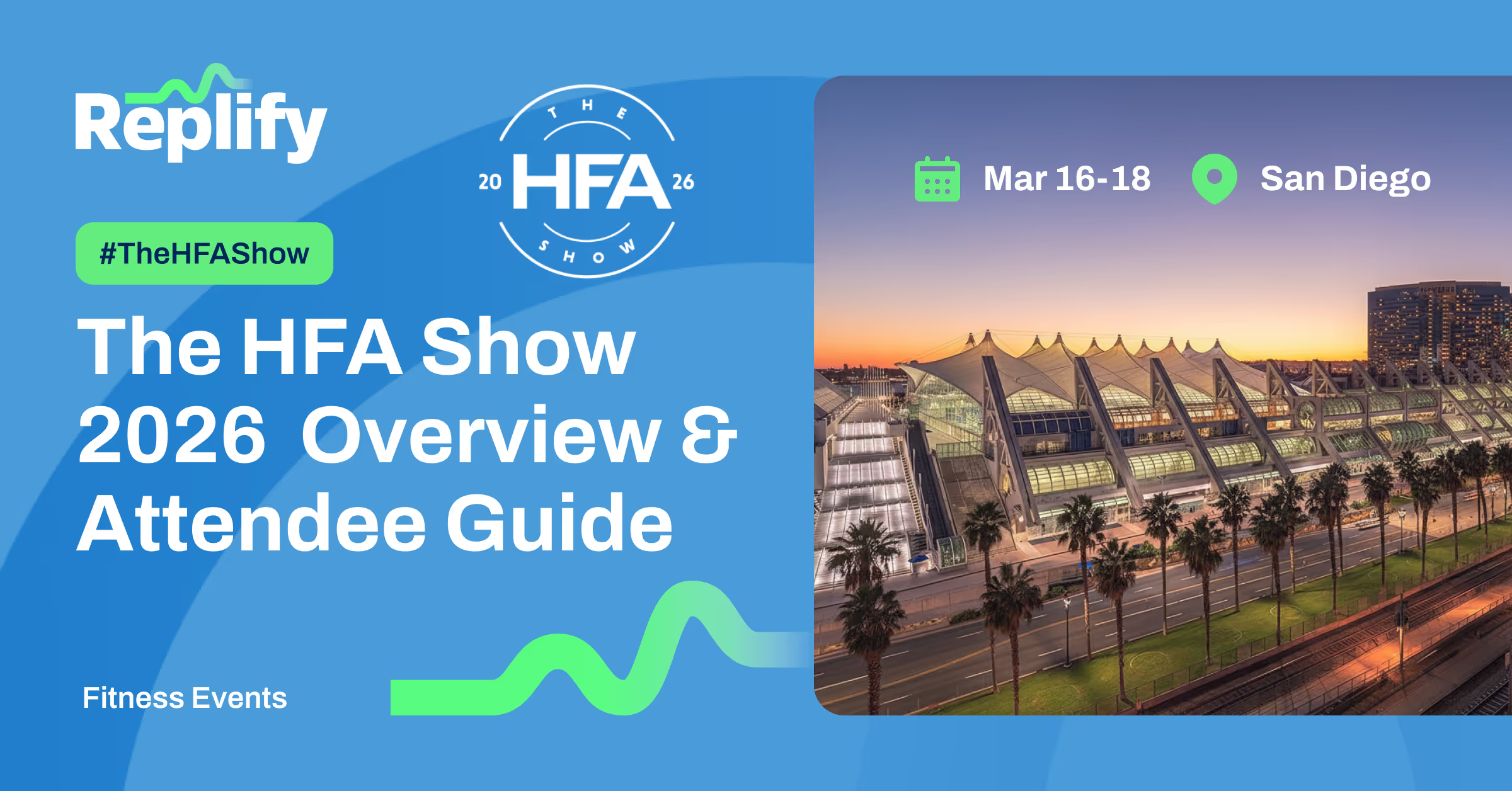
The HFA Show 2026 | Overview & Attendee Guide
Looking for the 2027 guide? Read the HFA Show 2027 Overview & Attendee Guide here.
This event has already happened! Read the updated 2027 HFA Show Guide.
--------
It's one of the largest events in health and fitness, period. Every year, The HFA Show brings together fitness professionals from around the globe for a week of learning, networking, and reconnecting. This article covers what to expect at The HFA Show 2026, plus helpful tips, pricing details, and how to make the most of it. See you all in San Diego, March 16 to March 18.
What Is the Health & Fitness Association?
The Health & Fitness Association (HFA) is the leading trade organization for the global fitness industry, representing gyms, health clubs, fitness studios, and wellness businesses worldwide. Its mission is to grow, promote, and protect the industry while advancing global health through physical activity.
The HFA community is massive, and so is its ecosystem. According to the HFA's 2025 Fitness Industry Benchmarking Report, responding companies reported a median EBITDA margin of 23.6%, with high-profit operators exceeding 35%. Tools like Replify are designed to help you get even more value out of your fitness business. Replify connects your gym or studio to AI-powered sales and customer service automation so you can capture more leads and convert more members without ever missing a call or inquiry.
The State of the Fitness Industry in 2025
The fitness industry has never been stronger. According to William Blair's July 2025 industry report on the fitness sector:
- 24.9% of Americans now belong to a fitness club, up more than 600 basis points over the past decade
- Nearly 83 million Americans hold gym memberships
- Fitness club membership grew nearly 6% in both 2023 and 2024
- U.S. fitness club memberships have risen roughly 20% since 2019
- There are approximately 55,000 commercial fitness clubs operating in the United States
The HFA's 2025 Benchmarking Report reinforces the industry's financial health, with median annual revenue per location reaching approximately $2.5 million and a 9.9% median year-over-year revenue change. Clubs also achieved a 5.5% increase in net membership, demonstrating sustained consumer demand for fitness services.
For gyms and fitness studios looking to capitalize on this growth, the key is converting the 75% of Americans who still don't belong to a fitness club. That's where AI-powered solutions like Replify's AI receptionist come in, helping facilities respond to every lead 24/7.
What Is The HFA Show?
The HFA Show is the must-attend annual conference and trade show where the global health and fitness community comes together. It provides attendees with unparalleled opportunities to learn from industry leaders through hundreds of sessions that cater to all levels of expertise.
Here's why you should attend:
- Skill Up: Dive into hands-on training sessions and breakout workshops, covering everything from sales and marketing to programming and leadership.
- Gain Insights: Keynote speeches and presentations from fitness visionaries will expand your perspective on how the industry is evolving.
- Network: Build meaningful connections with like-minded professionals within the vibrant global fitness community.
- Discover Innovation: Witness cutting-edge demos, discover new products and equipment, and see how others are transforming their businesses with technology and AI for gyms.
HFA Show FAQ
- When is The HFA Show 2026?
- Monday, March 16 to Wednesday, March 18, 2026
- Where is it?
- San Diego Convention Center, California, USA
- Will there be virtual options?
- Check with HFA for livestream and on-demand session availability
- What should I wear?
- Smart casual. Athleisure and sneakers are totally fine. Prioritize comfort.
- Do I need to book early?
- Yes. If you want the best rates and session access, don't wait.
Going to The HFA Show 2026? Stop by the Replify booth for smarter AI-powered sales solutions and swag that doesn't suck. Or just book a demo now and show your team how much time you'll save. See you in San Diego.
The Venue: San Diego Convention Center
The HFA Show 2026 is happening at the San Diego Convention Center (SDCC), the same venue that hosts Comic-Con. It's downtown, right on the water, across from Petco Park and steps from the Gaslamp Quarter. The venue is massive and walkable from dozens of hotels.
Getting there is easy. The airport's about 20 minutes away, and rideshares are everywhere. The SDCC can accommodate thousands of attendees and features an outdoor promenade, big session halls, and a huge dining atrium.
The atmosphere is professional, but it never feels too stiff. It's more like a reunion for people who love fitness and wellness.
Schedule Overview
Here's what to expect for the 2026 schedule:
- Sunday, March 15: Early check-in. Potential pre-conference training and certifications.
- Monday to Wednesday: Sessions, keynotes, Hall of Fame ceremony, and community events.
- Every morning: Early morning workouts hosted by exhibitors.
- Day sessions: Run from around 8 a.m. to 5 p.m.
- Trade show floor: Opens March 17-18 with 250+ exhibitors showcasing the latest equipment, programming, and software.
The official app will be released closer to the event, and the detailed schedule will drop about a month before.
Featured Keynote: Jesse Itzler
The 2026 keynote speaker is Jesse Itzler, a successful serial entrepreneur who sold Marquis Jet to Warren Buffett, was part of the sale of Zico Coconut Water to Coca-Cola, and sold his endurance hiking company 29029 to iFit. He has a passion for endurance challenges including the Ultraman and is an author of "Living With a Seal" and "Living With Monks."
HFA Show Education Tracks
The HFA Show features targeted education tracks designed to empower leaders across the health and fitness sector:
- Staff Management: Build & lead your team with effective recruitment and performance management strategies.
- Sales & Marketing: Learn to attract and retain clients with innovative strategies and proven techniques. (Looking for an edge? Discover how AI sales agents are transforming lead conversion in the fitness industry.)
- Research & Advocacy: Analyze industry-leading research on global wellness and consumer trends from the Health & Fitness Association.
- Technology & Operations: Dive into tools and systems that enhance efficiency and integrate technology, including AI for recreation facilities.
- Programming: Create impactful fitness programs that engage and inspire.
- Retention & Experience: Discover techniques to enhance client experience and increase retention.
- Leadership & Career Growth: Unlock your potential with leadership insights and career development strategies.
- Studio: Explore trends shaping the boutique fitness industry. AI for spas and wellness centers is a growing topic.
- Industry Partner: Learn about the research, equipment, and technology shaping the future of wellness.
Looking for CECs? The HFA Show offers continuing education credits across multiple sessions.
The HFA Show 2026 Theme
This year's HFA Show rallies around a powerful message: Stronger Together. It's more than a tagline—it's a call to action for an industry that thrives on community, connection, and collective impact. The theme reflects the Health & Fitness Association's vision of uniting the industry to advance global health, recognizing that gyms, studios, and wellness centers don't just compete—they collaborate to grow the entire market. With 75% of Americans still not belonging to a fitness club, the opportunity isn't about taking share from each other; it's about expanding the pie together.
From independent studio owners to multi-location operators, from equipment manufacturers to technology providers like Replify, the fitness ecosystem succeeds when we share best practices, advocate for the industry's role in public health, and push each other to deliver better member experiences. The "Stronger Together" theme will be woven throughout keynotes, education sessions, and networking events—a reminder that the connections you make on the trade show floor and in the hallways of the San Diego Convention Center can shape the future of fitness.
Why the Timing Matters: Generational Tailwinds for Fitness
According to William Blair's industry analysis, Millennials and Generation Z account for about 65% of domestic fitness club members, with membership among those under 25 growing at a 7.3% compound annual rate over the past three years. A recent Mindbody survey also indicates Generation Z preferences skew heavily toward strength training.
This generational shift is driving demand for:
- More technology-integrated experiences
- 24/7 responsiveness (which is where AI receptionists excel)
- Personalized communication across text, email, and phone
- Seamless digital-to-physical member journeys
Multi-location operators are investing heavily in AI customer service to meet these expectations at scale.
HFA Registration Options & Pricing
Conference + Trade Show (1, 2, or 3 Day)
Full access to everything The HFA Show has to offer:
- Keynotes
- Education Sessions
- Industry Partner Sessions
- International Forums
- Early Morning Workouts & Exercise Classes
- Trade Show Exhibits
- The HFA Show Kick-Off Party
Trade Show Only (March 17-18)
Two-day access to the trade show and select industry-partner-led educational sessions:
- Industry Partner Sessions
- Early Morning Workouts
- Exercise Classes
- Trade Show Exhibits
Early Bird Pricing: Register early for discounted rates. HFA members receive additional discounts and exclusive networking opportunities.
View current pricing and register
HFA Show Hotels & Accommodations
The main hotels fill up fast. Consider booking at hotels immediately adjacent to the SDCC for maximum convenience. Popular options include:
- Hotels in the Gaslamp Quarter
- Marina District properties
- Hotels near Petco Park
If you're on a budget, check out nearby hotels in Little Italy or East Village. Airbnb is another option. The venue is easy to reach from almost anywhere downtown. Book early. Even the affordable spots get snapped up quickly.
Tips for Attendees
Register early. Prices go up, and rooms get booked. Don't wait.
Wear comfortable shoes. Expect to walk. A lot. Think 15,000 to 20,000 steps a day between sessions, the trade show floor, and exploring San Diego.
Bring sunglasses and a hat. The outdoor terrace is a hidden gem. Great for meals, email catch-up, or impromptu meetings. The San Diego sun hits hard, especially if you're used to gloomier climates.
Pack workout clothes. You're at a fitness conference. Take advantage of the early morning workouts and try new programming from exhibitors.
Talk to people. The fitness community is friendly, and almost everyone is willing to have a conversation. This is your chance to connect with peers from around the world.
Download rideshare apps. If you don't have a pre-arranged ride from the airport, have Uber or Lyft ready. These will also help with quick trips to Coronado, Balboa Park, or other San Diego destinations just out of walking distance.
Explore San Diego. While you're here, take time to explore everything this vibrant coastal city has to offer. From the historic Gaslamp Quarter to the cliffs of La Jolla, there's plenty to see beyond the convention center.
The Business Case for Attending
With membership dues accounting for approximately 76% of fitness facility revenue according to the HFA's 2025 Benchmarking Report, operators are increasingly focused on diversifying into wellness, recovery, and ancillary services. The HFA Show is where you'll discover:
- New revenue streams beyond traditional memberships
- Technology solutions for multi-location businesses
- Strategies for improving your EBITDA margin (the industry median is 23.6%, but top performers exceed 35%)
- Insights from operators who've achieved the 9.9% median revenue growth the industry is seeing
For small and medium fitness businesses looking to compete with larger chains, The HFA Show provides actionable strategies and technology partnerships that can level the playing field.
Don't Miss Replify at The HFA Show 2026
Visit Our Booth: Stop by the Replify booth on the trade show floor to see our AI sales agent in action. We'll have real-time demos, live Q&A, and AI-powered strategies tailored for multi-location fitness operators.
Join Our Session: Attend our featured session on "AI as a Sales Agent for Fitness Businesses," where Replify CEO Tony Small will walk attendees through case studies showing how AI accelerates lead capture, improves customer touchpoints, and drives measurable ROI.
Why attend Replify's demo and session:
- Discover how AI can handle leads 24/7, freeing up staff to focus on service and member experience
- Learn from real-world examples of gyms and studios achieving impressive ROI with conversation-driven AI
- Experience firsthand how our platform uses automation while keeping engagement, empathy, and conversions at the forefront
- See how Replify's outbound AI sales can help you proactively reach leads who haven't converted
Ready to see what Replify can do before the show? Book a demo or try it free.
Industry Resources
Before you attend, brush up on the latest industry insights:
- HFA Research & Insights - Industry benchmarks and consumer trends
- Replify AI Blog - AI strategies for fitness businesses
- Replify Case Studies - Real results from gyms using AI sales agents
- Replify Events - See where we'll be throughout the year
About This Guide
We hope this guide helps you get the most out of The HFA Show 2026. Whether you're a first-time attendee or a returning veteran, San Diego is the place to be for fitness professionals looking to learn, connect, and grow.
The fitness industry is experiencing unprecedented momentum, with nearly 25% of Americans now belonging to fitness clubs and membership growth accelerating. The operators who thrive will be those who embrace technology, optimize their operations, and never stop learning.
See you there!
Sources: William Blair Equity Research, "High-Volume, Low-Price Fitness Clubs Are Driving Growth and Investment," July 2025; Health & Fitness Association, "2025 Fitness Industry Benchmarking Report," based on 2024 financial and operating data from 175 companies representing 17,000+ facilities.
HeyLibby Is Now Replify
Same dedicated team. New name. HeyLibby is now Replify.
We’re excited to share that HeyLibby is now Replify.
Since our founding in 2023 our AI sales and customer service platform has grown substantially both in terms of features and in the number of clients we support. Today, businesses across North America, the UK, Australia, and beyond use our AI agents to do outbound sales and inbound handle calls, texts, chats, and emails instantly, 24/7.
Why the name change from HeyLibby to Replify?
As we expand, we need a name that matches the full range of what our product delivers not just front-desk coverage, but complete communication and sales automation with AI.
Replify comes from two ideas central to our customers’ world:
- Rep: the sales and service reps who keep businesses running.
- Reply: the fast, accurate responses every customer expects.
- Replicate: true scale in communication both for AI sales and AI customer service
- Reps: As in workout reps. Our roots and many of our clients are leader of the fitness world.
Together, they capture how we power 24/7 AI sales and AI customer service, at unmatched speed and scale.
What’s Staying the Same as we go from HeyLibby to Replify?
Nothing changes for our customers.
Your logins, conversations, and integrations remain exactly as they are.
Our team, led by CEO Tony Small and CTO Anna Rodriguez, is the same group you’ve worked with from day one.
We’re still focused on what matters most, helping your team handle more calls, texts, and messages without hiring more staff.
What’s New for Replify (formerly HeyLibby)
You’ll start seeing the new Replify name and logo across our app, website, and communications. We’ve refreshed our design for better readability and accessibility, and we’re introducing new features that make setup and customization even faster.
The new brand reflects where we’re headed: AI that doesn’t just answer calls, but drives growth across your entire customer journey.
Thank You
To everyone who’s supported HeyLibby thank you. You’ve helped us build something special, and we’re excited to keep improving under our new name, Replify.
Not a Replify customer yet? Book a demo to explore your business use case.
10 Ways to Effectively Use AI at Your Gym, Club, or Fitness Studio
Operating a profitable gym or fitness business means balancing constant communication with members while trying to keep operations smooth and personal. Calls, texts, and emails pour in every day, many asking the same questions about schedules, memberships, or promotions. Each unanswered message can mean a missed opportunity.
AI can help. Modern tools now handle repetitive conversations, follow-ups, and outreach automatically, giving your staff more time to focus on what matters most: building relationships and creating great in-person experiences.
This article covers ten practical ways to use AI at your gym, from sales and customer service to billing, retention, and marketing. You’ll see real-world examples of how businesses like Arena Sports, Club24, and Gold’s Gym DC Metro are saving time, reducing missed calls, and growing revenue with Replify AI and other helpful AI tools. Whether you operate a single studio or a national chain, these strategies will help you serve members faster, work smarter, and drive measurable results.
What is AI for Gyms, Clubs, and Fitness Studios?
AI for gyms refers to the use of artificial intelligence to manage customer communication, automate daily tasks, and support business growth. Instead of relying entirely on front desk staff or call centers, AI tools can now answer questions, book sessions, follow up with leads, and even make outbound sales calls.
For fitness operators, this means every member or prospect gets a quick and accurate response, 24 hours a day, without adding more staff. AI systems like Replify connect across phone, text, chat, and email to handle thousands of interactions while staying on brand for each location.
In short, AI helps gyms and studios operate more efficiently, reduce costs, and improve the member experience. It is like adding a dependable team member who never takes a break and always knows what to say. Try the AI for Gyms ROI Calculator
1. AI Sales for Gyms, Clubs, and Fitness Studios
Sales are the lifeblood of any fitness business, but following up with every lead can be difficult. Staff often get pulled into front desk tasks, classes, or phone calls, leaving new inquiries waiting. This is where AI sales assistants like Replify make a measurable difference.
Replify AI qualifies fitness and wells leads, answer sales questions, and follow up across multiple channels including phone, email, chat, and SMS automatically. It can call, text, or email prospects who filled out a form, missed a call, or asked about membership options. Each response is fast, personalized, and consistent, helping more prospects move from interest to sign-up.
Gyms using Replify often see a lift in conversion rates because no lead slips through the cracks. The AI keeps conversations warm, hands off qualified leads to staff when needed, and reports results back into the CRM for tracking. The outcome is a steady increase in new memberships without extra workload on your team. Ready to try AI sales for your gym? Schedule a Replify AI demo.
2. AI Front Desk and AI Customer Service for Gyms, Clubs, and Fitness Studios
Front desk teams are often the heartbeat of a fitness business, but they face nonstop demands. Between greeting members, checking people in, answering calls, and managing emails, it’s easy for messages to pile up or calls to go unanswered. Replify solves this by acting as a virtual front desk assistant that never clocks out.
Replify handles inbound calls, texts, chats, and emails automatically. It recognizes returning customers, gives accurate information about classes, memberships, and pricing, and can even route complex questions to the right staff member. This keeps communication fast and consistent across all locations.
Five-location Arena Sports is using AI handle over 60% of all customer inquiries automatically. Members get immediate answers at any hour, and staff can focus on in-person service. The results speak clearly: a 10x ROI and a 15% labor cost reduction.
Similarly, Premier Sportsplex in Texas uses Replify AI to manage hundreds of weekly inquiries across phone, chat, and text. Their team reports that Replify frees staff to focus on members while ensuring every question gets answered quickly.
With Replify, the front desk becomes more efficient, staff get breathing room, and members experience better service every time they reach out.
3. AI Billing and Collections for Gyms, Clubs, and Fitness Studios
Billing conversations can be uncomfortable for staff and frustrating for members. Missed payments, expired cards, or unclear invoices often lead to back-and-forth calls that take up valuable time. Replify helps gyms handle these situations with empathy and accuracy while keeping communication consistent and professional.
With Replify, billing reminders and payment follow-ups happen automatically. The AI reaches out through text or email to let members know about an issue, provide payment links, or confirm updates to their account. It gives members the benefit of the doubt, using friendly and conversational language rather than formal collection notices.
Club24, a multi-location fitness brand, uses Replify to manage member billing outreach. Before using AI, their staff spent hours each week chasing overdue payments and correcting card errors. Now, Replify automatically notifies members of payment problems, answers common billing questions, and updates their information once the issue is resolved. Staff step in only when human discretion is needed.
The result is fewer awkward calls, faster payment resolution, and better member satisfaction. Members appreciate the gentle reminders, and gyms maintain steady cash flow without adding administrative burden.
4. AI Member Retention at Gyms, Clubs, and Fitness Studios
Keeping members engaged is far more cost-effective than constantly finding new ones. Yet many gyms struggle to maintain regular contact after the first few visits. AI makes retention both measurable and scalable by keeping communication active long after sign-up.
Replify helps gyms build stronger member relationships through consistent outreach. The AI can automatically check in with inactive members, send reminders about classes, and share personalized offers when attendance drops. It can even re-engage past members with win-back campaigns tied to seasonal trends or new programs.
From a business strategy perspective, AI retention works because it removes the delay between behavior and response. When a member stops showing up, the system reaches out immediately. When a contract renewal is coming due, the AI prompts a friendly message or call. Every touchpoint feels personal, but it happens automatically.
High-performing gyms combine this automation with human follow-up. The AI keeps the relationship alive, and staff step in for moments that require empathy or deeper discussion. This blend of AI consistency and human care leads to higher renewal rates, better satisfaction, and more predictable revenue.
5. AI as an Internal Knowledge Base at Gyms, Clubs, and Fitness Studios
When your business spans multiple locations, keeping every employee informed and consistent can be a daily challenge. Policies, promotions, and pricing change often, and information tends to live in scattered spreadsheets or email threads. AI can simplify all of that by serving as a live, searchable knowledge base for your team.
With Replify, staff can ask internal questions just like a customer would. For example, “What is our current student discount?” or “How do I handle a freeze request?” The AI instantly provides the correct, approved answer from your centralized database.
Gold’s Gym DC Metro uses Replify AI this way to support managers and level up newer employees. Instead of relying on busy managers for every question, junior staff can access the same high-quality information on their own. This saves time for managers, improves response accuracy, and helps every team member feel confident when handling member interactions.
As a result, information stays current, training becomes easier, and every member gets a consistent experience across all locations.
Ready to try AI sales and AI customer service for your gym? Schedule a Replify AI demo.
6. AI for Data Analysis at Gyms, Clubs, and Fitness Studios
Most fitness businesses collect plenty of data—attendance records, membership trends, class bookings, and sales metrics—but few have time to analyze it. AI tools can now process that data automatically and turn it into clear insights that drive smarter business decisions.
Platforms such as ABC Fitness, My PT Hub, Mindbody, and Trainerize have begun integrating AI-driven analytics to help owners see patterns in member behavior, forecast churn risk, and identify which programs generate the highest retention. These tools can surface insights that might otherwise go unnoticed, such as which class times lead to the most conversions or which offers attract the longest-term members.
AI data analysis becomes even more powerful when combined with communication tools like Replify. For example, a gym could identify that attendance drops off after 30 days and automatically trigger an AI outreach campaign to re-engage those members.
By using AI to analyze performance and take action on the results, gyms can move from reactive management to proactive strategy. Decisions become faster, campaigns become smarter, and every location benefits from data that finally works for them.
7. AI-Crafted Personalized Fitness Routines at Gyms, Clubs, and Fitness Studios
Members stay longer when they see progress that feels tailored to them. AI makes it possible to deliver that kind of personalization at scale. Instead of static workout plans, AI can design programs that adapt automatically based on goals, preferences, and performance data.
Tools such as Trainerize, My PT Hub, and Freeletics Coach use AI to create personalized fitness routines that adjust as members improve. These systems consider workout history, heart-rate data, and recovery time to recommend the next best session.
Gyms can pair these apps with Replify to create a complete experience. Replify can manage the communication side—checking in after workouts, reminding members of their next session, or offering nutrition guidance through automated messages.
This blend of AI coaching and AI communication helps members feel supported even when they are not in the gym. It gives trainers more time to focus on advanced coaching and personal connections while ensuring every member gets consistent motivation and progress tracking.
8. AI Marketing for Gyms, Clubs, and Fitness Studios
Marketing drives growth, but managing campaigns across email, text, ads, and promotions can take more time than most fitness teams have. AI marketing tools now automate much of that work, helping gyms stay visible, generate demand, and convert leads without extra effort.
Replify goes beyond simple follow-ups. It runs full AI marketing campaigns, AI demand generation, and AI promotions across phone, text, chat, and email. It can automatically reach out to lapsed members, promote seasonal offers, and follow up with new leads from your website or ads. Because Replify connects to thousands of systems—like HubSpot, Mindbody, ABC Fitness, and Google Ads—it can sync data instantly and trigger the right message at the right time.
For example, if a lead clicks an ad but never books, Replify can text them a friendly reminder or offer a free trial. If a member attends fewer sessions, it can send encouragement or a special class invite. Every campaign feels personal and on-brand, yet happens automatically.
By pairing Replify with your existing marketing tools, you create a self-sustaining engine that promotes your business around the clock, fills classes faster, and keeps leads engaged until they convert.
9. AI as a Shared Knowledge Base Across Multi-Location Franchises and Investment Groups
Running a multi-location fitness brand or franchise network means managing hundreds of staff, programs, and policies that can change weekly. Keeping every location aligned is one of the hardest parts of scaling. AI now makes it possible to share accurate, real-time knowledge across an entire organization.
Replify serves as a shared AI knowledge base that ensures every location, manager, and employee has access to the same verified information. Corporate teams can upload FAQs, SOPs, pricing rules, and brand guidelines once, and every franchise location instantly benefits. Staff can then ask natural-language questions—like “What’s the referral incentive this month?” or “How do I handle a membership freeze?”—and Replify provides the approved answer immediately.
For large investment groups and multi-brand operators, this shared knowledge base adds measurable value. It standardizes customer communication across hundreds of locations, reduces manager training time, and prevents inconsistent or outdated responses that hurt the member experience.
Replify also keeps a record of common questions asked by staff, helping leadership identify where more clarity or updated documentation is needed. This feedback loop builds operational consistency at scale, helping every location perform like the top performers in the network.
10. When Not to Use AI at Your Gym, Club, or Fitness Studio
AI can automate a lot, but it should never replace the human side of your business. The best gyms build loyalty through real relationships—handshakes, encouragement, and community. Members stay because they feel seen, supported, and part of something bigger. AI should strengthen that connection, not replace it.
Moments that require empathy, coaching, or personal accountability still belong to people. A frustrated member, a cancellation conversation, or a health concern needs a real human response. These are the moments that define your brand and keep members coming back.
It’s also important to use AI systems with guardrails. “Do-it-yourself” models built by contractors or pieced together from open tools can produce errors or “hallucinations,” where the system gives wrong or misleading information. That risk can damage trust quickly. Mature platforms like Replify are built with accountability, training data controls, and safety systems that prevent those mistakes while maintaining compliance and accuracy.
In short, AI should handle scale, speed, and consistency. Your team should handle care, connection, and community. The gyms that get this balance right build not only efficiency but lasting loyalty.
AI for Gyms, Fitness Studios, and Clubs FAQ
What can AI actually do for my gym?
AI can automate repetitive tasks like answering calls, sending follow-ups, booking appointments, and managing leads. It can also analyze data, generate personalized fitness plans, and run marketing campaigns. Tools like Replify bring all these functions together so gyms can serve members 24/7 without adding staff.
Is AI hard to set up or manage?
No. With modern platforms such as Replify, setup takes only a few days. The system learns your business details—hours, pricing, class types, and policies—then starts handling common questions right away. Updates are simple, and performance is tracked through built-in dashboards.
Will AI replace my staff?
AI is meant to support your team, not replace it. It takes over repetitive communication so your staff can focus on personal training, sales, and in-person experiences. Businesses using Replify often report higher staff satisfaction because employees spend more time doing meaningful work.
Is my member data secure with AI tools?
With established providers like Replify, yes. The platform follows strict security and privacy standards, including encrypted communication, data isolation per client, and access controls. Avoid using open or self-built AI systems that lack compliance measures.
What results can I expect from using AI?
Gyms and studios typically see faster response times, improved lead conversion, and better member retention. For example, Arena Sports achieved a 10x ROI after automating 60% of inquiries, and Gold’s Gym DC Metro saved managers hours each week while improving member follow-up rates.
Can AI integrate with the systems I already use?
Yes. Replify connects to thousands of platforms such as Mindbody, ABC Fitness, HubSpot, Google Ads, and Mailchimp. This allows the AI to update schedules, sync leads, and trigger marketing campaigns automatically.
How do I start using AI at my gym?
You can begin with a simple use case like automating missed-call responses or lead follow-ups. From there, expand into billing outreach, retention campaigns, and multi-channel marketing. Replify offers a quick onboarding process and live support to guide you through each step.
How much does AI for Gyms, Fitness Studios, and Clubs cost?
Very few AI vendors publish transparent pricing, however, Replify AI is an exception. Their pricing page has an always free plan, and paid plans start a $50/month.
Ready to try AI sales and AI customer service for your gym? Schedule a Replify AI demo.
Fitness Technology Summit 2026
The Fitness Technology Summit is October 12-14, 2026 at the Gaylord National in Washington D.C. Senior leaders across fitness, health, retail, and hospitality gather for invite-only sessions, real case studies, and executive networking that leads to deals.
This year’s focus centers on practical personalization with AI and data to lift member loyalty, improve retention, and drive revenue at scale. Expect curated panels, fireside chats, a Startup Spotlight, and a group dinner that makes new partnerships feel easy. If you guide a multi-location brand or a high-growth concept, this is your room; request an invitation and lock your hotel rate now.
This article is brought to you by Replify AI, an AI receptionist and AI sales agent trusted by Gold’s Gym, UFC Gyms, Anytime Fitness, Zoom Tan, Zoom Fit, and more…
What is the Fitness Technology Summit
The Fitness Technology Summit is an invite-only event for senior leaders in fitness, health, retail, and hospitality. It focuses on real results with AI and data; how to lift member loyalty, raise retention, and grow revenue across many locations. Attendees meet peers, learn from operators and technologists, and leave with plans they can use the next day.
At a glance
- Curated audience of executives and vetted sponsors; quality over size.
- Panels, fireside chats, and case studies with clear takeaways.
- Startup Spotlight for new tools with proof in market.
- Structured time to meet decision makers; receptions and a group dinner.
- Annual U.S. summit in Chicago for 2025; Europe event set for 2026.
Where is the Fitness Technology Summit?
- United States (2026): Washington D.C. Gaylord National, October 12–14, 2026.
- Europe (2026): London, England. Stamford Bridge Stadium, May 19–20, 2026.
What to expect at the InterContinental Hotel, Chicago for the US Fitness Technology Summit 2025
- Historic setting with style. The InterContinental sits on the Magnificent Mile in the former Medinah Athletic Club. Art Deco details, grand lobby, and city views set the tone.
- Iconic pool. A landmark Junior Olympic pool with terra-cotta tiles and hand-painted ceiling; quiet hours in the early morning; family hours later in the day.
- Fitness options. Full gym with cardio, free weights, and mats; locker rooms with showers and towels.
- Rooms that support work. Fast Wi-Fi, ample outlets, good desks, blackout curtains, and firm mattresses; request a quiet floor if you plan early starts.
- On-site restaurants and coffee. Casual spot for breakfast, lobby bar for quick meets, room service for late nights.
- Event flow. Ballroom and breakout rooms on dedicated levels; clear signage; staff that guides you to panels and private meetings.
- Easy arrivals. Curbside area for ride share; on-site garage; CTA Red Line a short walk away; quick cab rides to River North and the Loop.
- Walkable perks. Riverwalk access within minutes, Michigan Avenue retail outside the door, plenty of dinner options for small groups.
- Block rate. Discounted rooms for confirmed attendees; the hotel can cancel non-attendee reservations, so book after you receive your invite.
- Pro tips. Ask for a mini-fridge if you track nutrition; pack swim gear for the pool; bring a light jacket since meeting rooms can run cool.
Agenda Highlights: Fitness Technology Summit US 2025
Monday, October 13
- 5:00–7:30 pm. Welcome Reception at the InterContinental. Heavy apps, drinks, first meetups.
- Evening open. Set dinner with sponsors or new contacts.
Tuesday, October 14
- 7:00 am–5:00 pm. Main Summit day. Keynotes, fireside chats, operator-led panels.
- Opening advisory panel. Mastering Digital Personalization and Tools: AI and data for unforgettable customer experiences.
- Meals included. Breakfast, lunch, snack breaks for quick meetings.
- 7:00–10:00 pm. Summit Group Dinner. Full room together for food, drinks, and conversations.
Wednesday, October 15
- 7:00 am–3:00 pm. Second Summit day. Keynotes plus focused breakouts for business, marketing, and tech.
- Startup Spotlight. Fast looks at new tools with real results.
- Breakfast and boxed lunch provided.
Pro tips
- Block time on your calendar now for one-on-ones between sessions.
- Book the discounted attendee rate at the InterContinental after your invite is confirmed.
- Pack pool gear and a light layer. Meeting rooms can run cool.
Who should attend the Fitness Technology Summit
- Multi-location operators and franchise leaders. CEOs, COOs, GMs, and owners who run many sites and want stronger member growth, retention, and unit economics.
- Digital, marketing, and revenue leaders. CMOs, VPs, and directors who own demand, member lifecycle, and paid plus owned channels.
- Product, data, and IT executives. CTOs, CIOs, heads of product and data who care about accuracy, security, integrations, and time to value.
- Member experience leaders. VPs of Operations, contact center leads, and guest services directors who need better coverage and consistent answers.
- Corporate development and partnerships. Executives scouting tech with real results and clear ROI.
- Vetted solution providers. Sponsors and startups with customers in market and proof they can support enterprise rollouts.
Fitness Technology Summit FAQ
What is the Fitness Technology Summit?
An invite-only summit for senior leaders in fitness, wellness, and related sectors. The focus is AI, data, member loyalty, and revenue growth with proof from real operators.
When and where is the US event?
October 13 to 15, 2025. InterContinental Hotel, Chicago.
Is there a Europe event?
Yes. May 19 to 20, 2026 at Stamford Bridge Stadium in London.
Who should attend?
Executives from multi-location brands. Leaders in operations, marketing, product, data, and IT. Vetted sponsors with customers and references.
How do I request an invitation?
Submit a request. Capacity is limited. Each request is reviewed.
What does a ticket include?
Keynotes, panels, breakouts, Startup Spotlight, the welcome reception, and the group dinner. Breakfast and lunch on full days. Coffee and snacks.
What is the dress code?
Smart casual. A blazer or clean polo works. Bring a light layer since rooms can run cool.
Are there hotel details I should know?
A discounted room block is available at the InterContinental for confirmed attendees. Book after your invite is accepted.
Which airports are closest and how do I get to the hotel?
O’Hare and Midway. Taxis and rideshare reach the hotel fast. CTA stops are a short walk.
Can I bring a teammate?
Yes, if space allows. Submit a separate request.
What about substitutions and refunds?
Email the organizers if plans change. They will advise on options.
Are meals provided and can you handle dietary needs?
Yes. Vegetarian and gluten-free options are available. Note any needs on your request or email the team.
Is Wi-Fi available and will there be power?
Conference Wi-Fi is provided. Power strips sit near seating. Bring a compact charger.
Will sessions be recorded?
Select talks may be recorded for recap. Some discussions may follow Chatham House Rule.
How are sponsors chosen?
By results, references, and fit with the audience. Booth-only vendors are not a fit.
Can I speak or join a panel?
Speakers are curated. Share a short pitch with a case study and outcomes.
What is the Startup Spotlight?
Fast onstage demos from companies with live customers and measurable results.
What is the code of conduct?
Be professional, inclusive, and respectful. The team may remove anyone who violates this.
What is contact information for the Fitness Technology Summit?
Email fts@getalta.com for prompt support.
Fitness Technology Summit Conclusion
Chicago. October 13 to 15, 2025. Three focused days to learn from operators, compare notes with peers, and leave with a plan you can run next week. If you lead a multi-location brand and care about member growth, retention, and clear ROI, this room is worth your time.
Though Replify AI is not attending in 2025, if you want a straight read on AI that answers more calls, captures more leads, and frees staff for on-site service, grab an AI receptionist demo.
.avif)
AI Sales Assistant for Gyms & Fitness
Gyms face a constant challenge: staff are stretched thin handling tours, training, and in-person service, while leads slip through the cracks when calls and emails go unanswered. An AI sales assistant solves this gap by working 24/7 to capture leads, follow up, and keep prospects moving toward membership. Instead of missing opportunities after hours or overloading front desk staff with repetitive questions, gyms can rely on AI to handle routine outreach and free the team to focus on building relationships on the floor. The result is more sales conversations, better member experiences, and measurable growth at a lower cost.
What is an AI Sales Assistant for Gyms?
An AI sales assistant is software that takes on the role of a round-the-clock salesperson for your gym. Instead of relying only on front desk staff or part-time callers, the AI engages with leads instantly over phone, email, chat, or text. It answers common questions, qualifies prospects, books tours, and follows up automatically.
For gym owners, this means every inquiry is acknowledged the moment it comes in. No missed calls after hours. No staff juggling between giving a tour and answering the phone. The AI sales assistant works in the background to keep the sales funnel full and organized. It captures lead details, keeps prospects engaged, and escalates only the conversations that need a human touch.
What types of gyms and fitness studios should get an AI sales assistant?
AI sales assistants deliver the most value to gyms and studios that see a steady flow of inquiries and struggle to keep up with responses. Multi-location operators, high-volume fitness centers, and franchises often benefit first because they handle hundreds of calls, texts, and emails every week. But even single-location gyms or boutique studios can see ROI if their staff are constantly pulled away from members to answer phones or follow up on leads.
Whether it’s a large chain managing thousands of prospects across regions or a smaller studio trying to maximize every lead, AI helps ensure no opportunity slips through the cracks.
AI Sales Assistant for Large Gyms and Chains
Gold’s Gym DC Metro is a clear example of how AI sales assistants reshape sales at scale. With dozens of locations and a constant flow of calls, emails, and chats, the team struggled to respond quickly and capture every lead. After implementing Replify, they saw a 9.9X increase in leads captured. Read the Gold's Gym AI Sales Case Study
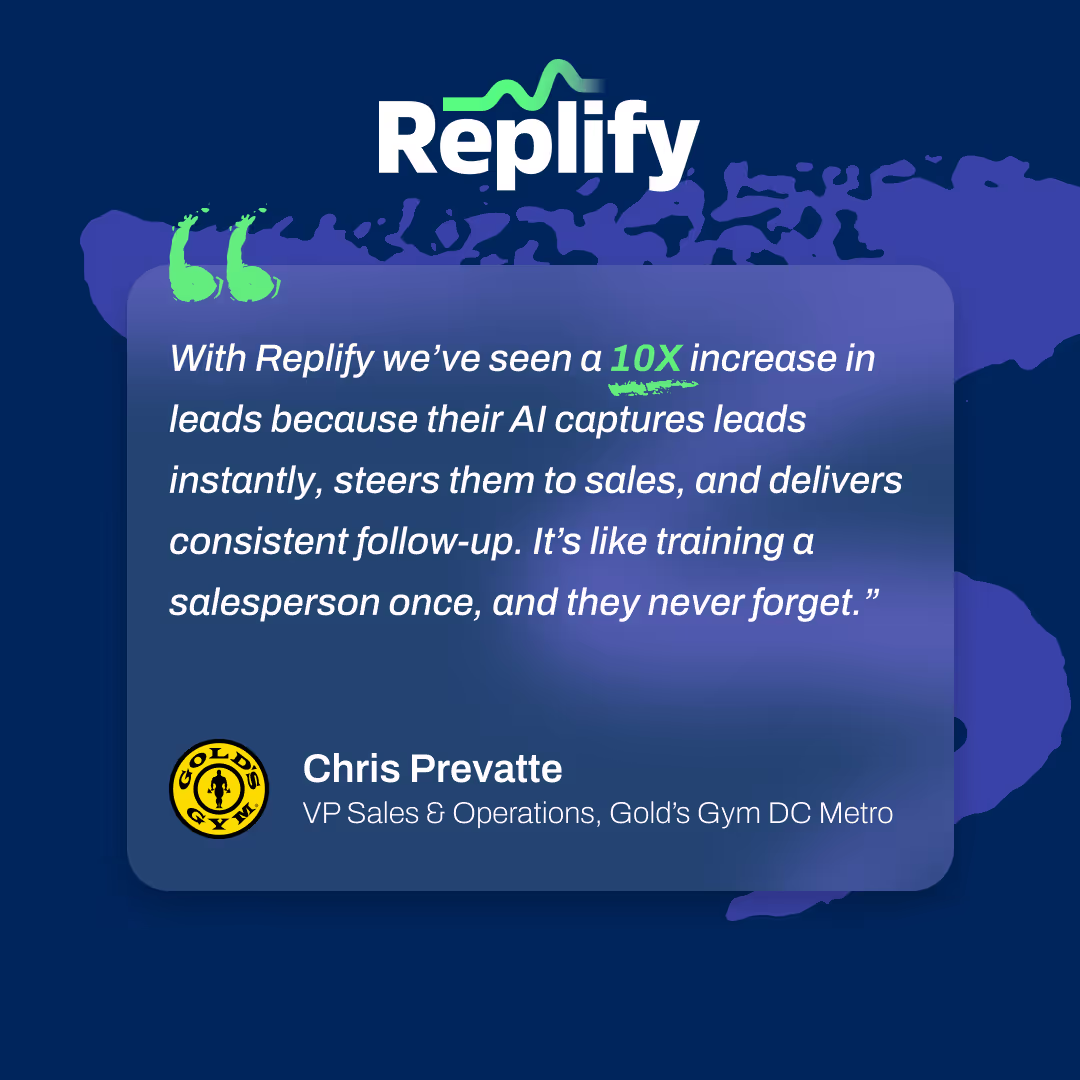
Instead of sending prospects to voicemail or relying on overworked staff, the AI answered inquiries instantly, booked appointments, and kept the pipeline moving 24/7. The sales team could focus on closing memberships and delivering a strong in-gym experience, while Replify handled the repetitive, time-sensitive follow-ups.
The result was more qualified conversations, higher conversion rates, and a consistent member experience across all locations.
AI Sales Assistant for Recreation Facilities
Recreation facilities face the same challenge as gyms: members call, email, and text at all hours with urgent questions about schedules, pricing, and sign-ups. Traditional phone trees frustrate people and often send them in circles. An AI sales assistant gives members direct, conversational answers right away, no matter the channel.
Arena Sports in Seattle put this into practice across five large facilities. By using Replify, they automated 60% of inquiries, cut labor costs, and achieved a 10X ROI. Parents got instant responses about program availability, age groups, and registration deadlines, while staff had more time to focus on in-person service. Read the Arena Sports AI Case Study.
At Premier Sportsplex, leadership reported that Replify now automates 70% of their inbound communication across phone, email, chat, and text. This removed the burden of answering repetitive questions and allowed staff to prioritize delivering an excellent in-person sports experience. Read the Premier Sportsplex AI Sales Assistant Case Study
For recreation centers with busy schedules and high volumes of family inquiries, an AI sales assistant ensures no member is left waiting and no opportunity is missed.
AI for Fitness and Wellness Franchises and Chains
Franchises and multi-brand operators often juggle hundreds of locations, thousands of calls, and the need to maintain a consistent member experience across every site. AI sales assistants provide the scale these businesses need—handling high call volumes, capturing leads, and ensuring no prospect is lost in the shuffle.
Zoom Tan and Zoom Fit, with nearly 100 locations nationwide, use Replify to automate half of their incoming calls. That’s 300 calls a day managed by AI, saving staff thousands of hours while keeping members and prospects engaged around the clock. Read the Zoom Tan and Zoom Fit AI Receptionist Case Study
Seattle Sun Tan, a regional tanning chain, also turned to AI to manage the constant flow of inquiries across locations. Instead of overloading staff or letting calls go to voicemail, Replify steps in to answer questions, route calls correctly, and book appointments. Read the 50+ location Seattle Sun Tan AI Customer Service Case Study
For franchises and wellness chains, this means lower labor costs, higher lead conversion, and a consistent standard of service across every location.
AI for CrossFit Gyms
CrossFit affiliates thrive on community and coaching, but many struggle with the admin side of the business. Coaches are busy running classes, leaving calls and emails unanswered or delayed. An AI sales assistant fills that gap by handling inquiries the moment they come in.
Prospects asking about class schedules, drop-in rates, or intro sessions get immediate answers. The AI can also book consultations or free trial classes directly into the calendar. For existing members, it helps with account updates, reminders, and common FAQs so coaches stay focused on the floor.
Because CrossFit boxes often run lean teams, the impact is immediate: fewer missed leads, smoother onboarding for new members, and less time spent chasing down repetitive questions. The AI essentially becomes the front desk for gyms that never had one.
Ready to build your own AI for your Crossfit Gym? Get started here.
AI for Yoga and Boutique Studios
Yoga and boutique studios succeed by offering a personalized experience, but limited staff often means phones go unanswered during class hours. Every missed call can mean a lost student or a missed opportunity to fill a class.
An AI sales assistant ensures every inquiry is answered in real time. Prospects asking about class passes, membership options, or beginner schedules get instant replies. The AI can also manage trial sign-ups, send reminders, and follow up with leads who showed interest but haven’t booked yet.
For boutique operators, this creates a more professional first impression and removes the stress of juggling admin work between classes. It also helps keep class spots full without adding payroll. The result is higher conversion rates, better member satisfaction, and more time for instructors to focus on delivering the experience that sets their studio apart. Ready to build your own AI for your Yoga Studio? Get started here.
How much do AI Sales Assistants cost?
Most AI providers keep pricing vague or hide it behind sales calls, which makes it hard for gyms to budget. Replify takes a different approach. There are no setup fees and no long-term contracts. You can launch in days, try the product risk-free, and scale as needed.
Replify offers paid plans starting at $300 per month. This makes it accessible for single-location studios as well as large fitness chains.
👉 Learn more about Replify pricing
What’s the ROI on a Sales Assistant?
The return on investment for an AI sales assistant is straightforward: fewer missed leads, lower labor costs, and more memberships closed. Facilities that adopted Replify have reported results like:
- Gold’s Gym DC Metro: 9.9X increase in leads captured.
- Arena Sports: 10X ROI by automating 60% of inquiries.
- Zoom Tan and Zoom Fit: Thousands of staff hours saved across 100 locations.
The math adds up quickly. If your gym misses even a handful of memberships a month because calls go unanswered, the lost revenue can far outweigh the cost of AI. With 24/7 coverage and automated follow-up, gyms can capture every opportunity and reinvest staff time where it matters most.
👉 Use the AI ROI Calculator to see potential savings and revenue growth for your facility.
AI Sales Assistant Set-Up and Integrations Process
The best AI sales assistants are built to fit the unique needs of each gym or fitness chain. While tools differ by provider, most successful deployments follow five core pillars:
- Training
Your AI assistant is trained on core business details: hours, pricing, class schedules, and FAQs. This ensures it can handle routine inquiries with accuracy from day one. - Customization
Modern AI assistants allow you to adjust voices, prompts, and tone to match your brand. Companies like Replify offer robust libraries of pre-made prompts, so gyms don’t have to start from scratch. - Integrations
A strong AI assistant connects with the systems you already use: calendars for booking tours, CRMs for tracking leads, and communication platforms for calls, texts, and emails. These integrations turn AI into a true sales partner rather than just a call-answering tool. - AI Sales Campaigns
Beyond answering inbound questions, AI can run outbound campaigns. That means following up with leads, reminding prospects about free trials, or contacting members about renewals—all automatically and at scale. - Continuous Learning
The most effective assistants get better over time. They learn from real conversations, flag gaps, and suggest new answers or campaigns. This cycle of improvement ensures the AI stays accurate and aligned with your evolving business needs.
By focusing on these pillars, gyms can adopt AI sales assistants in days instead of weeks, while ensuring the system is flexible enough to support long-term growth.
AI Sales Assistant FAQ
Can I get an AI sales assistant demo?
Yes. A demo is a great way to see the AI sales assistant in action before committing. This helps you test features like call handling, lead capture, and integrations. Schedule an AI sales assistant demo here.
How much do AI sales assistants cost?
Pricing varies widely. As covered earlier, many companies hide costs until after a sales call. However, some providers like Replify publish transparent pricing, with an always-free plan and paid tiers starting at $50/month. AI sales assistant pricing.
Do AI sales assistants have setup fees?
In many cases, yes. Some AI providers charge thousands in upfront setup fees. An exception is Replify, which offers no setup costs and fast onboarding.
Is there an AI sales assistant free trial?
It depends. Most AI Sales Assistants like HireBob, AI Front Desk, KeepMe, Smith AI, do not offer free trials. Replify's AI Sales Assistant does have a two week free trial, with no credit card needed, and an aways free plan. Start your AI sales assistant free trial by scheduling a demo here.
What do customers think of AI sales assistants?
Gyms and recreation centers using AI assistants report higher lead capture, reduced staff workload, and better member experiences. Case studies from Arena Sports, Gold’s Gym DC Metro, and Premier Sportsplex highlight double-digit ROI and consistent 24/7 coverage.
Can an AI sales assistant integrate with my existing systems?
Yes. Modern AI assistants connect with calendars, CRMs, phone systems, and email platforms. This allows them to book tours, track leads, and send automated follow-ups without adding extra tools.
Will an AI sales assistant replace my staff?
No. The goal is to offload repetitive tasks like answering FAQs and booking appointments, so your staff can focus on in-person service and closing sales. 100 location Zoom Tan is resolving 50% of repetitive customer inquiries with AI.
How fast can I launch an AI sales assistant?
Many gyms are live in days. Once business info and integrations are set up, the AI can immediately start handling inbound and outbound communication. Schedule a free demo and AI sales assistant onboarding call now.
Getting Started with an AI Sales Assistant
AI sales assistants are delivering measurable ROI for gyms, studios, and recreation facilities today. From capturing more leads at Gold’s Gym DC Metro to saving thousands of staff hours at Arena Sports and Zoom Tan, the results are consistent: more sales, lower costs, and better member experiences.
If your team is stretched thin or you’re missing opportunities after hours, now is the time to explore what AI can do for your gym.
👉 Book a demo of an AI sales assistant and see how quickly you can start turning missed calls into new members.
AI Sales in Fitness and Recreation: How Gyms and Clubs Are Driving Growth with Automation
Introduction: Why AI Matters for Sales in Fitness and Recreation
Selling memberships in gyms, studios, and recreation facilities has never been more competitive. Staff juggle phone calls, tours, emails, and walk-ins, often leaving leads unanswered or follow-ups delayed. Trial passes expire without conversion. Prospects walk out the door without a clear next step. Every missed call or late response is lost revenue.
Artificial intelligence changes this equation. With AI handling routine conversations, qualifying leads, and sending timely follow-ups, every inquiry gets an answer. Prospects receive the right nudge at the right time, and staff can focus on creating great in-person experiences instead of chasing voicemails.
The result is more captured leads, higher trial-to-membership conversion, and stronger retention. For gyms and recreation businesses, AI is no longer a futuristic concept. It’s a practical sales tool delivering measurable growth today.
The Core Sales Challenges in Fitness and Recreation
Running sales in gyms, clubs, and recreation centers comes with persistent challenges that directly impact revenue:
- High trial pass drop-off: Many prospects enjoy a free trial but never convert, often due to lack of timely follow-up or guidance.
- Missed calls and messages: Staff are busy on the floor, which means phone calls, emails, and chats go unanswered. Every missed inquiry is a lost opportunity.
- Staff stretched thin: Teams must balance in-person service with digital inquiries. This split focus reduces the quality of both.
- Rising labor costs: Covering phones or hiring extra staff just to manage inquiries eats into margins.
- Inconsistent follow-ups: Prospects may receive generic or late communication, making them feel undervalued.
These challenges compound into what many operators call a “leaky sales funnel.” Leads come in, but too many slip away before becoming paying members.
Listen to AI handling a call for Gold's Gym
How AI Improves Sales Outcomes
AI tackles the biggest sales challenges in gyms and recreation businesses by automating repetitive tasks and creating consistent, personalized engagement. Instead of staff chasing every inquiry, AI ensures no lead slips through the cracks.
AI Instant Lead Capture and Qualification
Most gyms lose leads after hours or when staff are tied up with in-person members. AI eliminates that gap. An AI receptionist can answer calls, texts, chats, and emails around the clock, capturing every inquiry the moment it comes in.
Beyond just logging the contact, AI can qualify leads by asking simple questions about goals, location preferences, or class interests. This information is stored automatically, so when a staff member follows up, they already know what matters most to the prospect.
The result: no more missed opportunities and a steady stream of pre-qualified leads ready for conversion.
Personalized Follow-Up at Scale with AI
Generic emails and delayed responses make prospects feel like just another number. AI fixes this by sending timely, relevant messages based on each person’s activity and goals.
If a trial member attends a strength class, the AI can recommend the next session or highlight a trainer who fits their interests. If someone hasn’t returned after their first visit, the AI can send encouragement and tips for recovery. Every touchpoint feels tailored, not mass-produced.
This type of personalization delivered automatically and at scale keeps prospects engaged throughout their trial and makes them far more likely to convert to full membership.
AI Automates Scheduling and Reminders
Back-and-forth messages kill momentum. AI removes the friction.
- Prospects pick a time from live availability for tours, trials, or consults.
- Bookings drop straight into your team’s calendar with confirmations sent instantly.
- Smart reminders go out by text or email at the right intervals to cut no-shows.
- If someone cancels, AI offers the next best slot and fills gaps fast.
The impact is simple. Less admin, fewer missed appointments, and more qualified conversations that lead to memberships.
AI Outbound Sales Campaigns
Reaching every lead on time is nearly impossible for busy staff. AI makes it automatic.
- High-volume outreach: Hundreds of calls or texts can go out in minutes instead of days.
- Timely nudges: Promote expiring trial passes, class sign-ups, or seasonal offers without relying on staff bandwidth.
- Consistent messaging: Every prospect hears the right message at the right time, with no variation between locations.
- Stronger conversion: Urgent, targeted outreach keeps prospects engaged and drives them toward joining.
With AI running outbound campaigns, recreation facilities can scale their sales activity without scaling payroll.
Data-Driven Insights from AI Sales Tools
From the early days, AI has disrupted data analysis. It's ability to quickly analyze vast and disparate data is unparalleled. It collects and analyzes every interaction to reveal what actually drives conversions.
- Lead scoring: AI ranks prospects by engagement signals—such as visits, email opens, or class attendance—so staff can prioritize the hottest leads.
- Behavior patterns: Insights highlight which classes, offers, or communication styles lead to the most sign-ups.
- Retention signals: Drop-off trends show which members are at risk of canceling, giving staff a chance to intervene early.
- Campaign optimization: Operators can test subject lines, text messages, and call scripts with real performance data, then double down on what works.
Instead of guessing, gyms and recreation businesses can use these insights to refine sales strategies and maximize return on every lead.
Proven AI Case Studies in Fitness and Recreation
The impact of AI sales isn’t hypothetical. Fitness clubs and recreation facilities across the country are already using it to capture more leads, reduce labor costs, and deliver measurable ROI. These examples highlight how AI changes the sales equation in real-world settings.
- Arena Sports: 10X ROI with AI Receptionist
- Gold’s Gym DC Metro: 9.9X Lead Capture
- Premier Sportsplex: Freeing staff to focus on in-person members
AI Call Automation Video
AI ROI Calculator: Measuring the Business Impact
One of the fastest ways to understand the value of AI in fitness and recreation is to compare costs against the lifetime value of new members.
- Member Lifetime Value (LTV): If a member pays $60 per month and stays for two years, that’s $1,440 in revenue.
- AI System Cost: Even at a few hundred dollars per month, capturing just two or three extra members covers the cost.
- Savings on Labor: Automating routine calls, emails, and chats reduces front desk workload and cuts labor expenses.
- Conversion Uplift: Case studies show gyms using AI report ROI multiples of 9X to 10X, with more predictable revenue growth.
By plugging in your membership fees, average retention, and AI subscription cost, operators can calculate how quickly the system pays for itself. For many, the breakeven point comes within the first month.
Implementation: Getting Started with AI Sales in Your Club
Adopting AI sales tools doesn’t have to be complicated. With the right partner, gyms and recreation centers can go live in days, not months.
Setup Timeline
Most systems train on your website, FAQs, and program details in minutes. A typical rollout is complete within a week, covering inbound calls, chats, texts, and emails.
Key Integrations
Replify's AI integrates with the gym software you already use:
- CRM platforms like HubSpot, Mindbody, or ClubReady.
- Communication channels including phone, SMS, email, and web chat.
- Calendars and scheduling systems to enable direct booking.
Staff Enablement
AI works best as an extension of your team. Staff handle high-value in-person interactions, while AI manages repetitive outreach and qualification. This hybrid approach ensures efficiency without losing the human touch.
The result is a smooth, quick adoption process that improves sales performance almost immediately.
Setup Timeline
Getting started with AI sales like Replify doesn’t require months of technical work. The process is fast and straightforward:
- Training in Minutes
The AI learns from your website, FAQs, and program materials to handle common questions right away. - Pilot Within Days
A small rollout at one location tests responses, call routing, and outbound messaging before expanding. - Full Deployment in Under a Week
Once tuned, AI can go live across all locations, managing calls, chats, emails, and texts 24/7. - Continuous Optimization
As members interact with the AI, new questions and use cases get added, making the system smarter and more effective over time.
For most clubs, AI can move from sign-up to full operation in less than a week—delivering immediate value without long implementation cycles.
How to Set-up AI Integrations
AI sales tools work best when they connect directly to the systems you already use. A smooth integration ensures no lead is lost and every touchpoint is logged.
- CRM Platforms: Connect AI to HubSpot, Mindbody, ClubReady, or other management systems so every interaction is tracked. This gives your team full visibility into where each lead is in the sales funnel.
- Calendars: Sync with Google or Outlook to allow AI to book tours, consultations, and sign-ups without staff intervention.
- Phone and Messaging: Route calls, texts, and chats through AI so it can answer routine questions, qualify leads, and escalate to staff when needed.
- Payments and Registration: For promotions or program sign-ups, AI can connect with your payment system to guide members through the process.
These integrations allow AI to function as part of your sales team, not just a stand-alone tool, creating a seamless experience for staff and members alike.
AI Staff Enablement
AI isn’t meant to replace your team. It’s designed to take repetitive work off their plate so they can focus on what matters most—building relationships and closing memberships.
- Reduce admin load: AI handles the constant flow of calls, emails, and chats that otherwise distract staff from in-person service.
- Provide better context: Every interaction AI has with a prospect is logged. When staff step in, they see goals, questions, and past activity, making conversations more productive.
- Hybrid approach: AI manages lead capture, scheduling, and follow-ups. Staff concentrate on tours, personal training consults, and creating memorable in-person experiences.
- Boost morale: By shifting tedious work to AI, staff can spend more time doing the engaging, human side of their jobs.
This balance makes the sales process more efficient without losing the personal connection that drives member loyalty.
AI Best Practices for Maximizing Results
Implementing AI sales tools is only the first step. To get the strongest results, operators should follow a few proven practices:
- Keep messaging consistent: Make sure the AI reflects your brand voice across all locations so every prospect gets a uniform experience.
- Blend AI with human touch: Let AI handle initial inquiries, scheduling, and follow-ups, but ensure staff step in for tours, consultations, and complex questions.
- Continuously update FAQs and offers: As programs, pricing, or schedules change, update the AI so prospects always receive accurate information.
- Use data insights: Review AI dashboards and reports to see which messages, offers, or classes drive the most conversions. Adjust campaigns based on what works.
- Start with one location, then scale: Pilot the system, refine the scripts, and roll it out chain-wide for maximum impact.
With these practices in place, AI becomes a reliable extension of your sales team—capturing more leads, converting more trials, and freeing staff to focus on in-person member experience.
The Future of AI in Fitness Sales
AI is moving from being a helpful add-on to becoming a core part of how fitness and recreation businesses grow. The next wave of innovation will push sales even further:
- Hyper-personalization as the standard: Every prospect will receive communications tailored to their goals, past activity, and preferences. AI will treat each member as a “segment of one.”
- Answer Engine Optimization (AEO): As more people use tools like ChatGPT and Claude to ask fitness questions, gyms will need to optimize content so their brand appears in AI-generated answers.
- Real-time adaptation: AI will automatically adjust sales messaging and offers based on live demand signals, like class capacity or seasonal interest.
- Hybrid human + AI teams: Staff will focus on motivation, tours, and relationship-building while AI manages outreach, scheduling, and data. This blend creates both efficiency and deeper personal connections.
- Integration with wearables and health data: Expect AI to connect with devices and biometrics, offering sales prompts tied to real member behavior, from workout streaks to recovery trends.
For gyms, studios, and recreation centers, AI is no longer just about saving time. It is shaping the next competitive advantage in attracting and retaining members.
AI for Gyms and Fitness Final Thoughts and Next Steps
AI is delivering measurable results today: capturing every lead, converting more trials into members, and giving staff time to focus on the in-person experiences that build loyalty. AI Case studies show 9–10X ROI, stronger member engagement, and reduced labor costs when AI becomes part of the sales process.
For operators, the path forward is clear:
- Start small—pilot AI at one location to prove results.
- Measure impact—track trial conversions, labor savings, and member satisfaction.
- Scale with confidence—roll out across all locations once the system is tuned.
The gyms and recreation businesses that adopt AI now will be the ones setting the pace in the next 12–18 months.
If you’re ready to see the impact firsthand, book a demo with Replify. Setup takes days, not months, and there are no long-term contracts
AI Receptionist ROI Calculator
Measuring the return on investment (ROI) from an AI front desk is straightforward once you understand the inputs. Every missed call or delayed response has a cost, and every captured lead has a value. By putting real numbers to inquiry volume, staff time, and customer lifetime value, businesses can see exactly what an AI front desk contributes to the bottom line.
This article provides a simple ROI calculator you can use to model savings and revenue impact for your business. You’ll be able to estimate:
- How much staff time is saved when routine calls, texts, and emails are automated.
- The dollar value of those hours at your actual wage rate.
- The added revenue from capturing leads that otherwise slip through.
- How those benefits compare to the monthly subscription cost of AI.
The calculator works for gyms, spas, multi-location businesses, and any service organization that relies on fast customer response. Adjust the fields to your numbers and see the monthly and annual ROI for your business in seconds.
AI Receptionist ROI Calculator
An AI front desk is a measurable investment. By automating 50–70% of routine inquiries and capturing leads around the clock, businesses often see double-digit ROI in the first month. The calculator shows how quickly the math adds up once you plug in your call volume and staff costs.
If your numbers point to positive ROI, the next step is to try it live. Replify makes it simple: no setup fee, no contract, and pricing starting at $50 per month. You can launch in days, measure results in real time, and scale across locations once you see the impact.
👉 Book an AI receptionist demo for a personalized tour.
AI Front Desk | Comprehensive AI Guide for Business Owners
Never miss another sale because a call went unanswered or emails slipped through the cracks. Discover how AI front desk technology turns every customer interaction into revenue even while the business sleeps, or staff is tied up with in person customers.
Businesses today are under pressure to respond to customers quickly across phone, text, email, and chat. Missed calls or delayed replies can mean lost revenue and frustrated customers. At the same time, staffing costs continue to rise and it is not practical for many organizations to hire extra employees just to cover phones or inboxes. This is where an AI front desk becomes valuable.
An AI front desk acts as a virtual receptionist that works 24 hours a day, seven days a week. It can answer routine questions, capture leads, schedule appointments, and route complex requests to staff. By taking on repetitive communication tasks, AI frees employees to focus on delivering the in-person service and sales that drive growth.
This guide provides a complete overview of how AI front desks work, who should consider using them, the costs involved, and how to calculate potential return on investment. You will see case studies from gyms, spas, and multi-location businesses where AI is already producing measurable results such as higher lead capture rates, faster response times, and double-digit ROI.
We will also cover best practices for setting up an AI front desk, from training it on common questions to connecting it with your CRM. A dedicated FAQ section answers the most common concerns about reliability, customer experience, and integration. Finally, you will find clear next steps if you are ready to explore AI for your own business.
By the end of this article you will know what an AI front desk is, how it can be deployed in your business, and what outcomes to expect. You will also see why Replify’s no-setup, no-contract model makes it one of the most practical solutions available.
What is an AI Front Desk?
An AI front desk is a virtual receptionist that handles customer communication across multiple channels including phone, text, chat, and email, without relying on a full-time staff member. Instead of waiting on hold or leaving a voicemail, customers get instant responses at any time of day.
At its core, an AI front desk combines natural language processing (how the system understands and responds to human language) with business-specific training. It learns your hours, pricing, programs, and policies so it can answer questions just like a staff member would. If a customer asks about membership costs, class schedules, or directions, the AI responds immediately. If the question is more complex, it routes the inquiry to the right staff person while capturing the customer’s details.
Modern AI front desks go beyond answering questions. They can:
- Book and reschedule appointments directly into your scheduling system.
- Capture leads from inbound calls, texts, or chats and push them into your CRM.
- Send outbound reminders or promotions to hundreds of customers in minutes.
- Provide consistent messaging across all locations, ensuring every customer receives the same accurate information.
The goal is not to replace staff but to offload repetitive and time-sensitive tasks so your team can focus on in-person experiences. For example, Arena Sports used Replify to automate 60% of inquiries while improving customer satisfaction, freeing their staff to focus on players and parents at their facilities.
In short, an AI front desk acts like a reliable team member who never takes a break. It improves customer response times, captures every lead, and reduces labor costs 24/7.
Who should use an AI Front Desk?
An AI front desk is useful for any business that receives frequent customer inquiries and cannot afford to miss leads or tie up staff with repetitive questions. The value grows as call, text, and email volume increases. While almost any service-based company can benefit, three categories stand out.
AI Front Desk for Gyms and Fitness Studios
Gyms often lose leads because staff are busy training members or managing the floor. Calls about hours, pricing, or class schedules may go unanswered, and trial sign-ups can slip through the cracks. With an AI front desk:
- Every inquiry is captured, even after hours.
- Free trial requests are booked directly into the system.
- Staff focus on in-person experiences instead of juggling the phone.
Gold’s Gym DC Metro saw a 9.9X ROI by capturing 100% of leads once they set-up their AI front desk with Replify. Read the Gold's Gym AI receptionist case study.
Spas & Wellness AI Receptionists
For spas and salons, appointment scheduling and rescheduling take up valuable staff time. Customers also want instant answers about services, pricing, and availability. An AI front desk provides:
- 24/7 appointment booking and changes.
- Automatic confirmations and reminders.
- Fewer missed calls, improving customer experience and retention.
By handling these routine interactions, staff can focus entirely on the guest experience inside the spa.
Multi-Location Businesses
Chains, franchises, and recreation centers face unique challenges. Customers often call the wrong location, receive inconsistent answers, or wait too long for a reply. An AI front desk solves this by:
- Ensuring consistent communication across every site.
- Routing calls to the right location or staff member.
- Analyzing inquiries to highlight areas for improvement in service and messaging.
Arena Sports, with five large facilities, automated 60% of inquiries and reduced misrouted calls, all while improving customer satisfaction
How much does an AI Front Desk cost?
First, let’s talk about how AI pricing works. Most AI tools are built on top of large language models, which have compute costs every time the AI processes a message or phone call. Vendors pass those costs to customers in different ways. Pricing models typically include:
- Per interaction or per minute charges: Each phone call, text, or chat session consumes compute power. Longer conversations cost more.
- Tiered monthly plans: Many providers offer buckets of minutes or interactions. For example, one plan may include 1,000 calls or chats per month, with overage fees if you exceed that volume.
- Add-ons for integrations: Linking your AI to a CRM, scheduling software, or phone system can trigger setup fees or higher subscription tiers.
- Support and training fees: Some vendors charge extra to configure the AI, train it on your FAQs, or provide ongoing support.
Now let’s focus in on AI front desk costs. This is where businesses often run into frustration:
- Setup fees: It’s common for AI front desk providers to charge thousands of dollars just to get started. One competitor quoted over $6,000 upfront for setup.
- Monthly subscriptions: Ranges are wide—from around $50 for entry-level products to $500+ per month for multi-location coverage.
- Call volume impact: If your business handles hundreds of calls or texts per week, usage-based models can quickly become expensive. Some providers charge per call or per minute on top of a base subscription.
- Contracts: Many require 12- or 24-month commitments, locking you in before ROI is proven.
One clear exception is Replify:
- No setup fee
- No long-term contract
- Pricing starts at $50 per month
- Works across phone, text, chat, and email without hidden usage fees
This model makes it possible to get started quickly, test the system at your actual call volume, and scale without worrying about compute overages or contract lock-in.
When comparing costs, the real measure is ROI. Arena Sports saved 15% in labor costs and achieved a 10X ROI by automating 60% of customer inquiries. Even with higher call volumes, the AI handled the load without increasing per-call costs, something traditional pricing models struggle to deliver.
In short: while most AI front desk providers tie pricing to compute usage and volume, Replify’s transparent subscription model makes budgeting predictable and ROI easier to achieve.
AI Front Desk ROI Calculator
The value of an AI receptionist is immense. If you think about the costs of answering phones, emails, and chats, instantly around the clock, switching to AI can provide both value and more customer satisfaction.
Visit our AI receptionist calculator or try below:
The value of an AI front desk is measured in both cost savings and revenue capture. To estimate ROI, you need to look at three factors:
- Call, text, and chat volume
- How many inbound inquiries do you receive per week or month?
- Example: 1,000 calls and texts per month.
- Staff time per inquiry
- On average, how many minutes does it take staff to answer a call or respond to an email?
- Example: 3 minutes per inquiry.
- Hourly staff cost
- What does it cost you per hour in wages and benefits?
- Example: $20/hour.
Sample calculation:
- 1,000 inquiries × 3 minutes each = 3,000 minutes (50 staff hours).
- 50 hours × $20/hour = $1,000 in staff time.
If an AI front desk automates 60% of those inquiries (a typical benchmark with Replify), you save:
- 600 inquiries handled by AI = 30 staff hours = $600/month saved.
Now add revenue impact. Missed calls often mean missed leads. If your average new customer is worth $200 and AI captures 10 extra leads per month, that’s another $2,000 in monthly revenue.
ROI summary:
- Labor savings: $600/month
- Revenue capture: $2,000/month
- AI front desk subscription: $50/month
- Total ROI: $2,550 per month, or 50X return
Arena Sports achieved a 10X ROI with AI through this exact math, combining labor savings with higher customer satisfaction and faster response times.
AI Front Desk Set Up Process and Timeline
Setting up an AI front desk is not a long or technical project. With Replify, most businesses are live within the same week they sign up, and training the AI takes only a few minutes.
Step 1: Kickoff and Discovery (Day 1)
- Review your goals and typical call volume.
- Identify key integrations (CRM, phone system, scheduling software).
Step 2: Instant Training (Day 1)
- Upload your price sheets, FAQs, or policies.
- Point the AI to your website so it can scan and learn directly.
- Within minutes, the AI has the knowledge it needs to answer customer questions.
Step 3: Configuration (Day 2–3)
- Connect phone, chat, text, and email channels.
- Set up call routing rules for complex or high-value inquiries.
- Align the AI’s tone and style with your brand voice.
Step 4: Testing and Refinement (Day 3–4)
- Run sample calls and chats.
- Confirm that common questions are answered correctly.
- Adjust workflows or messaging as needed.
Step 5: Launch (Day 4–5)
- Deploy across all locations and customer channels.
- Begin handling real inquiries and capturing leads immediately.
Step 6: Optimization (Week 2 onward)
- Monitor reports showing which questions required staff intervention.
- Add new FAQs or seasonal promotions in minutes by uploading updated documents.
- Expand to outbound calls, reminders, and proactive campaigns as needed.
Typical timeline: Training in minutes, full deployment in 5 days, continuous optimization over time. Businesses like Arena Sports rolled out across five facilities in less than two weeks.
AI Front Desk Best Practices
Deploying an AI front desk is simple, but the way you manage it will determine how much value you get. Based on customer results and case studies, here are the best practices to follow:
1. Start With Your Core FAQs
Upload your most common questions first—hours, pricing, schedules, membership details. Covering the top 20–30 questions will handle the majority of inbound inquiries.
2. Keep Knowledge Updated
Customer questions evolve. Refresh the AI by uploading new documents or letting it rescan your website when you change pricing, add promotions, or launch new programs. Updates only take minutes and keep responses accurate.
3. Connect to Your CRM
Integrating with your CRM ensures every lead is captured automatically. This avoids the common issue of staff missing phone slips or forgetting to log emails. Arena Sports used this connection to turn routine inquiries into trackable leads.
4. Route Complex Inquiries Smartly
AI should handle routine questions and booking, but route sales or billing disputes to the right staff member. Proper routing rules keep customers satisfied and staff focused where human input matters most.
5. Monitor and Optimize Weekly
Review reporting to see which questions were escalated. Add answers to those questions so the AI continues to improve. Over time, you should see the automation rate climb from 50–60% to 70% or more.
6. Train Staff to Focus on In-Person Service
Communicate clearly with your team: AI is not replacing them, it is removing distractions. With fewer calls and emails, staff can deliver better face-to-face experiences, which drives retention and upsell opportunities.
7. Use AI for Outbound Campaigns
Don’t limit AI to inbound questions. Replify customers use outbound calling and texting to remind members about renewals, promote new programs, or fill classes quickly. This creates new revenue streams without adding staff.
Takeaway: Treat the AI front desk as a living system. Keep it updated, monitor performance, and use it for both inbound and outbound communication. Done right, it delivers consistent savings, higher lead capture, and stronger customer satisfaction.
AI Front Desk Case Studies
The best way to understand the impact of an AI front desk is to look at real businesses already using it. These organizations span gyms, recreation centers, tanning salons, and sports facilities. In every case, AI reduced missed calls, automated a majority of inquiries, and created measurable ROI.
Gold’s Gym’s AI Front Desk
Gold’s Gym DC Metro deployed Replify across multiple locations to capture every lead. Before AI, calls often went unanswered when staff were busy on the floor. After AI:
- 100% of leads captured
- 9.9X ROI from labor savings and improved sales conversion
- Immediate responses on phone, text, email, and chat
This consistent lead capture turned missed opportunities into new memberships and stronger revenue growth. - Read the Gold's Gym AI front desk and AI sales case study
Arena Sports’ AI Front Desk
Arena Sports, a five-location recreational facility in Seattle, struggled with high call volume, misrouted calls, and rising labor costs. With Replify in place:
- 60% of inquiries automated
- 15% wage savings and a 10X ROI
- Outbound calling to hundreds of families completed in minutes instead of days
- Improved customer satisfaction with faster, more accurate responses
Arena Sports now runs a scalable customer communication system without overloading staff. - Read the Arena Sports AI receptionist case study
Seattle Sun Tan’s AI Front Desk
Seattle Sun Tan, a large multi-location tanning chain, adopted Replify to handle the constant flow of calls and inquiries about memberships, packages, and promotions. Key outcomes included:
- Consistent messaging across all locations
- Reduced pressure on in-store staff, allowing more focus on upsells and customer service
- Reliable lead capture outside of business hours
For a business built on recurring memberships, reducing missed calls translated directly into higher recurring revenue. - Read the Seattle Sun Tan AI front desk case study
Premier Sportsplex AI Front Desk
Premier Sportsplex faced hundreds of inquiries each week across phone, text, and chat. Replify automated the majority of those interactions:
- 70% of inbound communication handled automatically
- Staff freed to focus on the in-person sports experience
- Smooth onboarding process with fast deployment
As General Manager Brandon Hughes put it: “We can’t hire a full-time staff just to handle emails and calls. Replify allows us to focus on a great in-person sports experience.” - Read the Premier Sportsplex’s AI front desk case study
AI Front Desk FAQs
Can an AI front desk really answer phone calls?
Yes. Modern AI front desks can handle live phone calls, respond naturally to customer questions, and route complex issues to staff when needed. They can also manage text, email, and chat—all from the same system.
Does it replace my staff?
No. An AI front desk is designed to remove repetitive tasks, not people. Staff are freed from answering the same questions about hours or pricing and can focus on high-value in-person service, sales, and member retention.
How accurate are the responses?
Accuracy depends on training, but Replify makes setup simple. The AI learns instantly by scanning your website or uploading documents, ensuring answers match your actual business details. Updates take only minutes when information changes.
What if the AI doesn’t know the answer?
When the AI can’t provide a confident response, it logs the inquiry and routes it to staff. Businesses can then add the answer to the system so the AI learns and improves over time.
How fast can I get started?
With Replify, training can be completed in minutes, and most businesses launch within 5–7 days. Multi-location rollouts typically take less than two weeks.
What does it cost?
Most providers charge setup fees and long-term contracts. Replify is different: no setup fee, no contract, and pricing starting at $50 per month.
Can it handle outbound calls and reminders?
Yes. Businesses use Replify not only for inbound questions but also to place hundreds of outbound calls in minutes—reminding customers about renewals, events, or special promotions.
Does it integrate with my CRM?
Yes. AI front desks can integrate with CRMs so every lead is logged automatically. This ensures consistent follow-up and eliminates the risk of missed opportunities.
AI Front Desk Final Thoughts and Getting Started
An AI front desk is no longer a future concept—it is a proven tool businesses are using today to reduce costs, capture more leads, and improve customer satisfaction. By handling routine calls, texts, emails, and chats 24/7, AI ensures that no inquiry is missed and staff can focus on what matters most: delivering excellent in-person service.
The evidence is clear. Gyms, spas, tanning chains, and recreation centers have all seen measurable results:
- 60–70% of inquiries automated
- 10X ROI in labor savings and revenue growth
- Consistent communication across every location
Unlike many providers that hide behind setup fees and long-term contracts, Replify makes adoption simple. Training is done in minutes via website scanning or document upload, launch takes only a few days, and pricing starts at $50 per month with no commitment. That means you can test the system quickly, prove the ROI in your own business, and expand as you see results.
Getting Started with your AI front desk and AI sales agent
- See it in action: Book a 20-minute AI front desk demo to watch Replify handle real customer calls and chats.
- Start small: Deploy at one location or one communication channel, then expand to others once you see the impact.
- Measure ROI: Track savings, lead capture, and customer satisfaction in the first month.
- Optimize and grow: Add outbound campaigns, reminders, and more advanced workflows as you scale.
👉 Book a demo today and mention this guide to get your second month free.

Best AI for Gyms: 2026 Buyer’s Guide
Updated June 9, 2026
The fitness industry is a $128.4 billion market, and the operators pulling ahead are the ones using AI agents to capture more leads, retain more members, and run leaner operations. But with dozens of vendors claiming to offer "AI for gyms," it is hard to know which solutions actually deliver and which ones are just chatbots with a marketing budget.
This guide cuts through the noise. Whether you run a boutique studio or a 50-location chain, we break down the categories of AI that matter for gym operators in 2026, compare the leading AI agents and platforms side by side, and show you exactly how to evaluate, pilot, and scale AI across your fitness business.
Key Takeaway: AI for gyms is not one product. It spans AI agents for reception and sales, predictive member retention, AI-powered training, and operational analytics. The biggest, fastest ROI for most operators comes from AI reception and sales, where published case studies show 5x to 10x improvements in lead capture.
What Is AI for Gyms?
AI for gyms refers to artificial intelligence software built to help fitness businesses automate sales, customer service, member engagement, training, and day-to-day operations. The current generation of these tools are AI agents: software that doesn't just answer questions but takes action, booking tours, following up with leads, routing calls, and processing billing outreach without human intervention. They use large language models (LLMs), machine learning, natural language processing, and computer vision to handle tasks that have traditionally required dedicated staff.
In practical terms, an AI agent for gyms can answer your phones at 2 a.m. when a prospect calls after seeing your Instagram ad. It can follow up with every single lead in your CRM within seconds. It can predict which members are about to cancel and trigger an automated save campaign before they ever reach the front desk to ask for a cancellation form.
The global AI-in-fitness market was valued at $9.8 billion in 2024 and is projected to exceed $46 billion by 2034. That growth is not theoretical. It is being driven by real operators at real gyms deploying these tools and seeing measurable results.
The 5 Categories of AI for Gyms
Not all AI for gyms does the same thing. The market has matured into five distinct categories, each solving a different set of problems. Most operators benefit from starting with one category and expanding over time.
1. AI Agents for Reception and Sales
This is the category with the fastest, most measurable ROI for gym operators. AI reception agents answer inbound phone calls, text messages, emails, and web chats 24/7 using conversational AI that sounds and reads naturally. They capture lead information, book tours and trial classes, answer common questions (hours, pricing, class schedules), follow up with prospects, and route complex requests to staff.
The business case is simple: a secret shop study of 105 fitness facilities found that only 31% of calls were answered by staff, only 12% of inquiries received any follow-up, and 0% of facilities were using AI. Every unanswered call is a lost membership. AI reception closes that gap completely.
Leading platforms in this category include Replify, which handles phone, text, email, and chat across single and multi-location operations and is trusted by Gold's Gym, UFC Gym, SWEAT440, F45 Training, FS8, and more. Other players include HireBob, a UK-based platform focused on chat and text-based AI agents for fitness, and TrueLark, a general appointment-based AI assistant that some salons and studios use, though it isn't fitness-specific and doesn't make outbound sales calls.
2. AI-Powered Sales Outreach
Beyond handling inbound inquiries, some AI agents proactively reach out to leads and prospects. These AI sales agents make outbound calls, send drip email sequences, text leads who have gone cold, and re-engage former members. This is particularly valuable for gyms sitting on a database of hundreds or thousands of unconverted leads.
Replify's AI Outbound Sales and Keepme's Antares product both operate in this space, though they approach it differently. Replify handles outbound calls and multi-channel outreach, while Keepme Antares focuses on text, chat, and email-based lead nurturing.
3. AI-Powered Member Retention
AI retention platforms analyze member behavior data (visit frequency, class attendance, payment history, engagement patterns) to predict which members are at risk of canceling. The best platforms score every member with a churn probability and trigger automated save campaigns (emails, texts, staff alerts) when a member crosses a risk threshold.
The retention opportunity is bigger than most operators realize. Industry research from Q1 2026 ("The Fitness Membership Divide," Datagonist/FIT-C, n=2,500) found 26.5 million Americans are likely rejoiners: former members open to coming back at a median willingness-to-pay of $85 per month. AI handles both sides of that equation, therefore the leading operators use it twice: predictive churn scoring keeps current members from leaving, and automated outbound win-back campaigns bring former members home.
Retention AI takes three practical forms. Predictive analytics platforms like Keepme score churn risk from behavioral data. Communication AI agents like Replify execute the actual outreach: the calls, texts, and emails that re-engage at-risk and former members. And AI billing tools recover involuntary churn, the members lost to failed payments rather than choice, by following up on overdue accounts with calls, texts, and payment links.
4. AI-Powered Training and Coaching
AI training tools personalize workout programming, provide real-time form feedback through computer vision, and adapt difficulty based on member performance. These platforms appeal to gyms that want to offer a tech-forward member experience without hiring additional trainers.
Key players include EGYM Genius (smart strength training plans), Virtuagym (AI coaching and nutrition), Tempo (3D sensor-based home training), and Kaia Health (AI motion tracking for physical therapy and exercise). This category is growing fast but delivers ROI primarily through member experience and retention rather than direct lead capture.
5. Operational AI and Analytics
This category covers AI tools that optimize scheduling, predict class attendance, manage equipment maintenance, and analyze business performance. Features like predictive scheduling (forecasting peak times and class demand) and dynamic pricing are becoming standard in comprehensive gym management platforms. Most of these capabilities are being integrated into existing gym management software (Mindbody, ClubReady, ABC Fitness) rather than sold as standalone products.
Where should you start? For most gym operators, including single-location boutique fitness studios, AI reception and sales automation delivers the fastest ROI because it directly captures revenue that would otherwise be lost to missed calls, slow follow-up, and after-hours inquiries. Once that foundation is in place, layering on retention analytics and AI training creates a compounding effect.
Comparing the Leading AI Agents for Gyms
Here is how the most commonly evaluated platforms stack up for fitness operators.
Evaluating alternatives to a specific platform? We've published a detailed Keepme alternatives comparison for operators weighing retention-first vs communication-first AI. (Use your actual Keepme article slug.)
How to Evaluate AI for Your Gym
Choosing the right AI platform is one of the most consequential technology decisions a gym operator will make in 2026. Here is a framework for evaluating vendors that goes beyond feature checklists.
Channel Coverage
The most important question is: does the AI cover all the ways prospects and members contact you? Phone calls still account for the majority of high-intent gym inquiries, yet many AI vendors only offer chat or text. If a platform cannot answer your phone, it is leaving your highest-value leads on the table. Look for full omnichannel coverage: phone (inbound and outbound), SMS, email, and web chat.
Integration Depth
AI that does not connect to your gym management software creates data silos and manual work. Confirm native integrations with your CRM, billing system, scheduling platform, and marketing tools. The best platforms connect directly with systems like ABC Fitness, Mindbody, ClubReady, PushPress, Daxko, and HubSpot. For a full breakdown of the management platforms, CRMs, and billing systems in each category, see our fitness studio software guide.
Fitness Industry Training
Generic AI tools (like a general-purpose chatbot) do not understand gym-specific terminology, objection handling, membership structures, or the nuances of selling fitness. Purpose-built AI agents trained on thousands of gym conversations dramatically outperform generic alternatives. Ask vendors how their AI was trained and whether it understands concepts like membership tiers, class packs, personal training upsells, and freeze/cancel workflows.
Published Case Studies with Named Brands
Any vendor can claim "10x results." Demand case studies that name the gym, describe the deployment, and cite specific, verifiable metrics. If a vendor cannot produce published results from recognizable fitness brands, proceed with caution.
Speed to Deploy
The best AI platforms for gyms go live in days, not months. Long implementation timelines signal complexity that will also show up in ongoing management. Ask how long a typical single-location deployment takes from contract to live.
Scalability
If you operate or plan to grow to multiple locations, evaluate whether the platform supports centralized management, per-location customization, and franchise structures. Multi-location operators need the ability to roll out AI across 10 or 50 locations without re-inventing the wheel at each site.
Support Quality
When your AI is handling member and prospect conversations, issues need to be resolved fast. Ask where the support team is based, what the average response time is, and whether you will have a dedicated account manager or be routed to a generic help desk.
ROI of AI for Gyms: Real Numbers
The business case for AI in gyms comes down to three levers: capturing more leads, retaining more members, and reducing operational costs. Here is how the math works.
What does closing those gaps translate to in revenue? Here is the math for a single location.
Scale that across a 10-location chain and the annual revenue impact exceeds $2 million, all from leads that were previously being missed entirely.
Cost Reduction
AI reception does not just generate revenue. It reduces costs. When 60 to 70 percent of inbound interactions are handled by AI, front desk staff spend less time on the phone and more time on in-person member experience, the work that actually drives retention. For operators paying $15 to $20 per hour for front desk coverage, the labor savings alone often cover the cost of the AI platform.
Bottom line: AI for gyms shifts the front desk from a cost center to a growth driver. The ROI is not marginal. It is transformational for operators who deploy it correctly.
Case Studies: AI in Action at Real Gyms
Gold's Gym DC Metro: 9.9x More Leads Captured
Gold's Gym DC Metro operates 20 locations across the Washington, D.C. metro area. After deploying Replify's AI receptionist, the organization captured 9.9 times more leads compared to a previous AI vendor. The results were significant enough that Gold's Gym extended Replify across its entire corporate footprint, citing measurable cost savings and revenue growth. Read the full Gold's Gym case study.
Club 24 Concept Gyms: 6,000+ Calls Automated Monthly
Club 24 Concept Gyms uses Replify to handle over 6,000 inbound calls per month across its locations. The AI handles common inquiries (hours, pricing, membership questions), books tours, captures lead information, and routes complex calls to staff. The result is hundreds of staff hours saved monthly and a consistent member experience regardless of location or time of day. Read the Club 24 case study.
Dynamic Fitness: 180 Staff Hours Saved, 6x More Leads
Dynamic Fitness documented 180 staff hours saved per month and a 6x increase in captured leads after deploying AI reception. Staff were freed from phone duty and redirected to member-facing activities on the gym floor. Read the Dynamic Fitness case study.
UFC Gym: AI Customer Service and Sales at Scale
UFC Gym deployed AI to handle customer service and sales inquiries, ensuring consistent response quality across locations and reducing the burden on in-club staff. Read the UFC Gym case study.
Arena Sports: 10x ROI
Arena Sports, a multi-facility recreation operator, reported handling 60% of inquiries automatically with AI and achieving a 10x return on investment. Read the Arena Sports case study.
AI Implementation Roadmap for Gyms
Deploying AI across a gym or fitness chain does not have to be a massive, disruptive project. The most successful implementations follow a phased approach.
Phase 1: Assess (Week 1)
Identify your biggest gaps. How many calls are you missing? What is your average speed-to-lead? What percentage of inquiries get follow-up? Pull data from your phone system, CRM, and front desk logs. These baseline numbers become the metrics you will measure AI against.
Phase 2: Select a Vendor (Week 2)
Use the evaluation criteria above to shortlist vendors. Request demos, ask for case studies from operators similar to your size and model, and confirm integration compatibility with your existing tech stack.
Phase 3: Pilot at One Location (Weeks 3 to 6)
Deploy AI at a single location with clear success metrics: calls answered, leads captured, tours booked, speed to lead, and member satisfaction. A 30-day pilot provides enough data to validate the investment.
Phase 4: Integrate and Optimize (Weeks 6 to 8)
Connect the AI platform to your CRM, scheduling system, and billing software. Fine-tune conversation flows based on pilot data. Train staff on the new workflow (how AI routes calls, when to intervene, how to use lead data the AI captures).
Phase 5: Roll Out Chain-Wide (Weeks 8 to 12)
Use pilot data to build an internal business case and secure buy-in from ownership or franchise partners. Roll out to remaining locations with per-site customization as needed (different hours, class schedules, promotional offers).
Phase 6: Measure and Expand (Ongoing)
Track ROI quarterly with clear KPIs. Once reception and sales AI is stable, consider layering on AI billing and collections, outbound sales campaigns, or predictive retention tools.
2026 Trends: Where AI for Gyms Is Headed
Several macro trends are shaping the AI landscape for gym operators this year and beyond.
AI Agents Are the Breakout Category
With staff shortages persisting and labor costs rising, AI reception agents have moved from "nice to have" to operational necessity. Gyms that do not have an AI communication layer in 2026 are at a measurable competitive disadvantage, losing leads to competitors who respond instantly.
The Gym-as-Clinic Model Is Accelerating
Health systems are partnering with gyms, physician-referred exercise programs are becoming more common, and the line between fitness and healthcare is blurring. AI platforms that can handle health-oriented intake, integrate with health data, and manage more complex member journeys will gain an edge. The $6.8 trillion global wellness industry is increasingly converging with traditional fitness, and AI is the connective tissue.
GLP-1 Medications Are Reshaping the Member Base
The rise of GLP-1 weight loss medications (Ozempic, Wegovy, Mounjaro) is creating a new segment of fitness consumers who need guidance on exercise programming post-weight-loss. Gyms that use AI to personalize onboarding, training, and engagement for this population will capture a growing market.
Multi-Channel AI Is Table Stakes
In 2024, offering a website chatbot was considered "AI for gyms." In 2026, members and prospects expect instant responses across phone, text, email, social DMs, and chat. Platforms that only cover one or two channels will fall behind those that provide a true omnichannel experience.
All-in-One Platforms Are Winning
The trend toward integrated platforms that combine sales, service, billing, and analytics in a single AI layer is accelerating. Operators are tired of managing five different point solutions. Platforms that can handle reception, outbound sales, billing and collections, and member communication from one dashboard are capturing market share.
"Gym operators need AI that directly drives growth. Virtual training is valuable, but the biggest wins come from answering every call and capturing every lead. That is where AI reception delivers measurable ROI." -- Tony Small, CEO, Replify
Frequently Asked Questions About AI for Gyms
What is the best AI for gyms in 2026?
The best AI for gyms depends on what problem you need to solve. For AI-powered reception, sales, and lead capture, Replify is the category leader with proven results at brands like Gold's Gym and UFC Gym. For predictive member retention and churn analytics, Keepme offers AI scoring and automated campaigns. For AI-powered personal training and workout programming, platforms like EGYM, Virtuagym, and Tempo lead the market. Most multi-location operators start with AI reception and sales because it delivers the fastest, most measurable ROI.
What is an AI agent for gyms?
An AI agent for gyms is software that doesn't just answer questions but takes action on behalf of the business: answering phone calls, booking tours, following up with leads by text and email, routing calls to staff, and processing billing outreach. Unlike a chatbot, which responds within a single chat window, an AI agent works across channels and completes multi-step tasks like scheduling, lead qualification, and payment follow-up without human intervention.
How does AI for gyms work?
AI for gyms uses large language models, machine learning, and natural language processing to automate tasks that traditionally require staff. AI receptionists answer phone calls, texts, and emails using conversational AI that sounds natural. AI sales agents follow up with leads, book tours, and nurture prospects automatically. Predictive retention tools analyze member behavior data to flag at-risk members before they cancel. AI training platforms use computer vision and algorithms to personalize workout programs. These tools integrate with existing gym management software like ABC Fitness, Mindbody, ClubReady, and PushPress.
How much does AI for gyms cost?
AI for gyms typically ranges from $200 to $1,500+ per month per location, depending on the platform and feature set. AI receptionist and sales platforms generally fall in the mid-range and replace the cost of part-time or full-time front desk staff. The ROI is significant: a single gym location capturing 80 additional leads per month at an average member value of $650 annually generates over $50,000 in new revenue, far exceeding the cost of the AI platform.
Can AI replace the front desk at a gym?
AI does not fully replace gym front desk staff, but it dramatically reduces the workload and ensures nothing falls through the cracks. AI receptionists handle inbound calls, texts, emails, and web chats 24/7, answering common questions, booking tours, capturing lead information, and routing complex inquiries to staff. This means your front desk team can focus on in-person member experiences instead of being tied to the phone. Multi-location operators like Gold's Gym and Club 24 Concept Gyms use AI to automate 60 to 70 percent of customer interactions while keeping staff available for high-value, face-to-face engagement.
Does AI for gyms integrate with gym management software?
Yes. The leading AI platforms for gyms integrate with major gym management and CRM systems including ABC Fitness (Ignite and Glofox), Mindbody, ClubReady, PushPress, Daxko, Jonas Fitness, Zen Planner, HubSpot, and Salesforce. Replify offers native integrations with over 30 fitness industry platforms and also connects through Zapier for additional flexibility. When evaluating AI vendors, confirm they integrate directly with your existing tech stack so data flows automatically.
What ROI can gyms expect from AI?
Published case studies show significant ROI from gym AI implementations. Gold's Gym DC Metro reported a 9.9x increase in lead capture after deploying an AI receptionist across 20 locations. Club 24 Concept Gyms automated over 6,000 calls per month, saving hundreds of staff hours. Arena Sports reported a 10x ROI. Dynamic Fitness documented 180 staff hours saved and 6x more leads captured. The primary ROI drivers are capturing leads that would otherwise be missed, faster speed-to-lead response, reduced front desk labor costs, and improved member retention through consistent follow-up.
What is the difference between an AI receptionist and an AI chatbot for gyms?
An AI chatbot for gyms typically handles text-based conversations on a website or messaging platform. An AI receptionist is more comprehensive: it answers live phone calls with a natural-sounding voice, responds to text messages and emails, books appointments and tours, captures lead data, routes calls to staff when needed, and can make outbound calls. AI receptionists like Replify function as a full communication layer across phone, text, email, and web chat, while chatbots are limited to a single text-based channel.
What are the best TrueLark alternatives for gyms?
TrueLark is an AI assistant built primarily for appointment-based salons and spas. For gyms and fitness studios, the leading alternative is Replify, which is fitness industry-specific, answers phones plus texts, emails, and chat, makes outbound sales calls, handles AI billing and collections outreach, and publishes named case studies with brands like Gold's Gym, UFC Gym, and SWEAT440. Operators who need predictive churn analytics alongside communication AI often pair Replify with Keepme.
Is AI for gyms suitable for single-location boutique studios?
Yes. While multi-location chains see the largest aggregate ROI, single-location boutique fitness studios benefit significantly from AI. A boutique studio with limited front desk coverage loses leads every time a call goes unanswered during classes or off-hours. AI ensures every inquiry gets an immediate response, which is critical when the average gym prospect contacts only one or two facilities before making a decision. For single-location operators, AI reception is often the highest-impact first investment because it directly converts missed opportunities into new members.
How do gyms use AI for member retention?
Gyms use AI for member retention in several ways. Predictive churn models analyze member behavior to flag at-risk members before they cancel. Automated engagement campaigns trigger personalized outreach when a member shows signs of disengagement. AI-powered billing and collections tools handle overdue payment follow-up through calls, texts, and emails, recovering revenue that would otherwise be lost. AI outbound campaigns also win back former members; Q1 2026 industry research counts 26.5 million likely rejoiners in the U.S. market. Together, these tools address the top cancellation reasons: cost (34%), free alternatives (23%), and low usage (20%).
What should gym owners look for when evaluating AI vendors?
Prioritize these factors: (1) Channel coverage -- does the AI handle phone calls, texts, emails, and web chat, or just one channel? (2) Integration depth with your existing gym management software, CRM, and billing system. (3) Published case studies with named fitness brands and specific metrics. (4) Fitness industry specialization, as AI trained on gym-specific conversations performs significantly better than generic AI tools. (5) Speed to deploy. (6) Scalability for multi-location operations. (7) Support quality, ideally US-based with fitness industry expertise.
Ready to See AI for Gyms in Action?
Replify answers calls, texts, and emails for gyms 24/7. See why Gold's Gym, UFC Gym, SWEAT440, F45 Training, FS8, and hundreds of fitness operators trust Replify to capture every lead.
Book a Replify Demo | Call or Text: 206-231-5978
Data Sources: "The Fitness Membership Divide" (Q1 2026, Datagonist/FIT-C, n=2,500); Fitt Insider "State of Health & Wellness 2025"; Replify Secret Shop Study (2025, 105 facilities); AI fitness market sizing via industry reports. Case study data from published Replify case studies.

Best Fitness Studio Software in 2026: The Owner and Operator's Guide
Updated June 9, 2026
Running a fitness studio or health club in 2026 means juggling memberships, scheduling, billing, staff, and customer communications, all while trying to keep your classes full and your members happy. That's a tall order. The good news? There's fitness studio software for nearly every operational job, and the operators winning right now have figured out which tools to combine.
This guide breaks down the best fitness studio software by category: membership management, AI sales and customer service, scheduling, payments, CRMs, analytics, and more. Whether you're a boutique yoga studio or a 20-location health club, the right stack saves hours of admin work and directly grows your bottom line.
What Is Fitness Studio Software?
Fitness studio software is the set of digital tools that run the business side of a gym, studio, or health club: membership management, class scheduling, billing, lead follow-up, member communication, and reporting. Modern stacks pair a management platform with AI that answers calls, texts, emails, and chats, so no lead or member inquiry goes unanswered.
The category has split into two jobs. Management software organizes your operations. AI sales and service software handles your conversations. The best studios in 2026 run both, therefore they capture leads competitors miss and free staff for in-person member experience.

Why Fitness Studio Software Matters: The Data
Most studios believe they're responsive. The data says otherwise. Replify secret shopped 105 fitness facilities by phone and web form to measure how the industry handles new leads.
The takeaway: the biggest software gap in fitness isn't scheduling or billing. It's the conversation layer. Two out of three new leads who call never reach a human, therefore the studios that answer every call, text, and email win disproportionate share. That's the problem the next category solves.
AI for Fitness Studio Sales and Customer Service
Here's where modern fitness operators are pulling ahead: AI. New leads won't wait. If you don't answer within minutes, they're already texting your competitor. That's why AI sales and customer service is now part of the essential fitness studio software stack.
- Replify: An AI receptionist and sales agent designed for gyms, fitness studios, and multi-location operators, trusted by Gold's Gym, UFC Gym, SWEAT440, F45 Training, FS8, and more. Replify answers phones, texts, chats, and emails 24/7. It books tours, follows up on leads, routes calls to staff, and makes outbound calls and emails. On average, gyms using Replify automate 60 to 70 percent of customer interactions, freeing staff for in-person engagement. The results are documented: Gold's Gym DC Metro captured 10x more leads across 20 locations, Dynamic Fitness generated 6 to 10x more leads, Club 24 Concept Gyms saves 400+ staff hours per month, and SWEAT440 cut customer service costs by 53 percent.
Membership Management Software for Fitness Studios
Strong membership management is the backbone of any successful studio or club. The right system automates check-ins, renewals, payments, and keeps your community organized.
- Mindbody: A household name in fitness. Full-featured platform covering memberships, scheduling, payments, and marketing. Widely used by boutique studios and multi-location operators.
- Zen Planner: A popular option for smaller studios and gyms, with strong integrated billing and scheduling.
- ClubReady: Geared toward larger clubs with automation, reporting, and enterprise-level functionality.
- PushPress: A user-friendly management tool, particularly for boutique gyms and CrossFit boxes.
- Glofox: Known for slick mobile apps that drive member engagement. Now part of the ABC Fitness family.
- RhinoFit: Automates daily operations like billing, email, scheduling, and check-ins.
- Wellyx: End-to-end gym management software with payments, scheduling, and marketing tools.
- Daxko: Purpose-built for YMCAs and community rec centers.
Summary: Membership management software automates daily tasks, ensures smooth billing, and supports long-term member relationships.
Class Scheduling and Booking Software
Smooth scheduling ensures fewer missed classes, fewer headaches, and more satisfied members.
- Acuity Scheduling: Flexible booking for classes, trainers, and events.
- WellnessLiving: Combines scheduling, rewards, and reputation management in one.
- Fitli: Simple online scheduling and payments.
Billing and Payment Processing
Payment headaches are the quickest way to derail a fitness business. Reliable billing software ensures steady cash flow and happy members.
- Authorize.net: A trusted, widely used payment gateway for recurring memberships.
- Stripe: Flexible payment system with integrations into most gym platforms.
- Paysafe: Secure, compliance-ready solution for gyms and clubs.
- Replify: For the follow-up side of billing, Replify's AI automates billing and collections outreach via phone, text, and email, including voicemails, live transfers to staff, and payment link delivery. Club 24 Concept Gyms uses it to execute over 3,000 billing follow-ups per month.
Access Control and Check-In
Access control software ensures secure, seamless entry for members and staff.
- GymMaster: Combines access control with attendance tracking.
- Brivo: Cloud-based door access for gyms that want mobile, contactless entry.
- Kisi: Keyless entry and access management popular with 24/7 facilities.
CRM and Sales Automation
Managing leads and prospects requires more than sticky notes and spreadsheets. Modern CRMs help fitness studios nurture leads, improve close rates, and grow faster.
- GymSales: Purpose-built sales CRM for health clubs.
- HubSpot: Popular for marketing automation, pipelines, and reporting.
- Salesforce: A heavyweight CRM platform, best for large, multi-location operators.
- Trainerize: Manages leads and automates follow-ups alongside training delivery.
Marketing and Communication
Marketing software helps fitness studios keep in touch with members, promote events, and build community.
- Mailchimp: Automates email and SMS campaigns for members and leads.
- Constant Contact: A long-standing favorite for newsletters and promotions.
- Podium: Collects reviews and automates text communication.
Fitness and Coaching Apps
These apps extend your member engagement beyond the studio floor, building loyalty and results.
- MyFitnessPal: Nutrition and exercise tracking with easy member adoption.
- Trainerize: Strong option for digital personal training and habit coaching.
- TrueCoach: Online programming tool for personal trainers.
Collections Software for Gyms and Fitness Studios
Collecting payments, especially overdue ones, is one of the most challenging parts of running a fitness business. Fortunately, AI now handles the outreach at scale.
- Replify: AI makes billing calls and sends texts and payment links to members with overdue accounts, then live transfers to staff when a member wants to talk. Multi-location Club 24 Concept Gyms uses Replify to make over 3,000 billing calls per month. Read the AI collections case study.
Reporting and Analytics
Data-driven operations are a defining feature of the top-performing clubs.
- Insight Gym: Specialized performance analytics and member trends.
- Looker / Tableau / Power BI: Advanced analytics and visualization, best suited for larger operators or franchises with data teams.
Facility and Staff Management
Managing staff and schedules can be as tricky as managing members. These tools keep operations humming.
- Deputy: Strong option for shift scheduling and workforce management.
- When I Work: Simple team scheduling.
Member Engagement and Community
Retention is about more than billing, it's about connection. These platforms support engagement and community.
- Virtuagym: App-based challenges, messaging, and nutrition.
- Listen360: Collects, measures, and analyzes member feedback.
Website and Digital Experience
Your website is your new front door. A clean, mobile-friendly digital experience drives leads and sets expectations.
- Squarespace / Wix / WordPress: Website builders with flexible templates for gyms and studios.
- Vagaro: Combines booking with website hosting.
How to Choose Fitness Studio Software: A 5-Step Framework
- Start with your biggest leak. Is it lead follow-up, billing, scheduling, or member engagement? Fix the most expensive problem first. For most studios, the Secret Shop data says it's unanswered calls and zero follow-up.
- Match the tool to your size. A single-location yoga studio and a 20-location club chain need different stacks. Single locations lean on simplicity (PushPress, Zen Planner). Multi-location operators need enterprise reporting (ClubReady, Daxko) and AI that scales across locations (Replify).
- Check the integrations before you buy. Your AI communication layer, management platform, and CRM should talk to each other. Replify integrates with Mindbody, ClubReady, PushPress, Glofox, Daxko, HubSpot, and dozens more.
- Demo with your front desk in the room. They live in the software daily, therefore their buy-in determines whether it gets used.
- Measure in 90 days. Track lead-to-tour rate, answer rate, staff hours saved, and recovered billing revenue. The best fitness studio software pays for itself in the first quarter.
The Fitness Studio Software Stack: 2026 Roundup
The best operators no longer rely on a single all-in-one solution. Instead, they build a smart stack that covers:
- Membership management
- Class scheduling
- Billing and payments
- CRM and sales automation
- Analytics and reporting
- AI sales and service (Replify)
What sets leading studios apart is how they use AI. Tools like Replify automate both inbound and outbound member communication, ensuring no lead or member inquiry goes unanswered. That's not just a tech upgrade, it's an operational advantage.
If you're curious how a leading AI sales agent and receptionist fits into your gym or studio operations, book a Replify AI demo today.
Frequently Asked Questions
What is fitness studio software?
Fitness studio software is the set of digital platforms that run the business side of a gym, studio, or health club: membership management, class scheduling, billing, lead follow-up, member communication, and reporting. Modern stacks combine a management platform like Mindbody or PushPress with an AI receptionist like Replify that answers calls, texts, emails, and chats 24/7.
What is the difference between fitness studio software and gym management software?
The terms largely overlap. Gym management software typically refers to platforms built for larger health clubs with access control, dunning, and high membership volumes (ClubReady, ABC Fitness, Daxko). Fitness studio software usually refers to tools for class-based boutique businesses (Glofox, Zen Planner, PushPress). AI sales and service tools like Replify work across both because every facility type needs its phones answered and leads followed up.
Do I need all these software tools to run my fitness studio?
No. Most studios start with a membership management system (like Mindbody, PushPress, or Glofox) and a payment processor. From there, adding AI sales and service tools like Replify, plus scheduling and marketing software, builds a well-rounded stack. You don't need everything on day one. Build your stack as your business grows.
How much does fitness studio software typically cost?
It varies by category. Membership management platforms like Mindbody or Zen Planner typically cost $99 to $300+ per month depending on features and location count. AI tools like Replify start at $300 per month per location, a fraction of the cost of a full-time front desk hire, and pay for themselves in leads captured and staff hours saved. Most studios spend $300 to $800 per month total across their full software stack.
Is AI really necessary for smaller studios?
Yes. Even small studios lose leads when calls go to voicemail or texts go unanswered. In Replify's secret shop of 105 fitness facilities, only 31 percent of new-lead calls were answered and 88 percent of facilities never followed up. Replify automates lead response and captures opportunities 24/7, regardless of business size. Small studios often see the biggest relative impact because they have fewer staff to cover phones and inquiries.
What is the best all-in-one software for fitness studios?
There is no single perfect all-in-one solution. Most top-performing studios use a curated stack: a membership management platform (like Mindbody, PushPress, or ClubReady) paired with AI for sales and customer service (Replify), a payment processor, and analytics tools. This approach lets you pick the best tool for each job rather than settling for a platform that does everything but nothing exceptionally well.
How do I choose the right fitness studio software?
Start by identifying your biggest operational pain points. Is it lead follow-up, billing, scheduling, or member engagement? Then consider your size (single location vs. multi-location), budget, and integration needs. Request demos from 2 to 3 platforms in your top category and involve your front desk staff in the evaluation.
Can AI replace a front desk at a fitness studio?
AI doesn't replace your front desk team, it augments them. Tools like Replify handle the repetitive tasks (answering phones, responding to texts, following up on leads, billing outreach) so your staff can focus on what humans do best: in-person member engagement, facility management, and building community. Most gyms using Replify report automating 60 to 70 percent of routine customer interactions.
What software do most gyms and fitness studios use?
The most widely used management platforms include Mindbody, ABC Fitness, ClubReady, PushPress, and Glofox. For payment processing, Stripe is the most common choice. Increasingly, forward-thinking operators are adding AI tools like Replify to handle sales and customer service communications across phone, text, email, and chat.
What software integrations matter most for fitness studios?
The most important integrations are between your membership management system and your payment processor, your AI communication tools and your CRM or booking system, and your analytics platform and your operational data. Look for platforms that offer native integrations or connect via Zapier. Replify integrates with Mindbody, ClubReady, PushPress, Glofox, Daxko, HubSpot, and dozens more.
Do I need separate software for billing and membership management?
Usually not. Most membership management platforms (Mindbody, PushPress, ClubReady, Glofox) include integrated billing and payment processing. However, for following up on overdue accounts, adding AI billing and collections outreach like Replify recovers significant revenue that would otherwise be lost through calls, texts, emails, and payment links.
Final Thoughts on Fitness Studio Software
The best fitness studios and clubs in 2026 are powered by smart software stacks that balance automation and personal touch. From Mindbody to HubSpot, from Stripe to Tableau, the tools you choose matter. But what makes the biggest difference today is adding AI, especially Replify, to capture leads, answer questions, and scale your member experience.
Want to see how AI fits into your studio's operations and member services? Book a Replify demo.
.avif)
How to Set-up AI for Your Gym, Health Club or Fitness Studio
Getting Started with AI for Your Gym or Fitness Studio
Running a gym or studio is a lot like running a three-ring circus. You've got the phones ringing, members signing waivers, trainers juggling schedules, and at least one person who insists they lost their key fob in the smoothie bar. Somewhere in all that chaos, new customers are trying to reach you. They call, they text, they fill out your website form. And if you don't answer fast, they're off to the gym down the street.
Enter AI receptionists for gyms and fitness studios. They never call in sick, they work 24/7, and they don't complain about protein shaker smell. The only real challenge? Figuring out how to set one up. Good news: it's not rocket science. In fact, setting up Replify for your gym or studio is surprisingly straightforward and way more affordable than you'd guess.
This guide walks you through three simple steps: training your AI, integrating it with your phones and CRM, and making small improvements over time. Let's get started.
Why Fitness Businesses Are Adopting AI
Before diving into the setup process, it's worth understanding why AI for health clubs and gyms has become essential rather than optional. The fitness industry faces unique challenges that make AI particularly valuable.
According to data from leading fitness operators using Replify, missed calls represent one of the largest sources of lost revenue. Gold's Gym DC Metro achieved 10X lead growth after implementing AI to ensure every inquiry received an immediate response. Similarly, Dynamic Fitness captured 6X more leads within weeks of deployment and saved 180 staff hours monthly.
The math is simple. When prospects call at 8 PM or text on Sunday morning, they expect instant answers. AI ensures no opportunity slips through the cracks, regardless of when it arrives.

Types of Fitness Businesses Using AI
AI isn't just for big box gyms. Fitness businesses of all types are using AI software for gyms and studios to scale operations and improve member experience. Here's how different fitness business models are deploying AI:
Traditional Gyms and Health Clubs
Full-service gyms like Gold's Gym and Club 24 Concept Gyms use AI to handle high call volumes across multiple locations. Club 24 automates over 6,000 calls monthly, including 3,010 billing follow-up calls, saving 65 hours per month in staff time.
Boutique Fitness Studios
Studios offering specialized classes like spin, barre, or HIIT benefit from AI handling class scheduling questions and waitlist management. SWEAT440, a franchise offering 40-minute circuit classes with new sessions every 10 minutes, uses AI to manage the fast turnover structure. They automated 5,000+ calls in the first six weeks and cut support costs by 53%.
Pilates and Yoga Studios
These studios typically operate with lean staff and benefit significantly from AI handling appointment scheduling, class inquiries, and package information. AI can explain the difference between reformer and mat Pilates or guide prospects to the right class level.
Boxing and Martial Arts Gyms
Combat sports facilities use AI to field questions about training schedules, membership requirements, and trial classes. The AI can explain different programs for beginners versus competitive fighters and book introductory sessions.
Recreation Facilities
Multi-sport facilities like Arena Sports and Premier Sportsplex serve diverse populations across multiple programs. Arena Sports automated 60% of inquiries while achieving 10X ROI, and Premier Sportsplex freed coaches to focus on training rather than answering phones.
Tanning Salons and Wellness Centers
Wellness businesses like Zoom Tan (100 locations) and Seattle Sun Tan (50+ locations) use AI to handle repetitive questions about hours, services, and pricing. Seattle Sun Tan automated 74% of calls, including 85.5% of hours inquiries.
YMCAs and Community Fitness Centers
Nonprofit organizations like YMCAs face unique challenges with diverse programs spanning childcare, senior fitness, youth sports, and aquatics. Thanks to AI integrations with YMCA management software like Daxko, YMCAs are reaping the cost savings of AI customer service, member retention, and sales.

Step 1: Train Your AI Receptionist
The first step in setting up an AI receptionist is giving it a personality. Not the kind of personality that scares people off, but the one that makes new members feel welcome. Think of it like training a new front desk employee, except you don't have to worry about them sneaking off to eat Quest Bars in the supply closet.
With Replify, "training" really means feeding the AI the basics:
- Your hours and location (including holiday schedules)
- Membership types and pricing tiers
- Common FAQs (Do you offer childcare? What's the parking situation? Do you have showers?)
- Program-specific details (class schedules, personal training availability, trial offers)
- Key brand details—are you friendly and casual, or polished and professional?
Here's the fun part: you can make it sound like you. If you want Replify to greet callers with "Hey, welcome to Muscle City Gym, let's get you pumped," you can. If you'd rather keep it professional, that works too.
And don't worry if you're not a tech wizard. Most gyms get their AI receptionist up and running in less time than it takes to clean a treadmill belt. If you need inspiration, check out real-world results in the Arena Sports case study, where they cut response times to under one minute and achieved 60% automation of inquiries.
What to Include in Your AI Training
Essential Information:
- Operating hours (including seasonal variations)
- Membership options and pricing
- Trial or intro offer details
- Parking and facility access information
- Class schedules and popular programs
- Cancellation and freeze policies
Helpful Context:
- Your gym's unique selling points
- Target member demographics
- Common objections and how to address them
- Upsell opportunities (personal training, supplements, premium memberships)
Dynamic Fitness, a three-location gym in Houston, trained their AI with specific local details for each club. Within two weeks, they captured more telephone inquiries than the previous four months combined and saved approximately two hours per day at each location.
Step 2: Integrate with Your Phones, CRM, and More
Once Replify knows what to say, the next step is plugging it into your existing systems. Think of it as connecting the dots: phone, CRM, scheduling software, and SMS.
Phone Integration
Replify can pick up calls just like your front desk. The difference is it never lets a lead roll to voicemail. That's huge. Gold's Gym DC Metro rolled out Replify across 20 locations and captured almost ten times more leads compared to their old system. Ten times. That's the difference between a packed spin class and an instructor teaching to two lonely bikes.
For franchise operations, phone integration becomes even more critical. SWEAT440 connected 25+ locations to a single AI system, ensuring consistent responses across their entire network while handling 5,000+ calls in just six weeks.
CRM and Management Software Integration
CRM integration is equally important. Replify syncs with popular fitness management platforms, including:
- Mindbody
- ABC Fitness
- ClubReady
- Daxko (for YMCAs)
- PushPress
- Salesforce and HubSpot for larger operators
- 1,000+ other tools through Zapier
When someone texts or calls, their info goes straight into your system. No more sticky notes with phone numbers on the monitor. No more missed follow-ups because "someone forgot."
SMS and Multi-Channel Communication
Members love texting. Whether it's asking "Are you open on Labor Day?" or "What's the sauna situation?" Replify handles it. Responses are instant, accurate, and polite. Plus, every exchange gets logged for you to review.
Multi-location operators see particular value in unified communication. Zoom Tan's 100 locations handle approximately 300 calls daily, with AI automating 50% of volume. This consistency across every location ensures members get the same quality experience regardless of which studio they contact.
The key takeaway: integration makes AI part of your everyday workflow, not some awkward side project.
Step 3: Continuous AI Learning & Improvement
Setting up AI isn't a "set it and forget it" job. The best AI for gyms treats it like a coach—always tweaking, always improving. Luckily, that doesn't mean long hours in a server room. It usually means making small updates that keep your AI sharp.
Three Easy Areas for Improvement
1. Refine FAQs Based on Real Conversations
If members keep asking about holiday hours, add that info. If people ask whether the Zumba class is beginner-friendly, teach the AI the answer. Review your conversation transcripts weekly to identify patterns.
Seattle Sun Tan analyzed their AI interactions and discovered that 85.5% of hours questions and 61.9% of treatment questions could be fully automated. They used this insight to further refine their AI responses, ultimately achieving 74% automation across all business inquiries.
2. Review Transcripts for Patterns
Replify gives you full call and text transcripts. Skim them once a week. You'll spot patterns, common objections, and even new sales opportunities. Arena Sports used transcript analysis to identify program information gaps on their website, which they updated to reduce repetitive questions.
3. Update Promotions and Seasonal Information
Running a New Year's deal? Offering a free week for referrals? Teach your AI so every lead hears about it. Update class schedules, trainer availability, and facility closures proactively.
Club 24 Concept Gyms maintains their AI knowledge base across seven locations from a central dashboard. When they update pricing or programs, the changes sync across all clubs instantly.
You don't need to overhaul the system—just give it a little polish. Over time, you'll notice fewer staff interruptions, happier members, and a healthier pipeline.
For example, Premier Sportsplex reported that Replify handled 65% of their inbound inquiries after just a few weeks. That's like hiring a full-time receptionist, only one that doesn't need health insurance or a birthday cake.
Real-World Results: What to Expect
Understanding realistic outcomes helps set proper expectations for your AI deployment. Based on data from fitness businesses using Replify, here's what operators typically achieve:
Lead Capture and Conversion
- Gold's Gym DC Metro: 10X increase in leads captured
- Dynamic Fitness: 6X more leads, 93 inquiries in first two weeks
- SWEAT440: 5,000+ calls handled in six weeks
- Gold's Gym DC Metro: Sales cycles shortened from 30 days to 3-5 days
Automation Rates
- Arena Sports: 60% of inquiries automated
- Premier Sportsplex: 65% automation rate
- Seattle Sun Tan: 74% of business inquiries automated
- Zoom Tan: 50% of 300 daily calls automated across 100 locations
Time and Cost Savings
- Dynamic Fitness: 180 staff hours saved monthly
- SWEAT440: 178 hours saved in six weeks, 53% cost reduction
- Club 24 Concept Gyms: 65 hours saved monthly on billing calls alone
- Arena Sports: 15% labor cost reduction, 10X ROI
Enterprise-Scale Impact
For nonprofits and large operators, the numbers are particularly compelling. The YMCA of Delaware saved $500,000 annually through integrated automation systems, while the YMCA of Memphis and the Mid-South saw conversion rates jump from 3-4% to 35-40%.
These results demonstrate that AI delivers measurable ROI across fitness businesses of all sizes, from single-location studios to 100+ location enterprises.
Common Setup Challenges and Solutions
While setting up AI is straightforward, fitness operators occasionally encounter these challenges:
Challenge: Integrating with Legacy Systems
Some older gym management systems have limited API access. Solution: Replify connects through intermediary tools like Zapier, which bridges virtually any software. Many operators also run AI independently at first, then integrate once they see results.
Challenge: Training AI on Complex Pricing
Gyms with tiered memberships, family plans, and corporate rates worry about AI accuracy. Solution: Start with basic information and add complexity gradually. Most gyms find that 80% of pricing questions involve just 2-3 membership types.
Challenge: Staff Resistance to Change
Some team members worry AI will replace them. Solution: Frame AI as freeing staff from repetitive tasks so they can focus on member relationships and sales. Show them case studies where AI deployment led to better jobs, not job losses.
Challenge: Multi-Location Consistency
Franchise operators need location-specific details while maintaining brand consistency. Solution: Create a base knowledge library, then add location overrides for hours, staff names, and local programs. SWEAT440's approach provides a proven template.
Why This Matters for Your Gym or Studio
Running a fitness business today means juggling dozens of channels. Calls, texts, web forms, DMs. Replify's AI receptionist doesn't just help you keep up, it makes you look good. Members get quick answers, prospects book tours faster, and your team finally has time to breathe.
Here's the kicker: it's affordable. Setting up Replify usually costs less than hiring one part-time receptionist. And it scales. Whether you have one studio or twenty, you can roll it out location by location.
The fitness industry is increasingly competitive. According to the Fitt Insider "State of Health & Wellness 2025" report, the global wellness industry is valued at $6.8 trillion, with emerging trends like GLP-1 medications, gym-as-clinic models, and the women's health boom reshaping the landscape. Fitness businesses need every advantage to stand out and serve members effectively.
If you want proof, book a Replify demo and see it in action. No pressure, no jargon. Just a simple walkthrough of how AI can fit into your gym today.
Frequently Asked Questions About Setting Up AI for Gyms
How long does it take to set up AI for my gym?
Most gyms get Replify operational within hours, not days. The basic setup—training your AI on hours, pricing, and FAQs—typically takes 30-60 minutes. Phone integration depends on your existing system but usually completes within a day. Gold's Gym DC Metro deployed across 20 locations in weeks, while smaller operators often go live same-day.
Is setting up Replify complicated?
No. Most gyms get started in under an hour. You just provide your hours, pricing, and FAQs. Replify does the rest. The interface is designed for gym owners and managers, not IT professionals. If you can use email and social media, you can set up Replify.
How much does AI cost compared to hiring staff?
Replify typically costs less than hiring one part-time front desk employee, while working 24/7 across all communication channels. Unlike staff, AI never misses a shift, calls in sick, or needs health insurance. Arena Sports achieved 10X ROI, meaning every dollar invested returned ten dollars in value through captured leads and operational savings.
Will AI replace my front desk staff?
No. AI handles repetitive calls and texts so your staff can focus on members in the gym. Think of it as an assistant, not a replacement. Dynamic Fitness staff reported higher job satisfaction after AI deployment because they spent time greeting members and closing sales rather than answering "What are your hours?" for the hundredth time. Gold's Gym DC Metro's general managers were freed from their desks to build member relationships.
Does AI work for studios as well as large gyms?
Yes. Whether you run a yoga studio, pilates center, martial arts dojo, or boxing gym, AI can answer calls, schedule trials, and capture leads. The technology scales from single locations to 100+ location enterprises. Seattle Sun Tan runs AI across 50+ tanning salons, while boutique studios benefit from never missing a call.
Can AI handle complex questions about my gym?
Modern AI like Replify uses natural language processing to understand context and nuance. It can discuss membership options, explain class difficulty levels, describe facility amenities, and even recommend programs based on prospect goals. For truly complex situations, AI seamlessly transfers to staff with full conversation context.
What if the AI doesn't know the answer to something?
Replify includes smart escalation protocols. When the AI encounters a question it can't confidently answer, it captures the prospect's contact information and routes the inquiry to your team with full conversation history. This ensures no lead is lost while maintaining quality. You'll also see these escalations in your dashboard, helping you identify gaps to fill in future training.
How do I integrate AI with my existing gym management software?
Replify offers native integrations with popular platforms like Mindbody, ABC Fitness, ClubReady, and others. For systems without direct integrations, Replify connects through Zapier to bridge 1,000+ apps. Most integrations complete in minutes with guided setup.
Can I customize how the AI sounds and responds?
Absolutely. You control your AI's personality, tone, and style. Whether you want friendly and casual or professional and polished, you set the parameters. You can even adjust how the AI handles specific situations, like promoting your January special to new year prospects.
What kind of results should I expect in the first month?
Based on real deployments, most gyms see immediate improvements in lead response time (from hours to seconds), significant increases in captured inquiries (often 6-10X more leads), and measurable time savings for staff. Dynamic Fitness captured 93 inquiries in their first two weeks—more than the previous three months combined. Your results will vary based on call volume and current processes, but impact is typically evident within days.
How does AI handle billing and payment questions?
AI can answer common billing questions about payment methods, billing cycles, and membership costs. For more complex issues like disputed charges or account-specific problems, AI captures details and routes to appropriate staff. Club 24 Concept Gyms uses AI for proactive billing outreach, making 3,010 automated calls monthly for payment follow-ups.
Can AI make outbound calls for sales and retention?
Yes. Replify's AI Growth Engine handles outbound calling for lead follow-up, reactivation campaigns, and retention outreach. Club 24 Concept Gyms automates thousands of outbound billing calls, while other operators use AI for trial member check-ins and win-back campaigns. This capability multiplies the value beyond inbound communication.
What happens to my data and member information?
Replify maintains enterprise-grade security and privacy protections. All conversations are encrypted, and member data is handled according to privacy regulations. You own your data and can export it at any time. See our privacy policy for complete details.
Do I need a long-term contract?
No. Replify offers month-to-month pricing with no setup fees or long-term commitments. This reduces adoption risk and lets you scale as you see results. Gold's Gym DC Metro chose Replify partly because of this flexibility after experiencing vendor lock-in with competitors.
How do I know if AI is right for my gym?
If your gym or studio experiences any of these challenges, AI will help: missed calls during busy periods or after hours, slow lead response times, staff overwhelmed by repetitive questions, inconsistent information across locations, or limited budget for additional staff. The case studies section shows results across different gym types and sizes.
Setting Up Your AI for Your Gym: Next Steps
Setting up AI for your gym or studio doesn't need to be intimidating. With Replify, it's as easy as training your AI on the basics, integrating with your phones and CRM, and making small updates over time. The payoff? Faster lead capture, happier members, and more time for your staff to focus on what matters: growing your community.
The fitness operators achieving the best results share a common approach: they start simple, measure results, and scale what works. Whether you're a single-location yoga studio or a 100-location franchise, the path is the same.
Ready to see how it works? Book a Replify demo today and discover why leading fitness brands like Gold's Gym, UFC Gym, SWEAT440, and hundreds of others trust Replify to power their member communication.
You can also call or text (206) 231-5978 to experience Replify firsthand. Yes, an AI will answer—that's the point.
Related Resources
For More Information on AI for Fitness:
- AI for Health Clubs: Complete Guide
- Best AI for Gyms: 2026 Buyer's Guide
- 10 Ways to Use AI at Your Gym
- AI Software for YMCAs
Case Studies by Business Type:
- Gold's Gym (Multi-Location Health Clubs)
- SWEAT440 (Boutique Fitness Franchise)
- Arena Sports (Recreation Facilities)
- Zoom Tan (Wellness Centers)
AI to Capture and Convert more leads for health clubs, gyms, and fitness studios
Senior operations leaders in gyms and fitness franchises face a recurring challenge: missed calls and delayed responses that cost memberships. This article explains how AI receptionists capture and convert more leads, with case studies, ROI models, and practical steps for implementation across multi-location businesses.
What is an AI Sales Agent and AI Receptionist?
An AI sales agent and AI receptionist is a digital front desk that answers phone calls, texts, chats, and emails using AI voice and language models. It works 24/7 and integrates directly with scheduling systems and CRMs. For multi-location gyms, it ensures no lead is lost and every member inquiry receives a consistent response.
Answer snippet: An AI receptionist is a 24/7 digital front desk that captures leads from phone, SMS, and chat for gyms and multi-location businesses.
Types of fitness businesses using AI to capture and convert more leads
Health clubs, gyms, fitness studios, circuit training, yoga studios, YMCAs, recreation facilities, boxing gyms, pilates studios, and class based fitness like Zumba and Jazzercise have a profound use case for AI customer service like Replify, because their in person experiences are mission critical to member outcomes. When their teams don't answer the phone, or worse are on the phone instead of helping in person members, their sales and revenue are negative effected. Below are a few real world examples of fitness busineses successfully using AI to capture and covert more leads.
- Health Clubs like Dynamic Fitness have seen a 7X increase in lead capture after deploying Replify's AI for phones, text, email, and website live chat.
- Fitness Franchisors SWEAT440, Gold's Gym, and UFC Gym, use AI to capture 100% of leads and member inquiries.
- Recreation facilities like Arena Sports and Premier Sportsplex use AI to automate 65%+ of repetitive meber inquires.
- Tanning chains like Zoom Tan and Seattle Sun Tan
How AI Receptionists Capture and Convert Leads
Lead conversion depends on speed and coverage. AI receptionists address both by:
- Answering every inbound call, even after hours or during peak desk traffic.
- Capturing names, numbers, and intent directly into a CRM.
- Sending immediate follow-up texts or emails to keep the lead engaged.
- Handing hot prospects to sales staff or booking appointments automatically.
Benefits for Multi-Location Fitness Operators
AI reception brings operational and revenue benefits across three areas:
- Lead conversion: Gold’s Gym DC Metro captured nearly 10x more leads after replacing a competitor with Replify AI.
- Operational efficiency: Seattle Sun & Desert Sun automated 60% of inbound calls, allowing staff to focus on in-person service.
- Growth impact: Arena Sports reported a 10x ROI from new member enrollments driven by faster speed-to-lead.
AI Sales Implementation Roadmap
Executives typically deploy in four phases:
- Pilot: Launch at 2–3 sites, integrate CRM, train on FAQs.
- Scale: Roll out chain-wide with reporting dashboards.
- Optimize: Add SMS workflows, class bookings, and schedule sync.
- Expand: Some CRMs and BPOs later white label the technology, but gyms focus on network-wide consistency.
Trend Watch: 2025 in Fitness and Wellness
Reception automation is a defining 2025 fitness trend. Gartner projects 80% of customer service teams will use AI by 2026 (Gartner, 2024). Forrester reports 24/7 engagement is now expected in wellness services. Fitness operators are moving beyond basic chatbots to full AI phone agents integrated with CRMs.
AI Sales & Receptionists Conclusion
AI receptionists enable gyms to recover lost leads and give staff more time for in-club service. Book a Replify AI Demo to see how your chain can replicate results from Gold’s Gym and Arena Sports.
AI Sales in Fitness and Recreation
Fitness and recreation operators face an ongoing challenge: engaging leads quickly, qualifying them effectively, and keeping them in the sales pipeline while balancing day-to-day operational demands. Missed calls, delayed follow-ups, and inconsistent lead handling cost real revenue. This article explains how AI phone agents fit into modern sales workflows for gyms, studios, and recreation businesses, helping operators capture more leads, respond instantly, and improve conversion rates.
What is an AI Sales Agent?
An AI sales agent is a voice-enabled virtual assistant trained to answer inbound calls, make outbound follow-ups, and engage customers with human-like conversation. In the fitness and recreation industry, these agents are configured to answer membership inquiries, handle booking requests, provide facility information, and qualify leads before handing them to sales staff.
In this context, an AI sales agent is both a customer service tool and a sales acceleration engine. It works 24/7, ensures no call, email, or lead form is missed, and provides consistent, brand-aligned responses.
How AI Sales Agents Integrate Into Sales Workflows
AI sales agents are most effective when mapped to an existing sales process, ensuring they capture, qualify, and pass leads in a way that complements human staff.
Workflow Integration Steps
- Lead Capture at First Contact
- AI agents answer every call — whether during peak hours or after closing — capturing contact information and key intent signals.
- Example: A prospective member calls a recreation facility after 8 p.m. to ask about pickleball court availability. The AI agent gathers their details, offers booking information, and sends the lead to the sales CRM.
- Lead Qualification
- Agents ask pre-set questions to determine lead fit. For gyms, this might include membership interest level, preferred training type, or budget. For recreation centers, it could be activity preferences, group size, or frequency of use.
- Automated Follow-Up
- AI agents can place outbound calls to confirm appointments, follow up on expired trials, or re-engage cold leads.
- This creates a flywheel effect — every missed opportunity becomes another touchpoint without adding staff workload.
- CRM Integration
- When integrated with systems like Mindbody, Club Automation, or a custom CRM, AI agents log call data, tag lead status, and trigger automated nurture campaigns.
- Handoff to Human Sales
- Warm leads are routed to sales teams with complete call transcripts and context, reducing the time needed to prep for outreach and improving close rates.
Benefits of AI Sales for Gym Chains, Fitness, and SMBs
- 24/7 Availability: No more missed calls after hours, meaning consistent lead capture.
- Staff Efficiency: Front desk teams focus on in-person members while AI handles phone traffic.
- Consistent Sales Process: Every caller experiences the same brand voice and offer presentation.
Implementation Roadmap For AI Sales
- Assess Current Sales Workflow
Identify where calls are missed, leads are lost, or follow-ups are delayed. - Select AI Phone Agent Vendor
Look for providers trained in fitness and recreation operations, like Replify's AI receptionist, with proven integrations into your CRM or POS. - Configure Scripts and Knowledge Base
Upload facility hours, pricing tiers, class schedules, and promotional offers. Align AI responses with your sales pitch. - Integrate With CRM
Ensure call transcripts and lead data sync in real time for sales team follow-up. - Train Staff on Handoff Process
Sales and front desk staff should know how to follow up on AI-captured leads quickly. - Measure and Optimize
Track key metrics: answer rate, lead qualification rate, appointment bookings, and membership sales. Refine scripts as needed.
Trend Watch: 2025 AI Reception in Fitness/Wellness
- Hyper-Personalized AI Scripts: AI agents now adjust their conversation flow based on real-time CRM data, offering different upsell options to new leads vs. returning customers.
- Omnichannel Convergence: Phone agents integrate seamlessly with SMS, email, and live chat for consistent messaging.
- Voice AI in Group Bookings: Recreation centers use AI to coordinate large group rentals, memberships, and event scheduling without tying up staff.
- BPO-Embedded AI: Outsourcing providers are offering white-label AI phone agents as part of their client packages to compete in cost-sensitive markets.
AI phone sales agents are are a practical, high-ROI addition to sales workflows in the fitness and recreation industry. By ensuring instant engagement and seamless CRM integration, they help operators recover lost revenue and improve member experience.
Book a Replify AI Sales Demo to see how AI phone agents can fit into your sales workflow and start delivering measurable results.
AI Receptionist: The 24/7 Digital Front Desk for Modern Multi-Location Businesses
Multi-location businesses lose revenue and loyalty when customers wait for answers or hit a busy signal. This article explains how an AI receptionist delivers instant, always-on assistance across phone, email, and chat capturing leads, qualifying customers, and returning valuable time to frontline teams.
What is an AI Receptionist for Multi-Location Businesses?
An AI receptionist is a digital agent that handles customer inquiries across phone, email, and web chat. Unlike legacy phone trees or web forms, modern AI receptionists, like Replify, use conversational AI to answer questions, capture leads, and qualify prospects in real time. Businesses with multiple locations use AI receptionists to provide consistent, high-quality service around the clock.
In 2024, new advances in AI phone agents and customer experience automation have made it possible for businesses to automate routine interactions without sacrificing the human touch. An AI receptionist integrates with your existing phone system and digital channels, triages inbound requests, books appointments, and routes complex issues to staff.
After deploying an AI receptionist, a multi-location business can expect more consistent customer interactions, increased inbound lead capture, and faster response times—across every location and channel.
AI receptionists for multi-location businesses automate customer inquiries and lead capture across phone, email, and chat, ensuring 24/7 support and higher conversion rates.
How to Implement an AI Receptionist: Steps for Multi-Location Businesses
A successful AI receptionist rollout requires thoughtful planning, integration, and change management. Follow these five steps for a smooth transition:
- Identify use cases
Pinpoint where your team loses the most time on repetitive inquiries: phone calls, appointment scheduling, FAQs, or basic lead capture. Define the business outcomes you want—such as reduced call abandonment or faster customer response. - Select the right platform
Look for a platform built for multi-location businesses. Replify offers AI phone agent capabilities, digital front desk coverage, and customer experience automation—all designed for easy deployment at scale. - Integrate with core systems
Ensure the AI receptionist integrates with your existing CRM, booking tools, and call handling infrastructure. Seamless integration enables real-time prequalification, lead routing, and data capture. - Train and test
Configure scripts, workflows, and knowledge bases to reflect your brand and typical customer journeys. Test with live calls and emails to ensure accuracy, tone, and escalation triggers are working. - Roll out and monitor
Launch the AI receptionist in a single location or channel, measure performance, and adjust workflows. Roll out to additional locations with learnings from early deployments. Monitor KPIs such as first-response time, call volume reduction, and conversion rates.
To implement an AI receptionist, businesses should identify routine tasks, select a platform like Replify, integrate with core systems, and monitor results to maximize value.
Benefits for Multi-Location Businesses: From Instant Response to Increased Sales
Multi-location operators face unique pressures: high call volume, inconsistent customer experiences, and missed sales opportunities outside business hours. An AI receptionist directly addresses these challenges:
- 24/7 customer engagement
Customers get answers, schedule appointments, and receive prequalification any time—no voicemails, no waiting. Businesses report that AI call handling boosts satisfaction and trust. - More sales and higher conversion rates
Instant response prevents lead loss. A digital front desk never sleeps or forgets to follow up, so every inquiry gets addressed. Replify customers have seen a 40% increase in captured leads after implementation. - Free staff for high-value tasks
Reception teams reclaim hours spent answering routine questions. This enables more focus on in-person customer experience and complex requests. - Consistent brand experience
Customers get the same accurate information, tone, and process at every location, strengthening brand trust and loyalty. - Data-driven optimization
AI receptionists provide granular reporting: peak inquiry times, common questions, and conversion analytics, allowing for continual improvement.
AI receptionists benefit multi-location businesses by delivering 24/7 engagement, increasing sales, freeing staff time, and providing actionable customer insights.
ROI Calculator & Business Case: Measuring the Value of AI Receptionists
To build a business case, quantify both hard and soft ROI:
Hard ROI
- Increased leads captured (calculate missed calls and inquiries pre- and post-implementation)
- Labor cost savings from reclaimed staff hours
- Reduced call abandonment rates
- Higher conversion to appointments or sales
Soft ROI
- Improved customer satisfaction (Net Promoter Score, CSAT)
- Faster first response times
- Brand consistency
Sample AI Receptionist ROI Calculation
Assume a business with 10 locations receives 50 inbound calls per location, per day. If 20% of calls go unanswered (industry average), that’s 100 missed opportunities daily. With an AI receptionist capturing 90% of these, at a $50 average customer value, the monthly incremental revenue = 100 calls x 0.9 x $50 x 30 days = $135,000.
Factor in labor savings (e.g., reclaiming 10 hours per week at $20/hour per location = $8,000/month across 10 locations), and the ROI quickly justifies the investment.
The ROI for an AI receptionist comes from increased lead capture, labor savings, and higher conversion rates—often generating payback in the first quarter.
Implementation Roadmap for Multi-Location Businesses
Deploying an AI receptionist is a change management project as much as a technical rollout. Follow this roadmap for a successful transition:
- Secure stakeholder alignment
Get buy-in from leadership, reception, sales, and IT. Define clear success metrics and project owners. - Map customer journeys
Identify touchpoints—calls, emails, web chat—where AI can drive instant gratification and prequalification. Build scripts around these journeys. - Pilot at select locations
Start with 1–3 locations or channels. Monitor results and gather feedback from staff and customers. - Train staff
Teach frontline staff how the AI receptionist works, escalation paths, and how to use the reporting dashboard. - Integrate with CRM and communication systems
Connect Replify to your CRM, phone system, and web chat for seamless operation. - Review and optimize
Analyze call and chat logs, adjust scripts, and iterate based on real-world data. Expand deployment based on performance.
An effective AI receptionist implementation includes stakeholder buy-in, targeted pilots, CRM integration, and continuous optimization across locations.
Trend Watch: 2025 AI Receptionists Reshape Customer Experience Across Industries
In 2025, AI receptionists are setting a new standard for inbound engagement in service businesses. Two trends stand out:
- Voice AI adoption accelerates
Forrester reports that 52% of multi-location businesses plan to deploy conversational AI phone agents by late 2025 (Forrester CX Trends 2025, https://www.forrester.com/report/cx-trends-2025/). - Focus on customer prequalification and instant service
Instead of endless phone trees or generic contact forms, businesses use AI receptionists to instantly prequalify, schedule, and route requests. This enables smaller teams to provide a high-touch experience at scale.
The shift to AI-driven, 24/7 reception is already changing the way customers choose providers. The rise of digital front desk automation, advanced AI call handling, and customer experience automation gives multi-location businesses a sustainable advantage in a crowded market.
AI receptionist adoption is accelerating in 2025, with more businesses using digital front desk automation and voice AI to deliver 24/7 service and prequalify leads instantly.
What is an AI receptionist?
An AI receptionist is a digital agent that manages inbound customer interactions—calls, emails, and chats—using conversational AI to provide information, capture leads, and qualify customers instantly.
How does an AI receptionist help multi-location businesses?
AI receptionists ensure every inquiry at every location receives an instant response, increasing lead capture, reducing missed calls, and freeing staff for higher-value work.
Will customers notice a difference with an AI receptionist?
Customers benefit from faster, more consistent service. The AI handles routine questions and scheduling, escalating complex requests to staff—so customers get the help they need, faster.
How does Replify integrate with existing systems?
Replify connects to your CRM, booking, and phone systems, automating customer data capture and appointment scheduling with minimal IT effort.
What results can I expect from an AI receptionist?
Businesses report faster response times, more captured leads, higher conversion rates, and staff time redirected to in-person service, often seeing payback within the first three months.
AI Receptionists and Business Outlook
AI receptionist solutions are quickly becoming the standard for multi-location businesses seeking to deliver instant customer gratification and increase sales. Book a Replify AI Demo to see how instant, automated customer engagement can change your business.