

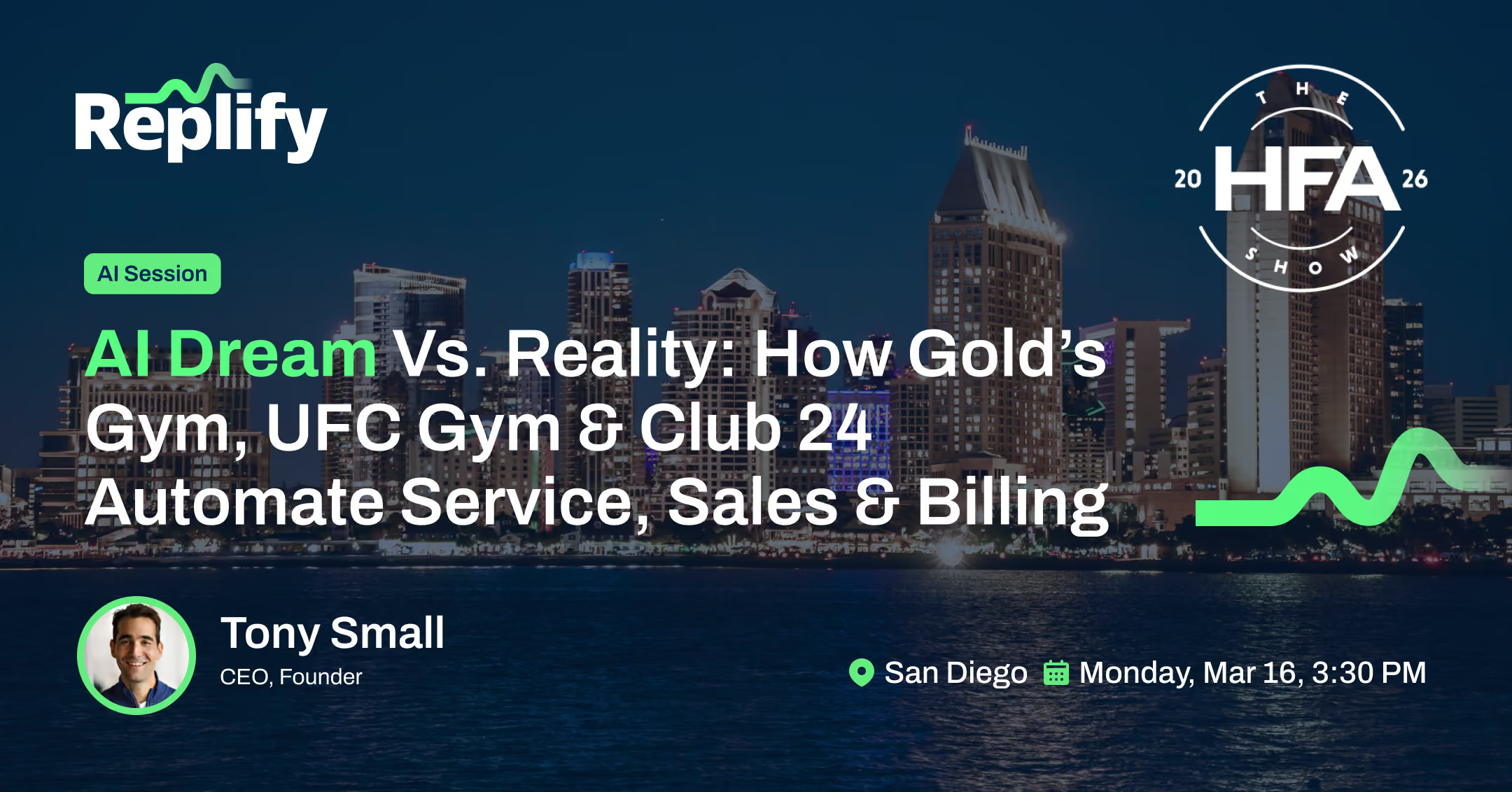
At the 2026 HFA Show in San Diego, Replify CEO and co-founder Tony Small took the stage for a 38-minute AI presentation that walked the room through a complete, practical picture of where AI stands right now for gym operators, what it can genuinely do today, where it still falls short, and what real results look like when you deploy it the right way.
Three multi-location operators joined him to share their own experiences: Chris Prevatte from Gold's Gym DC Metro, Val Nepomuceno from Club 24 Concept Gyms, and Ryan Ensmann from Dynamic Fitness.
Ready to explore Replify's AI receptionist and AI sales suite for your multi-unit operation? Schedule a demo.
AI Is Powerful. It Is Also Not Perfect.
Tony opened the HFA session the way more AI presentations should: with a reality check.
He showed the audience an AI-generated video avatar of himself, created in about 10 minutes, delivering a presentation in fluent Spanish. The capability was impressive. Then he played a clip from a YouTube channel where a director tries to get AI actors to perform a simple comedy scene. The result was a disaster of body-switching, overacting, and robotic delivery.
The point was clear. If you push AI to the bleeding edge of what it can do right now, you will be disappointed. But if you look at the capabilities that were cutting-edge 12 to 18 months ago, those tools are now mature, reliable, and ready to drive real ROI.
"If you look at where AI was really at the forefront one year ago and you take those technologies, those are pretty well baked," Tony told the audience. "AI phone didn't exist two years ago. Now it does, and it works really, really well."
He also referenced a conversation from earlier that day at HFA where another panelist was asked whether their AI deployment had been ROI-positive. The answer was no, they were barely breaking even. Tony's point was not to scare the room, but to acknowledge that bad AI experiences are real, and that the difference between a positive and negative outcome usually comes down to where and how you deploy it.
Why Buying AI Software Is Harder Than Buying Regular Software
Before getting into solutions, Tony laid out the obstacles that make AI adoption uniquely challenging for gym operators:
The possibilities feel endless, which makes it hard to define a starting point. There are too many vendors making far-fetched claims that collapse once you get into implementation. There is genuine concern about the technology, combined with limited IT bandwidth on most gym teams. And the downside risk is real: poor results, low ROI, and staff complaints.
"Buying software already is hard," Tony said, "but buying AI software is dramatically harder."
His framework for navigating this was practical. Learn from other customers who have already deployed. Be skeptical but stay open. Pilot with a few locations rather than going all-in. Start simple. Avoid long-term contracts. And above all, do not let perfect be the enemy of good.
The Problem: What Actually Happens When Someone Calls Your Gym
To ground the conversation in real data, Tony presented findings from a secret shopping study Replify conducted across 105 fitness facilities and 30 different brands.
The team called each gym during open hours, posed as prospective members, asked about pricing and hours, and documented every step of the experience.
The findings painted a picture that most operators in the room recognized:
Only 31% of calls connected directly to a live person. 28% went to voicemail. 38% landed in a phone tree, with mixed results from there. 3% got no answer at all. When callers could reach a person, the average wait was 50 seconds from first ring to conversation. To put that in context, Tony had the audience sit in silence for 25 seconds, half the average wait, and the discomfort in the room was palpable.
Only 33% of staff who answered asked any qualifying questions. Only 33% invited the caller for a tour or visit. And the number that hit the hardest: only 12% of gyms followed up in any way after the call. No text, no email, no callback.
As Tony pointed out, most gyms have a solid process for web form leads. Those go into the CRM and trigger automated follow-up sequences. But phone leads, often the highest-intent prospects of all, disappear into thin air.
The Solution: What AI Actually Looks Like in a Gym
With the problem established, Tony shifted to what the solution looks like in practice, starting with the highest-value, lowest-risk use case: AI-powered inbound call handling.
He played a live call recording from Gold's Gym DC Metro. The AI answered, identified itself clearly, offered Spanish language support, captured the caller's name, asked whether they were a current member, provided hours, offered a free pass via text, answered questions about class offerings and pricing, and wrapped the call naturally. The entire interaction sounded fluid, professional, and human.
Tony shared data on how callers actually interact with AI. Replify handles approximately 10,000 calls per day across its customer base, which gives them a large dataset on real-world behavior. The breakdown falls into roughly three groups: about 25-30% of callers want nothing to do with AI and immediately ask for a live person (Replify accommodates this with instant live transfers), another 30% or so recognize they're talking to AI and respond in clipped, robotic phrases ("membership, free trial"), and the remaining third simply have a normal conversation.
Beyond inbound, Tony walked through the outbound use cases that are working right now for gym operators:
Sales follow-up. When a prospect submits a lead form during off-hours, AI can call them immediately to book a tour rather than waiting until the next business day.
Billing collections. Instead of staff manually calling hundreds of past-due members hoping a few answer, AI handles the outreach and connects members to billing when they are ready to resolve.
Member retention and winbacks. Reaching out to former members who already have a relationship with your brand.
Announcements and promotions. Getting the word out about new offerings via phone, layered on top of email and text campaigns.
He was equally direct about what does not work yet. Cold outbound calling, reaching out to lists of prospects with no existing relationship, is not something AI handles well today. The technology is not yet fluid enough to replicate the nuance of an experienced salesperson navigating a cold pitch.
Tony also covered the operational capabilities that matter most for multi-location operators: omnichannel support across phone, text, email, and chat; bidirectional inbound and outbound communication; centralized management with the ability to push changes across 5, 50, or 500 locations at once; deep CRM integrations (including ABC Fitness, HubSpot, GleanTap, and others); automated lead capture and calendar booking; configurable live transfer rules by time of day; and multilingual support in over 20 languages.
The Results: Three Operators, Real Numbers
The most compelling part of the HFA presentation was not Tony's data. It was the operators who took the stage to share what happened when they put this into practice.
Chris Prevatte, VP of Sales & Operations, Gold's Gym DC Metro
20 locations | ~50,000 members
Chris evaluated multiple AI vendors in 2024, splitting his locations between Replify and a larger competitor, five clubs each. The difference in customer service and partnership was, in his words, night and day. Two things set Replify apart: the speed of onboarding (fully operational within a week) and the team's CRM background, which meant they could speak his language when it came to integration and data flow.
The lead capture results were dramatic. Gold's Gym DC Metro went from roughly 150 to 200 total phone leads across all clubs to more than 1,000 per month. Some individual locations now pull 150 to 200 leads just from inbound calls that previously went unanswered.
But Chris pushed the technology further than anyone else on stage. He worked with Replify to build an internal, employee-facing AI agent loaded with the company handbook, operational procedures, billing processes, and HR policies. Every Gold's Gym DC Metro location now has this agent on the front desk desktop, available to any team member at any time.
"Use AI like an employee," Chris told the audience. "You've got to learn from it and you want to train it. It's not set it and forget it."
He also described using Replify for targeted promotional campaigns, building out custom AI agents with specific promotion knowledge and driving measurable results, including 10 attributable memberships from a single grand opening campaign.
Val Nepomuceno, Operations Leader, Club 24 Concept Gyms
7 locations
Val oversees everything at Club 24, from sales and retention to billing, maintenance, and technology systems. After evaluating multiple AI companies and running demos and trials, Club 24 chose Replify for the hands-on customer support and the ease of deploying across all seven locations.
Replify now handles all standard inbound inquiries: hours, holiday hours, pricing, promotions, general facility questions, after-hours calls, and door access issues. But the outbound capability is where Club 24 saw the biggest operational shift. Staff had been spending approximately 20 hours per month per location on past-due billing calls, texts, and emails. That work was offloaded entirely. Now, when the AI runs past-due campaigns, the phones light up with members proactively calling in to update their billing.
Total inbound time saved across all seven locations: over 400 hours per month. And during Black Friday, Replify executed more than 3,600 outbound calls across all locations in just five days.
Ryan Ensmann, Director of Marketing, Dynamic Fitness
3 locations | Houston, TX
Ryan's team runs a disciplined sales process. Their challenge was not closing. It was making sure every lead that tried to engage with them actually got captured. Paid marketing was driving inbound interest, but phone inquiries were falling through the cracks.
With Replify handling inbound calls, every inquiry is now answered, qualified, and logged. The increase in captured leads translated directly to increased sales, and Ryan's team has confidence that their marketing spend is not being wasted on leads that ring out to voicemail.
"One of the biggest things AI can do that is most impactful for the business is handling customer service," Ryan shared. "That's ensuring a consistent great experience for your members and prospects, but it's also alleviating additional work for your team so they can focus on delivering a better experience, keeping the clubs clean, engaging with your members."
The Q&A: Real Questions From Operators
The HFA session closed with audience Q&A that surfaced the practical concerns operators are actually thinking about.
How do you handle unexpected closures like weather or power outages? Tony shared a real example from the day before the presentation: a UFC Gym in Hawaii lost power unexpectedly. The team updated their AI phone greeting in about 10 seconds. During the January 2026 East Coast snowstorms, Replify's call volume spiked 4x as members called to ask whether their gym was open. AI handled every call instantly with accurate, updated information.
What should a live transfer rate look like? Transfer rates across Replify's customer base range from 30% to 70%, depending on how each operator configures their system. Some prefer a soft transfer that asks the caller's issue first (which often allows the AI to resolve it), while others transfer immediately when someone requests a live person.
How do you deal with spam labeling on outbound calls? Replify handles the 10DLC registration process with wireless carriers on the customer's behalf and works to ensure calls display the correct caller ID. The goal is to show the gym's name, or at minimum the correct phone number, and avoid any spam flagging.
How long does integration take? As fast as two days for gyms using CRM systems Replify has already integrated with. A few weeks for custom integrations or operators who want to build out a comprehensive knowledge base before going live.
What makes operators successful with AI? Tony's answer was simple: openness to trying something new, combined with a willingness to treat it like an ongoing process rather than a one-time installation.
Watch the Full 38-Minute HFA AI Presentation
This article covers the key themes, but the full session has more: the live AI call demo, Tony's complete data walkthrough, extended operator commentary, and the full audience Q&A.
Related Articles
Replify & ABC AI Agents Product Updates: Faster Inbox, Natural Voice Greetings, Redesigned Contacts
Replify, now part of ABC Fitness, shipped updates across Chatbot, Voice, Contacts, Inbox, and Connected Apps to make the platform faster for your front desk. See what's new.
.avif)
AI Receptionist and AI Sales Updates August 2026
Your AI receptionist and AI sales agents just got updated. Updates include editing live campaigns, faster setup, inbox management, and more
AI Case Studies at Gyms, Studios, and Health Clubs
Every AI receptionist and AI sales case study KPI in one place. 200+ gyms, studios, clubs, and salons.

Heading
Lorem ipsum dolor sit amet, consectetur adipiscing elit. Suspendisse varius enim in eros elementum tristique. Duis cursus, mi quis viverra ornare, eros dolor interdum nulla, ut commodo diam libero vitae erat. Aenean faucibus nibh et justo cursus id rutrum lorem imperdiet. Nunc ut sem vitae risus tristique posuere.
Heading
Lorem ipsum dolor sit amet, consectetur adipiscing elit. Suspendisse varius enim in eros elementum tristique. Duis cursus, mi quis viverra ornare, eros dolor interdum nulla, ut commodo diam libero vitae erat. Aenean faucibus nibh et justo cursus id rutrum lorem imperdiet. Nunc ut sem vitae risus tristique posuere.
Heading
Lorem ipsum dolor sit amet, consectetur adipiscing elit. Suspendisse varius enim in eros elementum tristique. Duis cursus, mi quis viverra ornare, eros dolor interdum nulla, ut commodo diam libero vitae erat. Aenean faucibus nibh et justo cursus id rutrum lorem imperdiet. Nunc ut sem vitae risus tristique posuere.
Heading
Lorem ipsum dolor sit amet, consectetur adipiscing elit. Suspendisse varius enim in eros elementum tristique. Duis cursus, mi quis viverra ornare, eros dolor interdum nulla, ut commodo diam libero vitae erat. Aenean faucibus nibh et justo cursus id rutrum lorem imperdiet. Nunc ut sem vitae risus tristique posuere.
Heading
Lorem ipsum dolor sit amet, consectetur adipiscing elit. Suspendisse varius enim in eros elementum tristique. Duis cursus, mi quis viverra ornare, eros dolor interdum nulla, ut commodo diam libero vitae erat. Aenean faucibus nibh et justo cursus id rutrum lorem imperdiet. Nunc ut sem vitae risus tristique posuere.
Heading
Lorem ipsum dolor sit amet, consectetur adipiscing elit. Suspendisse varius enim in eros elementum tristique. Duis cursus, mi quis viverra ornare, eros dolor interdum nulla, ut commodo diam libero vitae erat. Aenean faucibus nibh et justo cursus id rutrum lorem imperdiet. Nunc ut sem vitae risus tristique posuere.